Okay, buckle up, buttercup. We’re about to dive into a corner of the human experience that feels like a shared, collective glitch in the Matrix. Have you ever been absolutely, positively certain about a fact, only to discover… it’s completely, undeniably wrong? Like, “I could swear that character said this,” or “I distinctly remember that logo having that detail”? And then you find out millions of other wonderfully weird humans remember it the exact same way?
Welcome, my friend, to the glorious, unhinged world of the Mandela Effect. It’s named after the widespread false memory of Nelson Mandela dying in prison in the 1980s. But it’s not just about one global figure. It’s about a whole parade of pop culture, historical events, and common phrases that our collective brains have apparently decided to remix. At Psyness.com, we’re taking a “very nice!” look at this shared reality stutter, proving that knowing your brain is sometimes a master of improvisation is anything but boring – it’s a riot.
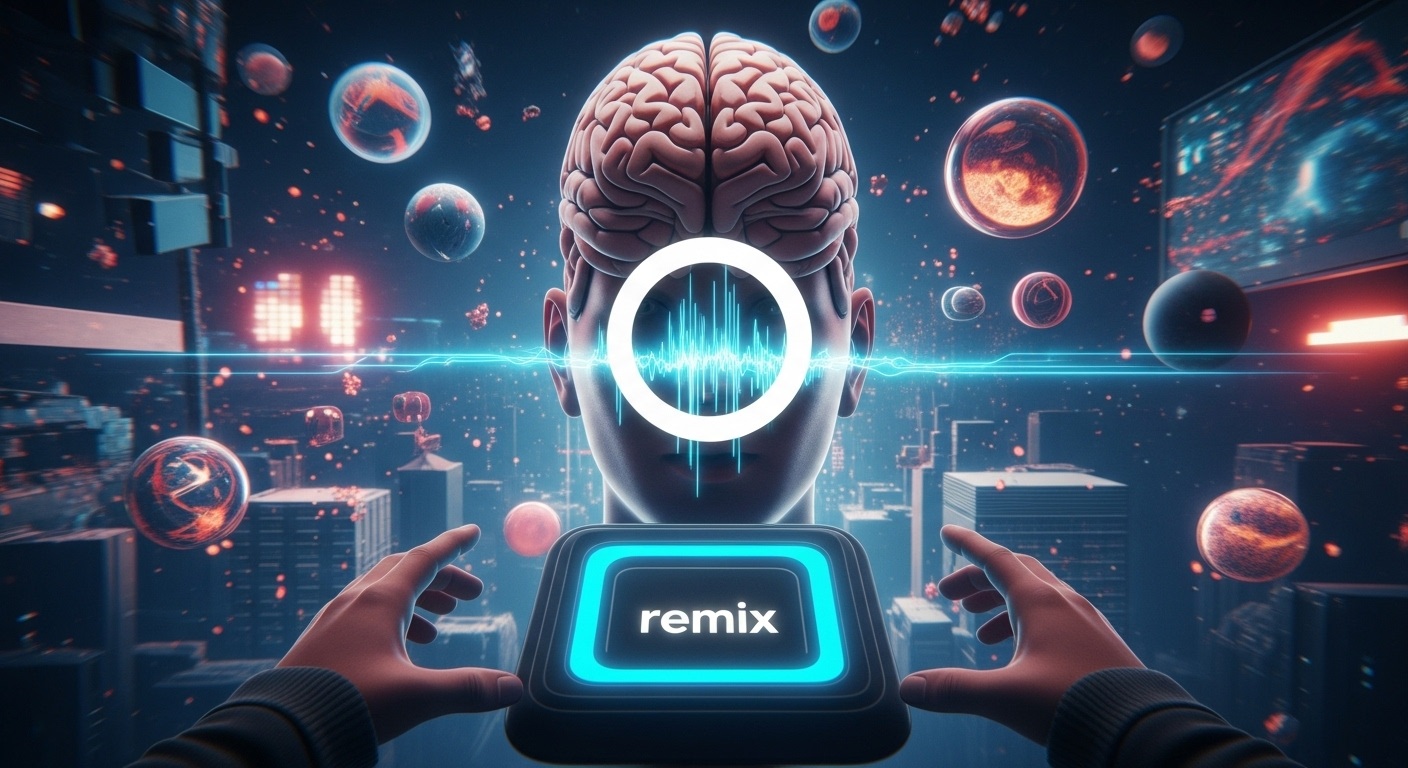
Your Brain | The DJ of Reality, Spinning Remixes
So, what exactly is happening when countless people remember the Berenstein Bears as Berenstain Bears? Or insist the Monopoly Man has a monocle (he doesn’t!)? Or recall that scene from Star Wars as “Luke, I am your father” (it’s “No, I am your father”)? Is it parallel universes? Time travelers messing with our timelines? Or something delightfully, fundamentally weird about how our brains store information?
Turns out, our brains aren’t perfect recording devices; they’re more like creative directors, constantly editing, compressing, and sometimes, outright inventing.
- Memory as Reconstruction, Not Replay: We often think of memory like a video recording, perfect and immutable. But psychological science tells us it’s more like a Wikipedia page | editable, influenced by new information, and sometimes, prone to vandalism (by ourselves, or others!). Every time you recall a memory, you’re not just replaying it; you’re actively reconstructing it, and during that process, errors can sneak in. Your brain’s remix button is always on.
- Confabulation | The Brain Fills in the Blanks: Our brains hate gaps. If there’s missing information, they’ll often subconsciously make something up that feels plausible to create a coherent narrative. The Monopoly Man looks like a character who would wear a monocle, right? Your brain, in its eagerness to be “very nice!” and helpful, just adds one in.
- Source Monitoring Errors | Where Did I Learn That? We often forget where we learned something. Was it from the original source? A conversation? A meme? If you heard a common misquote of a movie line, and then later saw the actual movie, your brain might incorrectly attribute the misquote to the movie itself.
- Social Suggestion & Priming: When a friend says, “Remember that movie where X happened?” and X actually didn’t, your brain is subtly primed. If enough people share the same false memory, it starts to feel incredibly real, creating a powerful collective illusion. This is the beautiful madness of humanity on full display – our shared reality can be surprisingly flexible.
The Pop Culture Paradox | Memes as Memory Makers
The Mandela Effect thrives in the age of pop culture and memes. These cultural touchstones are ubiquitous, repeatedly accessed, and often ripe for subtle misinterpretations that then spread like wildfire. A popular meme featuring a misremembered quote can solidify that false memory for millions, because it provides a strong, repeated “cue.” The glorious absurdity is that a funny image can literally warp our collective memory. It’s like the internet is actively helping our brains press the remix button.
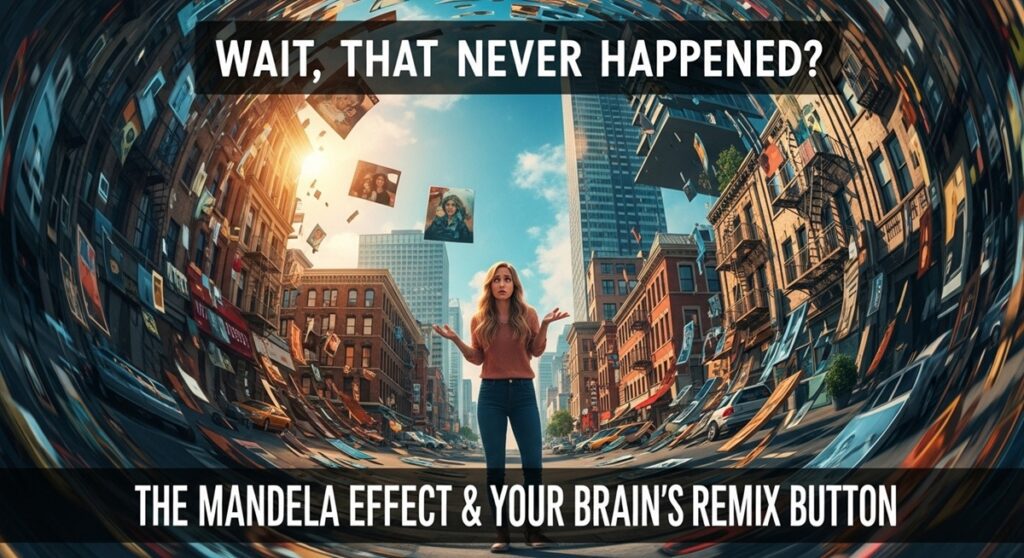
Your Wild World | Embracing the “It’s Normal (But Still Weird!)”
The unsettling feeling of the Mandela Effect comes from a clash | what you know to be true vs. what the “official” record states. This cognitive dissonance can be genuinely jarring. But understanding it allows us to appreciate the incredible, fluid nature of human memory and perception.
It’s not a glitch in reality; it’s a feature of our beautifully complex, wonderfully weird brains. It’s a reminder that:
- Your Memory Is a Creative Artist: Don’t trust it blindly. It’s an interpretative dancer, not a rigid librarian.
- Collective Belief Is Powerful: We are profoundly influenced by what others remember, even if it’s wrong. This highlights our deep need for shared understanding, even at the cost of factual accuracy.
- The Human Condition is Fascinating: It’s a riot to realize how subtly our minds can construct reality, and how easily a widely shared misconception can become our “truth.”
So, the next time you encounter a Mandela Effect, don’t panic. Take a moment to chuckle at your brain’s fantastic remixing skills. It’s “very nice!” to know that your inner world is so vibrant and capable of such imaginative memory-making. And remember, you’re not alone in remembering it “that other way.” You’ve just found your tribe of wonderfully weird, self-aware humans, all navigating the fascinating, often unhinged, labyrinth of shared memory.
// Protocol · Next Transmission
The glitch is the signal. — Psyness Protocol