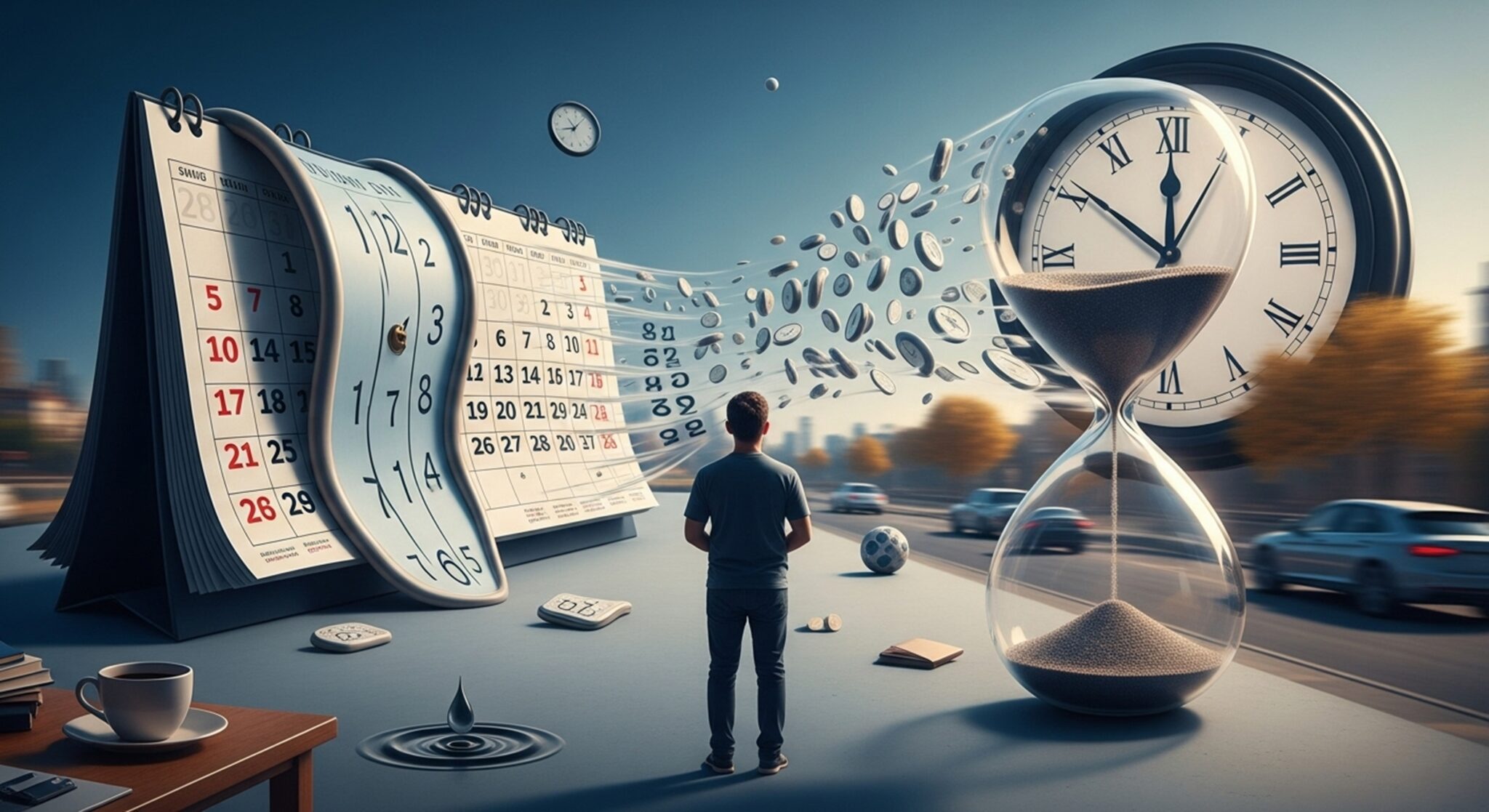
You’re stuck in a particularly tedious meeting. Each minute stretches into an eternity, an unholy alliance of slow-motion agony and existential dread. The clock seems to move backward. Then, suddenly, it’s December again. You blink. Wait, wasn’t it just January?! Where did the entire year go?! Your magnificent, weird brain blinks back, equally bewildered.
Welcome, fellow traveler, to the delightfully unhinged, universally baffling realm of the Time Warp Effect. It’s the glorious absurdity that makes individual days crawl by like a snail in molasses, while entire years vanish in a blink, leaving you to wonder if you accidentally hit the fast-forward button on your life. Is reality glitching? Are you secretly a time traveler who forgot your powers? Or is your beautiful brain simply playing tricks with its own internal chronometer? At Psyness.com, we take a “very nice!” look at this pervasive perception quirk, proving that understanding why time feels so wonky doesn’t have to be boring – it can be a riot.
Your Brain’s Wonky Chronometer | The Illusion of Speed
Why does our subjective experience of time shift so dramatically, making some moments feel interminable and others fleeting? It’s not about the actual ticking of clocks; it’s about how your magnificent, highly selective brain processes and records life’s endless stream of information.
The Architect | Memory, Novelty, and Boredom
Your brain, bless its diligent, data-obsessed heart, is constantly trying to make sense of incoming stimuli. Its perception of time is heavily influenced by how much new information it processes and how those memories are later recalled.
- Novelty vs. Routine (The “Newness Factor”): When you encounter new experiences – a new place, a new skill, a new challenge – your brain is forced to work harder. It creates more detailed, vivid memories because it’s actively encoding novel information. When you later recall these periods, those dense, rich memories make the time feel like it spanned a longer duration. Conversely, routine, boring periods (like that endless meeting) offer little new information. Your brain goes into “autopilot,” encoding fewer unique memories. When you recall a month of routine, it feels compressed because there are fewer distinct “anchor points” to slow down the memory. Your brain thinks, “Same old, same old! Very nice, but not worth much data storage, no?”
- Memory Density (The “Highlights Reel” Phenomenon): Our perception of past time is largely determined by the density of memories. A year packed with unique experiences (travel, new jobs, significant life events) feels longer in retrospect because your brain has more “files” to open. A year where every day blended into the next feels short because there are fewer memorable highlights. It’s like a sparsely populated photo album vs. a bulging one.
- Emotional Arousal (The “Excitement Filter”): Time perception is also influenced by our emotional state. Intense emotions – fear, excitement, deep engagement – can slow down our subjective experience of time in the moment. Think of a car accident (time slows down) or an exhilarating roller coaster ride. When we’re bored, the opposite happens – time drags.
The paradox? The very routines that offer us stability and comfort are often the ones that make time disappear in retrospect. Your brain’s efficient filtering for the familiar means it’s often discarding the “very nice!” details that make time feel long and rich when looking back.
Pop Culture’s Time-Bending Narratives | Our Shared Chronological Chaos
From films like Inception that warp time perception to shows that play with non-linear storytelling, pop culture constantly reflects our fascination with the malleability of time. Viral videos often highlight the blur of adulthood, asking “Where did the years go?” This collective musing taps into a universal experience of time’s trickery.
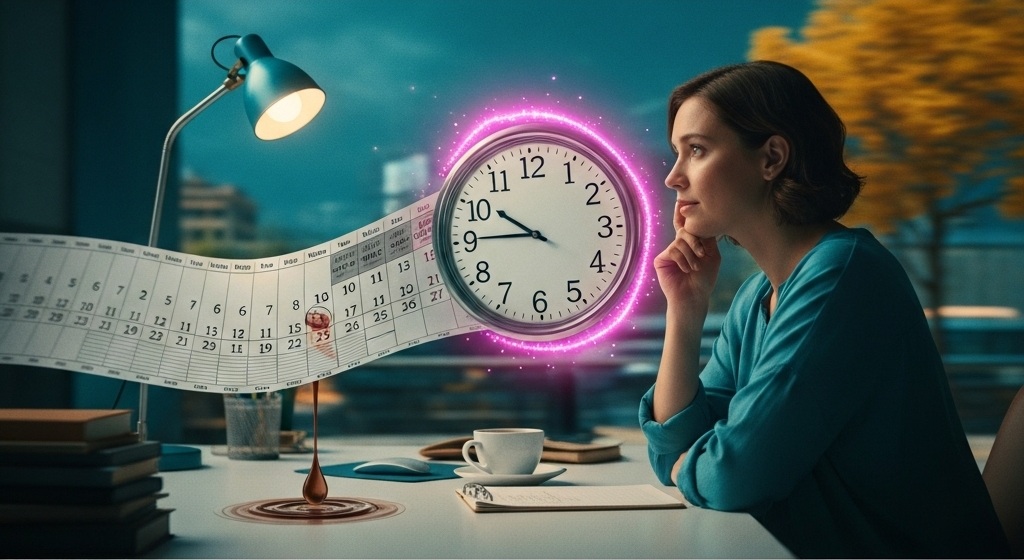
The glorious absurdity? We lament time speeding up, yet often gravitate towards routines and digital comforts that, ironically, contribute to it. We wish for more time, but our brains are secretly optimizing for efficiency over memorable moments. It’s a shared, delightful madness where our calendars become a blur. Your inner Borat might look at a fast-paced montage and exclaim, “This is like my life! Very fast, very nice, but where is beginning?!”
Harnessing Your Inner Time Lord (Very Nice! And Seriously Smart!)
Understanding your brain’s time-bending quirks isn’t about stopping the inevitable march of minutes. It’s about consciously influencing your perception of time, making it feel richer, longer, and more meaningful. It’s about becoming more intentional with how your magnificent, weird brain records your existence.
Here’s how to nudge your brain towards a more “very nice!” experience of time:
- Seek Novelty (The “Newness Injection”): Actively seek out new experiences, no matter how small. Try a new route to work, a different cuisine, learn a few words in a new language, visit a part of your town you’ve never explored. Novelty forces your brain to engage and create denser memories.
- Practice Mindful Engagement (The “Present Moment” Protocol): When doing routine tasks, try to bring conscious awareness to them. Really taste your food, feel the water in the shower, listen to the ambient sounds. Mindfulness slows down the in-the-moment perception of time and creates stronger memories.
- Create Memorable Moments (The “Highlight Reel” Strategy): Intentionally plan events that will stand out – a weekend trip, a special dinner, learning a new skill. These create powerful memory anchors that make retrospect feel longer and richer. Don’t just live; create memories.
- Reflect and Journal (The “Memory Architect” Habit): Regularly review your days, weeks, or months. Journaling about new experiences, feelings, and learning helps solidify memories and makes time feel less like a blur when you look back. This conscious act of recall reinforces the “length” of your experiences.
- Break Routine (The “Unpredictability Injection”): Even small changes can disrupt the brain’s autopilot. Change your morning routine, rearrange your workspace, or try a different type of exercise. Injecting unpredictability makes your brain work harder and take more “notes.”
The Time Warp Effect is a fascinating window into our complex psychology, a reminder that our brains, while magnificent, are also the architects of our subjective reality. Knowing this doesn’t make time stop; it makes you self-aware, wonderfully weird, and very nice! Embrace the power to shape your perception, understand your brain’s unique chronometer, and prove that you can make the most of every precious, wonderfully weird moment.
// Protocol · Next Transmission
The glitch is the signal. — Psyness Protocol