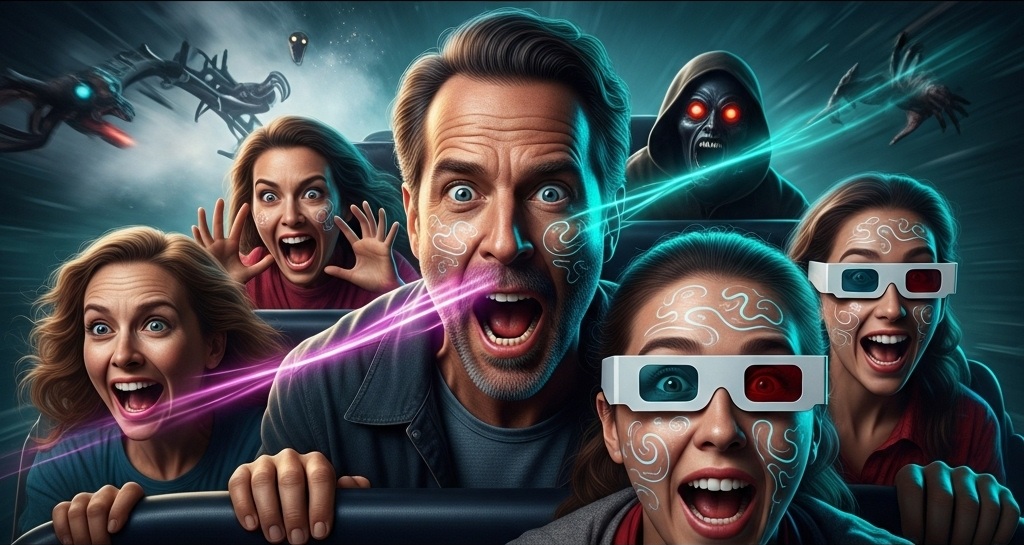
The lights dim. The eerie music swells. You grip the armrest, heart pounding, convinced something truly awful is about to leap out from the shadows on screen. Or perhaps you’re inching through a haunted house, knowing every jump scare is coming, yet still letting out a genuine shriek. Maybe you’re devouring a true-crime podcast, fascinated by the gruesome details, all from the safety of your perfectly normal living room.
Why?! Why does your magnificent, weird brain actively seek out experiences that make it want to evacuate its own skull? Am I secretly a masochist? Or is this just… fun?
Welcome, fellow traveler, to the delightfully unhinged, universally baffling realm of controlled fear. It’s the glorious absurdity of willingly exposing ourselves to terror, all for the sake of a thrill. Is it a sign of a dark side? A strange psychological addiction? Or is your beautiful brain simply a very nice, very sophisticated thrill-seeker? At Psyness.com, we take a “very nice!” look at this pervasive behavioral quirk, proving that understanding why fear feels so good doesn’t have to be boring – it can be a riot.
Your Brain’s Rollercoaster Ride | The Chemical Cocktail of Controlled Terror
Why do we actively pursue fear, knowing it will trigger primal alarm bells? It’s not about genuine danger; it’s about your magnificent mind orchestrating a fascinating internal chemical party.
Your brain, bless its intrepid heart, is wired for survival. When confronted with a perceived threat (even a fake one), it springs into action, flooding your system with powerful neurochemicals.
- The Safety Net (The “It’s Not Real, Very Nice!” Clause): This is the ultimate paradox. We seek out fear when we know we are fundamentally safe. Watching a horror movie from your couch, riding a rollercoaster with safety harnesses, or exploring a haunted house with actors – your rational brain knows there’s no real threat. This allows your primal fear response to fire, but without the actual survival imperative. You get the rush without the peril.
- The Chemical Cocktail | Adrenaline, Dopamine, Endorphins: When “scared” (safely), your body unleashes adrenaline (the “fight or flight” hormone) and cortisol. But crucially, in the absence of real danger, your brain then counteracts this with feel-good chemicals like dopamine (the reward chemical) and endorphins (natural painkillers/mood elevators). This post-fear chemical cocktail can create a powerful sense of exhilaration, relief, and even euphoria. It’s like your brain is giving you a high-five for surviving something that wasn’t actually dangerous. “I scream! I run! Then I feel very nice! This is efficient!”
- Catharsis and Release: Engaging with fear (safely) can be a powerful way to release pent-up stress, anxiety, or even aggression from daily life. The intense emotional experience provides a cathartic outlet, allowing you to “purge” those feelings in a controlled environment.
- Mastery and Resilience (The “I Did It!” Factor): Successfully navigating a frightening experience (even a fictional one) can boost your self-efficacy and resilience. You prove to yourself that you can handle intense situations, strengthening your belief in your own ability to cope. It’s a mini-victory, very nice!
- Novelty and Sensory Overload: In a world that can feel routine, controlled fear offers a jolt of novelty and sensory stimulation. It pulls you out of boredom and fully engages your senses, making you feel intensely alive.
Pop Culture’s Fear Factory | Our Shared Thrill-Seeking Cult
From blockbuster horror films to escape rooms, true-crime documentaries to extreme sports, pop culture is a relentless engine for generating “safe fear.” We consume it voraciously, creating a collective “fear cult” where the pursuit of a good scare is a badge of honor.
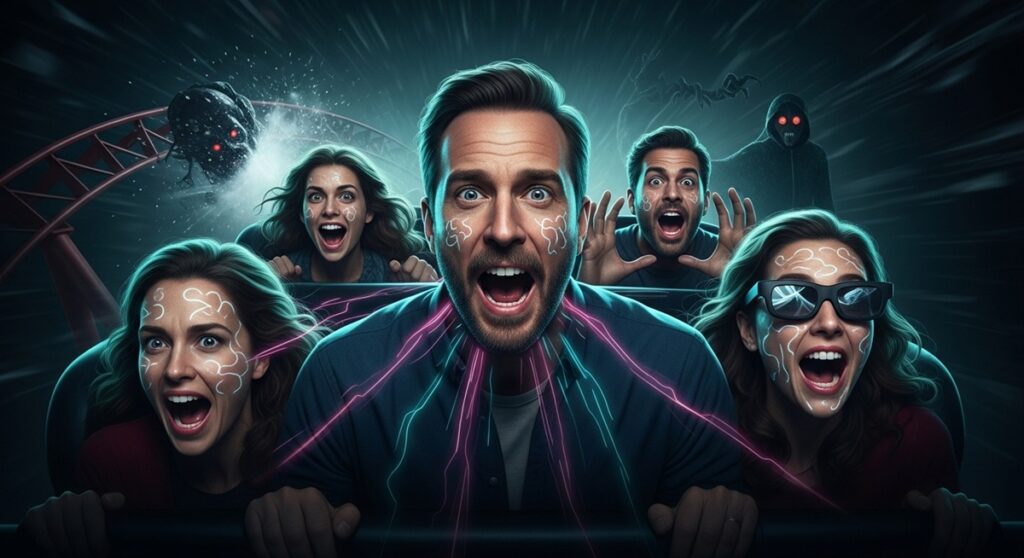
The glorious absurdity? We pay good money to be startled, to feel our hearts race, to experience moments of manufactured dread. We willingly subject our magnificent brains to this delightful torment because the payoff is so… very nice! It’s a testament to the primal, unhinged power of emotion over pure logic. Your inner Borat might emerge from a horror film, slightly disheveled, and declare, “My pants are wet, but my heart feels very strong! And I am still alive! Very nice!”
Embracing Your Inner Scream-Enthusiast (Very Nice! And Healthy!)
Understanding that your brain finds a bizarre pleasure in being safely scared isn’t about being strange; it’s about recognizing a deep-seated human trait. It’s about appreciating your mind’s unique way of regulating emotions and seeking thrill.
Here’s how to navigate your relationship with fear with a bit more Psyness:
- Identify Your “Fear Sweet Spot”: Not all fear is created equal. Do you prefer psychological thrillers over gore? Rollercoasters over skydiving? Understand your personal comfort zone for controlled fear. Respect your boundaries.
- Process and Release: After a scary experience, allow yourself to process the adrenaline and other chemicals. Talk about it, laugh about it, or engage in a calming activity. Don’t just immediately jump back into the mundane.
- Use It for Growth: Reflect on what you learned. Did you push a boundary? Did you feel a burst of confidence? Use these moments to understand your resilience.
- Distinguish Real vs. Reel: Consistently remind your brain that the manufactured fear isn’t real danger. This reinforces the “safety net” and prevents anxiety from spilling into everyday life.
- Share the Experience (Your Tribe!): Experiencing fear with others – whether a friend beside you at the movies or sharing theories about a podcast – can strengthen social bonds. It’s a shared rite of passage, a collective embrace of beautiful madness.
The pursuit of fear is a fascinating window into our complex psychology, a reminder that our brains, while magnificent, are also wired for adventure and powerful emotional experiences. Knowing this doesn’t make you a weirdo; it makes you self-aware, wonderfully weird, and very nice! Embrace the shivers, understand your brain’s thrill-seeking nature, and prove that facing the (safe) unknown can be a glorious, unhinged riot.
// Protocol · Next Transmission
The glitch is the signal. — Psyness Protocol