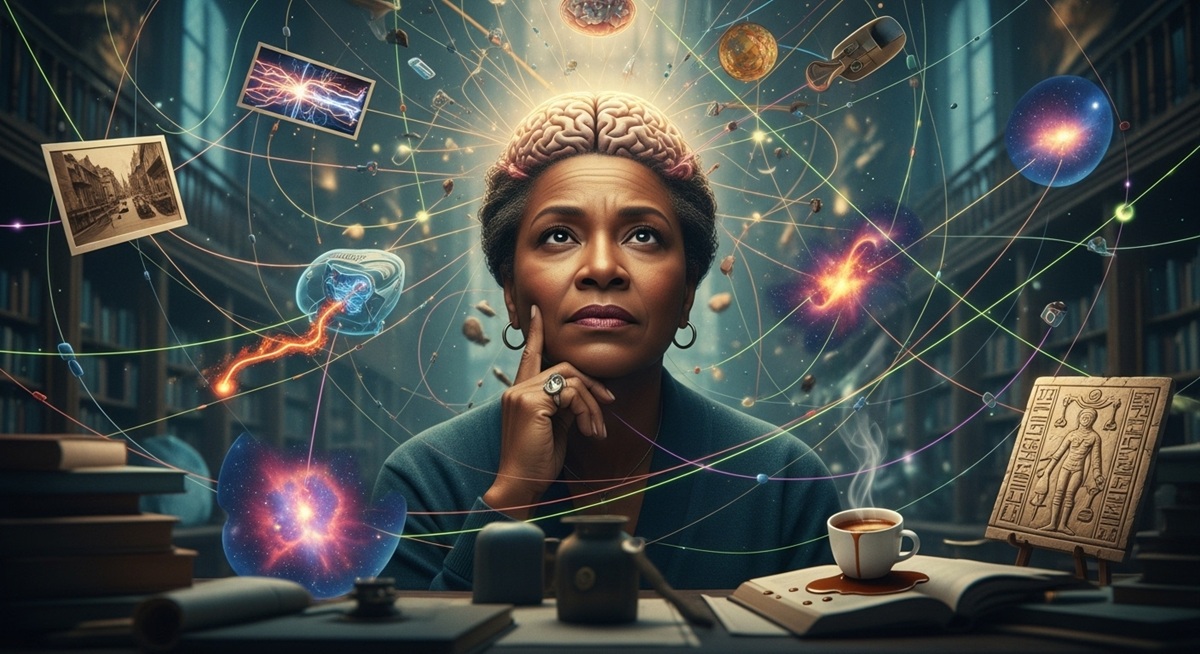
You’re scrolling through the news, feeling a familiar sense of delightful chaos. A global event here, a local scandal there, a celebrity mishap somewhere else. And then, a thought sparks | What if it’s all connected? What if that politician’s gaffe, that weird weather pattern, and the sudden rise of artisanal pickle-making are all part of a grand, intricate, slightly unhinged plan? Suddenly, your magnificent, weird brain feels a peculiar sense of calm, a comforting order amidst the glorious disarray.
Welcome, fellow traveler, to the delightfully unhinged, universally tempting realm where your mind believes everything’s connected. It’s the glorious absurdity of finding comfort in the most improbable explanations, because at least someone is pulling the strings, right? Is it pure delusion? A sign of a mind gone rogue? Or is your beautiful brain simply doing its very nice, very desperate dance to make sense of a confusing world? At Psyness.com, we take a “very nice!” look at this pervasive mental quirk, proving that understanding why you crave a good secret plot doesn’t have to be boring – it can be a riot.
Your Brain | The Ultimate Pattern-Seeker (And Chaos-Hater!)
Why does your mind gravitate towards grand, overarching explanations, even when they seem to defy all logic? It’s a fascinating testament to how our brains struggle with randomness and uncertainty.
The Architect | Crafting Order from the Abyss
Your brain is a relentless meaning-making machine. It absolutely detests chaos, ambiguity, and the idea that bad things can happen for no reason. When confronted with complex, random, or unsettling events, it yearns for a coherent narrative, something to tie it all together.

- The Need for Control & Predictability: Life is unpredictable. Disasters happen. People make irrational choices. This lack of control is deeply uncomfortable for our brains. A theory that “everything’s connected,” no matter how wild, provides a sense of hidden order. If there’s a mastermind, then at least someone is pulling the strings, which feels more predictable than pure randomness. “They control all! Very nice! At least not completely random chaos, no?”
- Cognitive Biases on Overdrive: Your brain has a whole arsenal of delightful quirks that prime it for seeing connections:
- Confirmation Bias: Once you suspect a connection, your brain actively seeks out information that confirms your belief, while ignoring anything that contradicts it. Every strange coincidence becomes “proof.”
- Proportionality Bias: We tend to believe that big events must have big causes. A plane crash must be more than just mechanical failure; a global pandemic must be more than just a virus. Our brains resist the idea of a massive outcome stemming from a mundane or random cause.
- Agent Detection: Humans are wired to detect “agents” (living beings with intentions) even when none exist. This is why we see faces in toast (pareidolia) or assume a strange noise is a person. This extends to assuming intentionality behind complex societal events.
- The Comfort of “Knowing the Secret”: Being “in on” a hidden connection, understanding the “truth” that others don’t, can provide a powerful sense of intellectual superiority and belonging. You’re part of an enlightened few, a secret tribe who “gets it.” This is deeply satisfying.
Pop Culture’s Interconnected Web | Our Shared Quest for Secret Truths
From Hollywood blockbusters to internet forums, pop culture is steeped in the allure of secret societies, hidden governments, and shadowy figures pulling strings. This pervasive cultural backdrop fuels our brains’ natural tendency to look for grand narratives, making the idea that “everything’s connected” not just normal, but sometimes even fashionable.
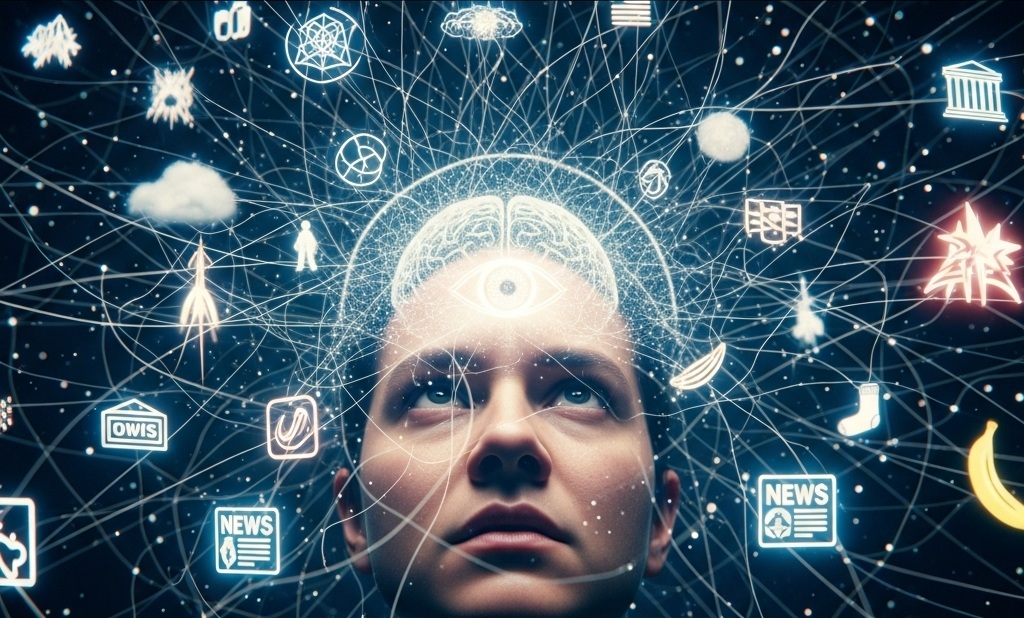
The glorious absurdity? We are often entertained by fictional conspiracies, then our brains, wanting to keep the party going, look for similar narratives in reality. The lines blur, and the “wild world around you” becomes a thrilling, unscripted spy novel. Your inner Borat might watch a spy movie and nod sagely, “They control everything! This is like real life, very nice!”
Navigating the Web of Connections (Very Nice! And Wise!)
Understanding why your brain finds the idea that “everything’s connected” so appealing doesn’t mean you’re gullible. It means you’re human, with a brain that craves order and meaning. It’s about recognizing the psychological levers at play and choosing whether to surrender to the comforting narrative or embrace the messy truth.
Here’s how to steer your brain away from unproductive rabbit holes:
- Acknowledge the Comfort: When a theory sparks interest, recognize the psychological need it’s fulfilling (control, meaning, belonging). “Ah, my brain wants order! Very nice, but is this order real?”
- Embrace Ambiguity (The Hard Part): Practice accepting that some things simply don’t have clear, simple answers. The world is complex and often random. This is uncomfortable, but it’s the beginning of genuine wisdom.
- Check Your Sources (With a Critical Eye): Before fully investing, ask yourself | Who benefits from this narrative? What evidence (outside of other similar theories) supports this? How would I verify this if it were a scientific claim?
- Seek Multiple Perspectives (The “Hear All Sides” Protocol): Actively seek out credible, diverse viewpoints, even (especially!) those that challenge your initial inclinations.
- Humor as a Reality Check: When a theory gets too wild, inject a little Psyness humor. Imagine your brain as a tiny Borat, trying to fit a square peg into a round hole, muttering, “This doesn’t fit! Very nice, but also very confusing!”
The ‘Everything’s Connected’ Brain is a fascinating window into our complex psychology, a reminder that our minds, while magnificent, are also prone to seeking patterns and narratives where none exist. Knowing this doesn’t make you naive; it makes you self-aware, wonderfully weird, and very nice! Embrace the glorious messiness of reality, understand your brain’s longing for order, and prove that you can find meaning even without a secret master plan.