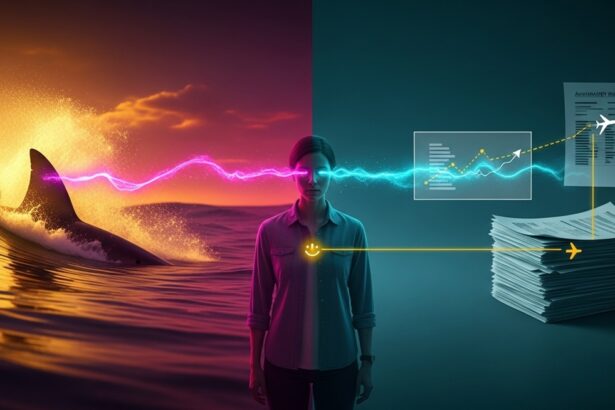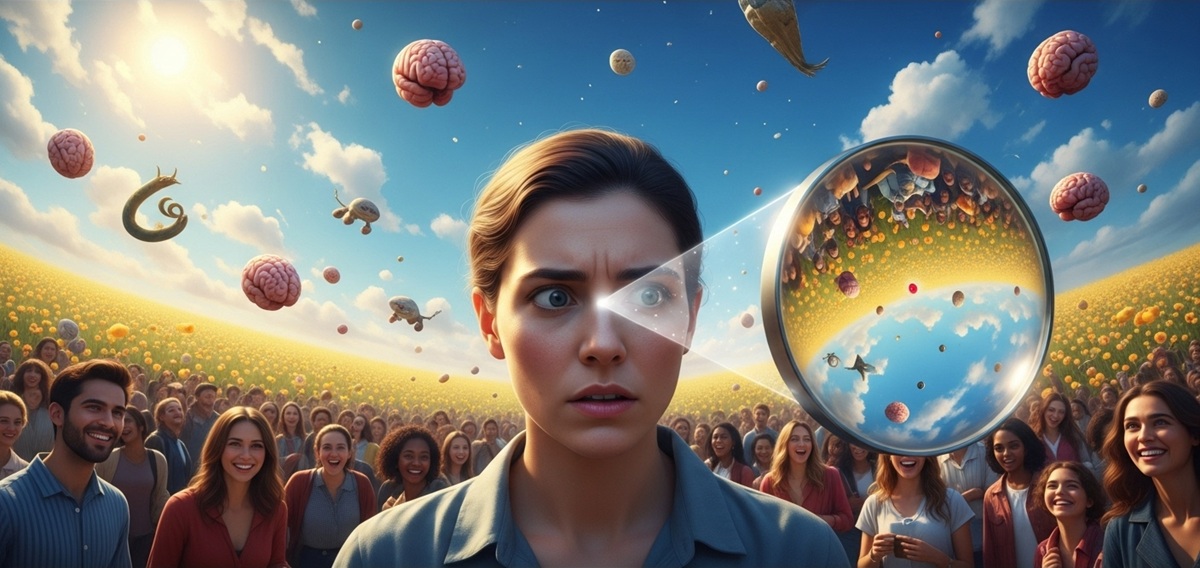
You get a performance review with five glowing compliments and one minor constructive criticism. What’s the first thing your magnificent, weird brain latches onto? The criticism, of course! You scroll through social media, seeing dozens of positive posts, but the one negative comment sticks with you all day. Or you have a perfectly good day, but one small annoyance overshadows everything else. Your brain seems to have a built-in magnet for the bad stuff, amplifying its importance. “Good things, very nice! But bad thing, it is very important! Must think about it always!”
Welcome, fellow traveler, to the delightfully unhinged, universally experienced realm of Negativity Bias. It’s the glorious absurdity of your mind’s tendency to give more weight, attention, and processing power to negative experiences, thoughts, and information than to positive ones. Is it pessimism? A peculiar form of self-torture? Or is your beautiful brain simply doing its very nice, very efficient (though sometimes exhausting) job of protecting you from potential threats? At Psyness.com, we take a “very nice!” look at this pervasive mental quirk, proving that understanding why you focus on the negative doesn’t have to be boring – it can be a riot.
Your Brain’s Threat Detector | The Survival Imperative
Why does your mind so readily prioritize and dwell on the negative, making it feel more impactful than the positive? It’s a fascinating testament to your magnificent brain’s evolutionary wiring, designed primarily for survival.
The Architect | The Danger Prioritizer
Your brain, bless its tirelessly vigilant heart, evolved in a world full of dangers. Missing a positive opportunity (like a berry patch) might mean less food, but missing a negative threat (like a lurking predator) could mean death. Therefore, our brains developed a bias towards the negative as a survival mechanism.
- Survival Advantage: From an evolutionary perspective, paying close attention to threats, dangers, and negative outcomes was crucial for survival. A brain that quickly registered “danger!” and dwelled on it was more likely to keep its owner alive than a brain that was easily distracted by pleasantries. “Bad thing, it can hurt me! Must remember very well! Good thing, it is nice, but not important for living!”
- Faster Processing: Negative stimuli are often processed more quickly and intensely by the brain. A negative word, image, or experience can trigger a stronger and more immediate emotional and physiological response than a positive one.
- Stronger Memory Encoding: Negative experiences tend to be encoded into memory more vividly and are recalled more easily. This is why a single traumatic event can leave a lasting scar, while countless positive experiences might blend into a general sense of well-being. Your brain wants you to remember what to avoid.
- Asymmetry of Impact: A single negative event can have a disproportionately larger impact on your mood, relationships, or self-esteem than multiple positive events. It often takes several positive experiences to counteract the effect of one negative one.
- News & Media Bias: The news cycle often capitalizes on negativity bias. “If it bleeds, it leads.” Negative news (crime, disaster, conflict) tends to grab more attention and is perceived as more important, reinforcing this bias in our daily information diet.
The paradox? While this bias was essential for our ancestors’ survival, in our relatively safe modern world, it can lead to anxiety, pessimism, rumination, and an underappreciation of the good things in life. Your brain’s “threat detector” is magnificent, but gloriously unhinged in its overzealous vigilance.
Pop Culture’s Drama Magnets | Our Shared Negative Obsession
From true crime documentaries that captivate millions, to reality TV shows that thrive on conflict and drama, to the endless cycle of outrage on social media, pop culture constantly reflects and often amplifies our negativity bias. We are drawn to conflict, scandal, and the darker side of human nature, making it a powerful force in what goes viral.

The glorious absurdity? We complain about “all the negativity in the world,” yet our brains are wired to seek it out, and our media feeds it to us. It’s a shared, delightful madness where the bad stuff often gets all the attention. Your inner Borat might see a very dramatic news story and declare, “This story, it is very bad! So I must watch it many times! Very nice for my brain to be upset!”
Rebalancing Your Reality (Very Nice! And Truly Liberating!)
Understanding that your brain’s ‘Bad News First’ tendency (Negativity Bias) is a natural, powerful cognitive pattern is the first step to liberation. It’s not about ignoring problems or pretending everything is perfect; it’s about learning to work with your magnificent, weird brain to give positive experiences the attention and weight they deserve.
Here’s how to nudge your brain towards more balanced, “very nice!” perception:
- Practice Gratitude (The “Positive Spotlight”): Consciously identify and appreciate positive things, no matter how small. Keep a gratitude journal, or simply take a moment each day to list three good things that happened. This trains your brain to seek out the positive. “This coffee, it is very good! My brain must remember this! Very nice!”
- Savor Positive Experiences (The “Mental Soak”): When something good happens, don’t just let it pass. Linger in the moment. Notice the details, the sensations, and the emotions. Mentally “take a picture” of it and replay it later. This helps encode positive memories more strongly.
- Limit Negative Input: Be mindful of your media consumption. Reduce exposure to constant negative news, social media arguments, or overly dramatic entertainment, especially before bed. Curate your information diet.
- The “Three Good Things” Exercise: At the end of each day, write down (or mentally list) three specific good things that happened, and briefly explain why they happened. This actively counters the brain’s negative lean.
- Reframe Challenges (The “Growth Mindset”): Instead of viewing setbacks as purely negative, try to see them as opportunities for learning and growth. This shifts your brain’s focus from threat to development.
- Engage in Positive Self-Talk: Consciously challenge your inner critic and replace negative self-talk with compassionate and realistic affirmations. Your brain listens to what you tell it.
- Seek Out Positive Connections: Spend time with people who uplift you and engage in positive, supportive conversations. Social connection is a powerful antidote to negativity.
The ‘Bad News First’ Brain is a truly special window into our complex psychology, a reminder that our minds, while magnificent, are also prone to delightful negative obsessions. Knowing this doesn’t make you a pessimist; it makes you self-aware, wonderfully weird, and very nice! Embrace your inner threat detector, understand your brain’s ancient wiring, and prove that you can rebalance your reality to see the good, even amidst the bad.
// Protocol · Next Transmission
The glitch is the signal. — Psyness Protocol