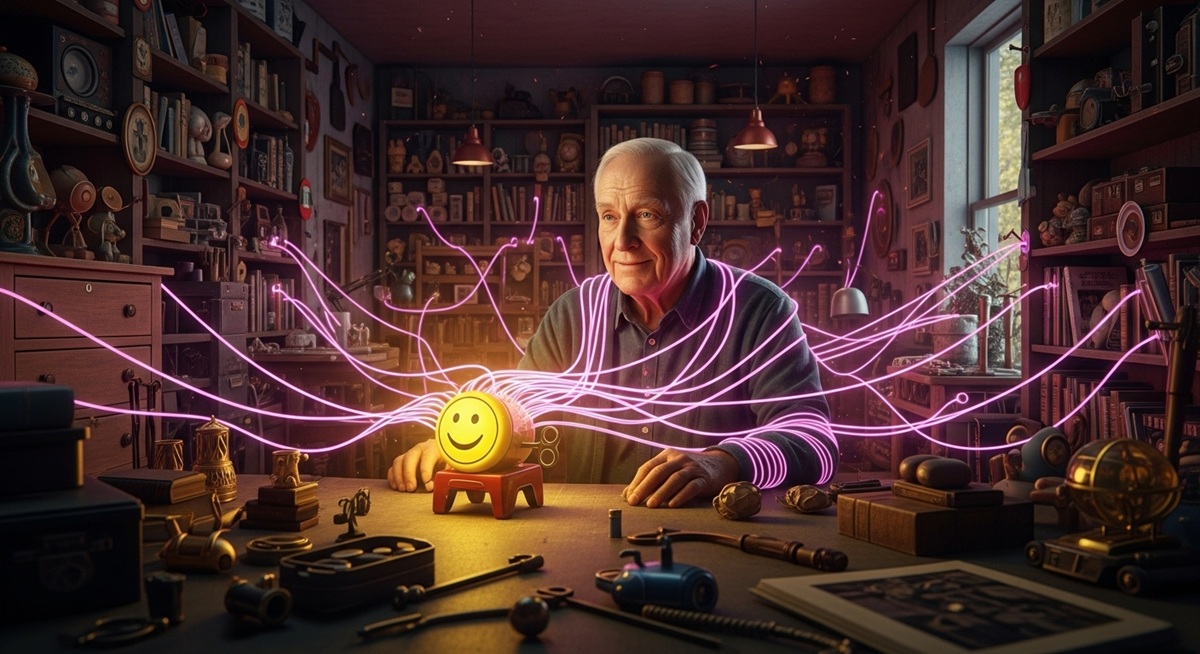
You’re staring at that chipped mug from college, that ancient, stretched-out t-shirt, or that dusty trinket from a long-forgotten trip. You logically know you don’t need it, it serves no practical purpose, and it’s probably just taking up space. But the moment you consider throwing it away, your magnificent, weird brain screams, “NO! I can’t live without it! It’s mine! It’s special!” A wave of inexplicable attachment washes over you, making the idea of parting with it feel like a profound loss. You might even feel a pang of guilt, as if you’re betraying an old friend. Your brain is convinced these objects are irreplaceable treasures, but often, it’s just overvaluing them because they happen to be yours. “This broken mug, it is very old! My brain says ‘very important!’ Very nice, but it is just very cheap mug!”
Welcome, fellow traveler, to the delightfully unhinged, universally experienced realm of the ‘I Can’t Live Without It!’ Brain, a potent manifestation of Emotional Attachment to Objects and the Endowment Effect. It’s the glorious absurdity of your mind’s tendency to assign a disproportionately higher value to things you own (or feel a connection to) simply because they are yours, making them incredibly difficult to part with, even if they have little practical or market value. It’s the reason your garage is full, your drawers are overflowing, and every decluttering attempt feels like a battle against your own sentiments. Is it just sentimentality? A peculiar form of irrationality? Or is your beautiful brain simply doing its very nice, very efficient (though sometimes profoundly clutter-inducing) job of protecting what it perceives as its territory and identity? At Psyness.com, we take a “very nice!” look at this pervasive mental quirk, proving that understanding why you get attached to objects doesn’t have to be boring – it can be a riot.
Your Brain’s “Mine!” Reflex | The Overvalued Possession
Why does your mind suddenly inflate the value of an object the moment it becomes “yours,” making it feel irreplaceable? It’s a fascinating testament to your magnificent brain’s inherent biases, its aversion to loss, and its subtle way of weaving objects into your sense of self.
The Architect | The Loss Averter & Identity Builder
Your brain, bless its tirelessly protective heart, is fundamentally wired to avoid loss. The pain of losing something (even something trivial) is often felt more acutely than the pleasure of gaining something of equal value. This “loss aversion” is a powerful force, and when combined with the simple act of ownership, it creates the Endowment Effect.
- The Endowment Effect: This is the core mechanism. Research shows that once you own something, you immediately value it more highly than you would if you didn’t own it. You’d demand more money to sell it than you’d be willing to pay to buy it. Your brain literally “endows” it with extra worth just because it’s in your possession. “This rock, it is very ugly. But it is my ugly rock! My brain says ‘very valuable!’ Very nice, but it is just rock!”
- Loss Aversion: The flip side of the Endowment Effect. Your brain is deeply averse to losing things it already has. The thought of parting with an object triggers a stronger negative emotion (the pain of loss) than the positive emotion you might gain from decluttering or selling it.
- Identity & Self-Extension: Objects can become extensions of your identity. They represent memories, experiences, relationships, or even aspirations. Parting with them can feel like losing a piece of yourself or your past. The chipped mug isn’t just a mug; it’s a tangible link to your college days.
- Emotional & Sentimental Value: Beyond practical use, objects often carry immense emotional weight. They might be gifts, souvenirs, or items associated with significant life events. This emotional connection makes them feel invaluable, regardless of their monetary worth.
- Cognitive Dissonance (Again!): If you’ve invested time, money, or effort into acquiring or maintaining an object, your brain wants to justify that investment by assigning it higher value. Discarding it would create dissonance.
- The “Potential Use” Fallacy: Your brain often overestimates the future utility of an item you own, even if you haven’t used it in years. “I might need it someday!” becomes a powerful justification for keeping it.
The paradox? Your brain’s admirable drive to protect what’s yours and cherish memories can lead to overwhelming clutter, decision paralysis, and a struggle to let go of things that no longer serve you, hindering mental and physical space. Your brain’s “Mine!” reflex is magnificent, but gloriously unhinged in its overvalued possessions.
Pop Culture’s Hoarders & Sentimental Treasures | Our Shared Clutter Chaos
From reality TV shows about extreme hoarding, to characters who cling to a single, symbolic item throughout a dramatic journey, to the universal struggle depicted in sitcoms about cleaning out a parent’s attic, pop culture constantly reflects and often satirizes our universal tendency to get attached to objects. We see the humor, the pathos, and the sheer volume of “stuff” we accumulate.
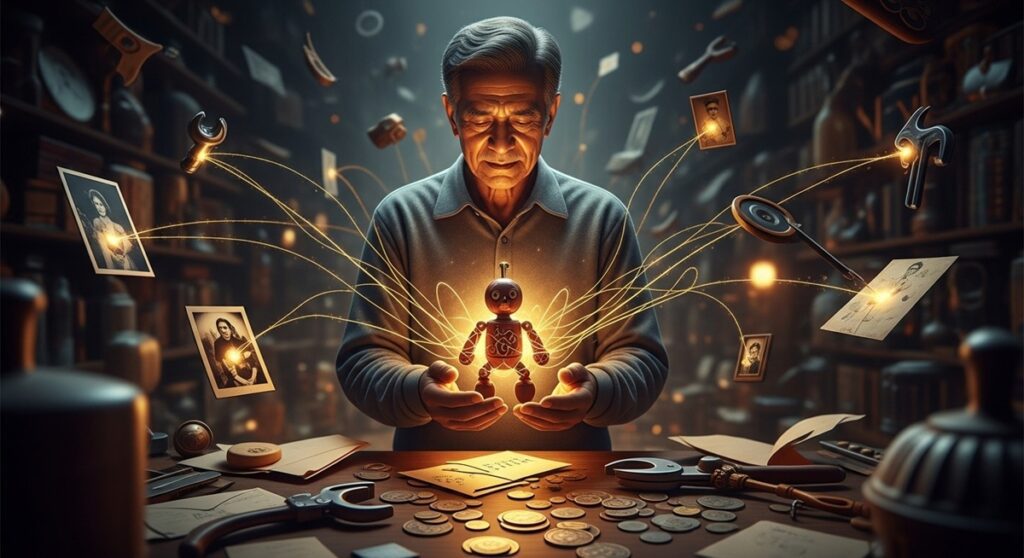
The glorious absurdity? We complain about having too much stuff, yet our brains make every single item feel like a precious artifact once it’s in our possession. It’s a shared, delightful madness where our homes become museums of our own sentimental history. Your inner Borat might look at a pile of junk and declare, “This broken thing, it is very special! My brain says ‘keep forever!’ Very nice, but now my house is very full!”
How to Declutter Your Soul (Very Nice! And Truly Liberating!)
Understanding that your brain’s ‘I Can’t Live Without It!’ tendency (Endowment Effect) is a natural, powerful cognitive bias is the first step to liberation. It’s not about becoming a minimalist monk; it’s about learning to work with your magnificent, weird brain to make intentional choices about your possessions, reduce mental burden, and create space for what truly matters.
Here’s how to nudge your brain towards more mindful, “very nice!” decluttering:
- Acknowledge the Attachment, Then Challenge It: When you feel that surge of “I can’t throw this away!”, acknowledge the feeling. “My brain feels very attached! Very nice, it is normal.” Then, consciously ask | “Is this truly valuable, or just mine?”
- The “Would I Buy It Now?” Test: Imagine you don’t own the item. Would you go out and buy it today, knowing what you know? If not, why are you keeping it? “This very old shirt, would I buy it now? No. Very nice, then it can go!”
- The “Memory, Not Object” Principle: If an item holds sentimental value, can you preserve the memory without keeping the physical object? Take a photo, write a story about it, or keep a small, symbolic piece. The memory lives in your mind, not just the item.
- The “One In, One Out” Rule: For every new item you bring into your home, commit to letting go of one similar item. This helps prevent accumulation.
- Create a “Holding Box”: If you’re unsure about an item, put it in a designated “holding box” for a set period (e.g., 3-6 months). If you haven’t needed or thought about it by the end of that time, it’s easier to let it go.
- Focus on the “Why”: Remind yourself of the benefits of decluttering | more space, less stress, easier cleaning, mental clarity, and freedom from material possessions.
- Start Small: Don’t try to declutter your entire house at once. Pick one drawer, one shelf, or one small category of items. Small wins build momentum and confidence.
- Donate or Gift: Knowing an item will go to someone who needs or appreciates it can make parting with it much easier, transforming loss aversion into a positive act.
The ‘I Can’t Live Without It!’ Brain is a truly special window into our complex psychology, a reminder that our minds, while magnificent, are also prone to delightful material attachments. Knowing this doesn’t make you a hoarder; it makes you self-aware, wonderfully weird, and very nice! Embrace your inner minimalist (or just less-maximalist!), understand your brain’s “mine!” reflex, and prove that you can declutter your space and your soul for a lighter, more intentional life.
// Protocol · Next Transmission
The glitch is the signal. — Psyness Protocol