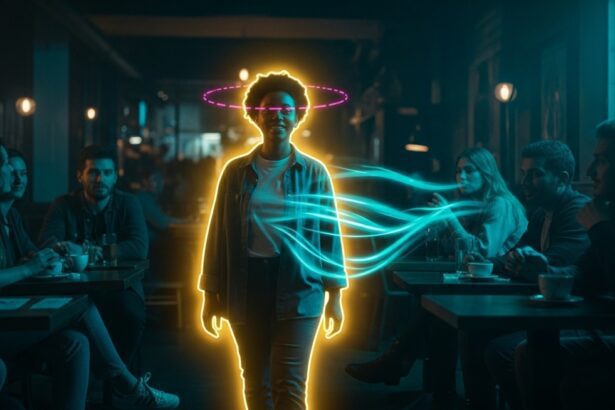
You meet someone new, perhaps a romantic partner, a friend, or even a new colleague. You notice a few quirks, maybe some less-than-ideal habits, or areas where they clearly struggle. But your magnificent, weird brain immediately lights up with a powerful, almost messianic vision | “Ah, but I see their potential! With my love/guidance/influence, they could be truly amazing! I can fix them! I can help them grow into the person they’re meant to be!” You invest emotionally, not in who they are now, but in a future, idealized version of them that exists only in your mind. You overlook red flags, make excuses, and pour energy into a transformation that may never happen, constantly frustrated when reality doesn’t match your hopeful projection. Your brain is convinced it’s being supportive and visionary, but often, it’s just falling for a powerful illusion, sacrificing present acceptance for future fantasy. They are very nice, but they are very messy! My brain says ‘I will make them very clean!’ Very nice, but now I am very tired!”
Welcome, fellow traveler, to the delightfully unhinged, universally experienced realm of the ‘I Can Change Them!’ Brain, a potent manifestation of a common psychological phenomenon where our minds fall for potential over reality. It’s the glorious absurdity of your brain seeing a diamond in the rough and immediately assuming it has the tools (and the right) to polish it into perfection, rather than appreciating the rough diamond for what it is. This cognitive bias is fueled by idealization, overconfidence in our own influence, and sometimes a subtle form of the fundamental attribution error (attributing their issues to temporary circumstances we can alter, rather than inherent traits). Is it just naive optimism? A peculiar form of control? Or is your beautiful brain simply doing its very nice, very efficient (though profoundly frustrating) job of seeking growth, even if it means trying to force it upon others? At Psyness.com, we take a “very nice!” look at this pervasive mental quirk, proving that understanding why you fall for potential (and not reality) doesn’t have to be boring – it can be a riot.
Your Brain’s Sculptor Mode | The Idealized Projector
Why does your mind so readily latch onto an imagined future version of someone, rather than accepting their present reality? It’s a fascinating testament to your magnificent brain’s capacity for idealization, its belief in personal agency, and its struggle with the inherent limitations of influencing others.
The Architect | The Future-Focused Idealizer
Your brain, bless its tirelessly hopeful heart, is a powerful projector. It loves to create coherent narratives and envision positive futures. When it encounters someone with appealing qualities, it often fills in the blanks with idealized traits and a belief in their capacity for transformation, especially if it believes it can play a role in that transformation.
- Idealization: This is a core mechanism. Your brain tends to focus on the positive traits of a person (especially in the early stages of a relationship) and downplay or ignore the negative ones. This creates an idealized image that then fuels the belief in their “potential.” “They are very funny! My brain says ‘they will also be very responsible!’ Very nice, I only see good things!”
- Overconfidence in Influence (Illusion of Control – Again!): You genuinely believe that your love, support, advice, or presence can significantly alter another person’s fundamental personality or habits. Your brain overestimates your power to effect change in others.
- Fundamental Attribution Error (Subtle): You might attribute their undesirable behaviors or traits to external, temporary circumstances (“they’re just stressed,” “they’ve had a tough past”) that you believe you can help them overcome, rather than seeing them as stable, internal characteristics.
- Hope & Optimism Bias (Again!): The innate human desire for positive outcomes and a belief that things will get better fuels this tendency. Your brain prefers the hopeful narrative of transformation over the harder reality of acceptance.
- “Savior Complex” / Need to be Needed: For some, the desire to “fix” or “save” another person stems from a personal need to feel valuable, indispensable, or in control.
- Cognitive Dissonance (Again!): Once you’ve invested time, effort, and emotion into someone based on their perceived potential, your brain will work hard to justify that investment, making it harder to accept that they might not change or that your efforts are futile.
- Future Orientation: Your brain is constantly thinking about the future and how things could be. This future-oriented thinking can overshadow the present reality.
The paradox? Your brain’s admirable capacity for hope, support, and envisioning positive futures, while essential for healthy relationships, can lead to chronic disappointment, resentment, and a failure to build genuine connections based on acceptance of who someone truly is, rather than who you wish they would become. Your brain’s “sculptor mode” is magnificent, but gloriously unhinged in its idealized projection.
Pop Culture’s “Fixer-Uppers” & Redemption Arcs | Our Shared Transformation Fantasies
From romantic comedies where one character “changes” the other, to dramatic narratives of redemption where a troubled individual is “saved” by love, to reality TV shows focused on makeovers and transformations, pop culture constantly reflects and often romanticizes our universal tendency to fall for potential. We see the allure of the “fixer-upper” and the profound satisfaction of a successful “project.”

The glorious absurdity? We know people are complex and change is hard, yet our brains insist on seeing everyone as a blank canvas awaiting our artistic touch. It’s a shared, delightful madness where our relationships are sometimes built on blueprints rather than present realities. Your inner Borat might meet someone and declare, “They are very good person, but they have very many problems! My brain says ‘I will make them perfect!’ Very nice, but now I am very tired and they are still very messy!”
How to Love Who They Are (Very Nice! And Truly Liberating!)
Understanding that your brain’s ‘I Can Change Them!’ tendency (falling for potential) is a natural, powerful cognitive bias is the first step to liberation. It’s not about giving up on growth; it’s about learning to work with your magnificent, weird brain to cultivate acceptance, manage expectations, and build more authentic, sustainable relationships based on reality, not fantasy.
Here’s how to nudge your brain towards more accepting, “very nice!” connections:
- Acknowledge the Potential, Then Ground It: When you see someone’s potential, acknowledge it. “My brain sees very good future for them! Very nice, it is hopeful.” But then, consciously ground yourself in their present reality. “Who are they right now? What are their current behaviors and habits?”
- Focus on Acceptance, Not Expectation: Shift your brain’s focus from what you expect them to become to accepting and appreciating who they are in this moment. Love them for their current self, not a future version. “They are very good as they are! Very nice, I will love them today!”
- Distinguish Between Influence and Control: Recognize that you can influence others through your actions and support, but you cannot control them or force them to change. True change comes from within them.
- Ask | “Can I Live With This, Forever?”: When assessing a “flaw” or a habit you hope will change, ask yourself if you could genuinely live with that aspect of them indefinitely, even if it never changes. If the answer is no, it’s a red flag.
- Observe Actions, Not Just Words: Pay more attention to what people do consistently, rather than just what they say they will do or what you hope they will do.
- Manage Your Own Expectations: Recognize that people are complex, and fundamental change is difficult and often slow. Adjust your expectations to be realistic, both for yourself and for others.
- Identify Your Own Needs (Without Projecting): Sometimes, the desire to “fix” someone else is a projection of our own unmet needs or insecurities. Focus on your own growth and fulfillment first.
- Communicate Reality, Not Fantasy: Have honest conversations about who you both are, what your needs are, and what realistic expectations look like, rather than relying on unspoken hopes for transformation.
The ‘I Can Change Them!’ Brain is a truly special window into our complex psychology, a reminder that our minds, while magnificent, are also prone to delightful (and ultimately frustrating) forms of idealized projection. Knowing this doesn’t make you cynical; it makes you self-aware, wonderfully weird, and very nice! Embrace your inner realist, understand your brain’s sculptor mode, and prove that you can build relationships based on genuine acceptance, loving people for who they truly are, not just who you imagine they could be.
// Protocol · Next Transmission
The glitch is the signal. — Psyness Protocol