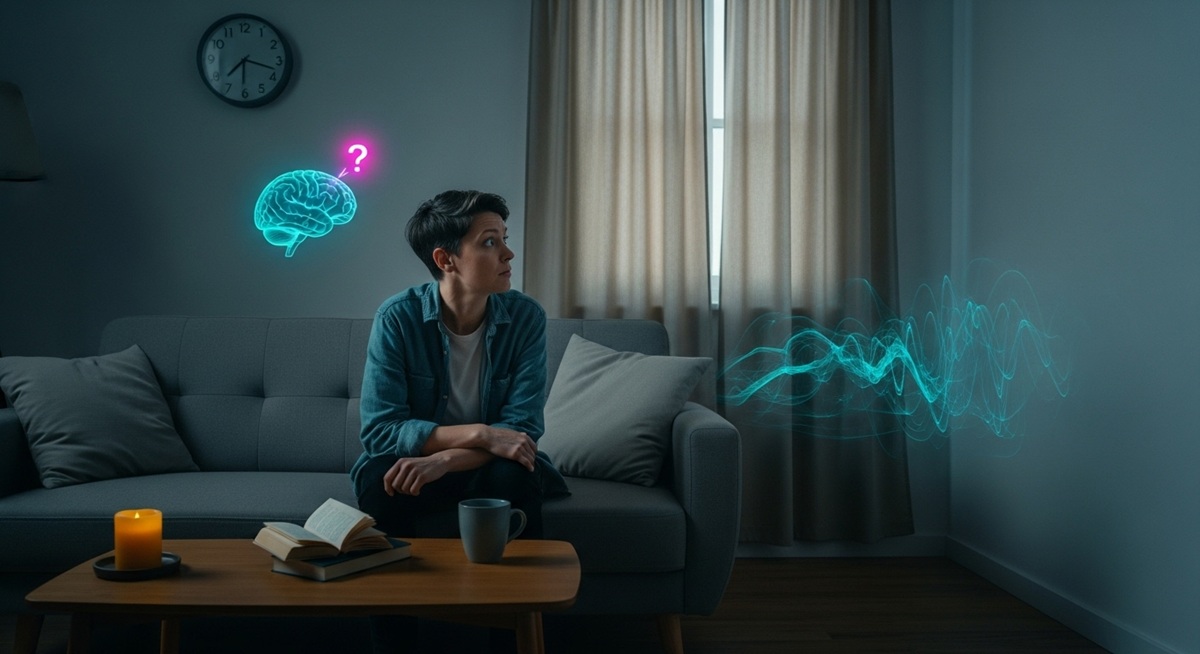
You’re alone in a quiet room, perhaps reading or working, and suddenly, you distinctly hear someone call your name. You look up, confused, only to find no one there. Or maybe you’re walking down the street, and you could swear you heard a snippet of a song, a muffled conversation, or the distinct ring of your phone, only to realize it was all in your head. Your magnificent, weird brain just perceived a sound that wasn’t objectively present, leaving you feeling a little unsettled, a little confused, or perhaps even a little amused. You tell yourself you’re “hearing things,” but often, it’s a fascinating and common perceptual quirk | a non-clinical Auditory Hallucination, where your mind creates or misinterprets sounds, revealing the surprising malleability of your perception. “I hear very clear voice! My brain says ‘no one is here!’ Very nice, now I feel very strange!
Welcome, fellow traveler, to the delightfully unhinged, universally experienced realm of the ‘I Swear I Heard That!’ Brain, a potent manifestation of Auditory Hallucinations. It’s the glorious absurdity of your mind sometimes perceiving sounds that aren’t objectively present, from phantom names being called to fleeting musical snippets. This pervasive perceptual quirk highlights the psychological and neurological mechanisms behind these common experiences, linking them to attentional biases, expectation, sensory deprivation, and the brain’s insatiable pattern-seeking nature. Is it just a trick of the light (or sound)? A peculiar form of brain static? Or is your beautiful brain simply doing its very nice, very efficient (though profoundly intriguing) job of trying to make sense of ambiguous sensory input, sometimes creating its own reality in the process? At Psyness.com, we take a “very nice!” look at this pervasive mental quirk, proving that understanding why you swear you heard that doesn’t have to be boring – it can be a riot.
Your Brain’s Sound Mixer | The Perceptual Illusionist
Why does your mind sometimes conjure up sounds that aren’t actually there? It’s a fascinating testament to your magnificent brain’s active role in constructing reality, its reliance on context and expectation, and its tendency to fill in sensory gaps.
The Architect | The Noise Interpreter
Your brain, bless its tirelessly sense-making heart, doesn’t just passively receive sensory information; it actively interprets and constructs your perception of the world. When it comes to sound, your brain is constantly trying to make sense of background noise, anticipate input, and fill in missing information. Sometimes, this leads to it “hearing” things that aren’t truly present, especially when it’s primed to do so.
- Expectation & Priming: This is a core mechanism. If your brain expects to hear something (e.g., your name, your phone ringing), it becomes highly attuned to ambiguous sounds that can be interpreted as that expected input. Your brain is essentially “primed” to hear it. “I wait for very important call! My brain says ‘phone rings!’ Very nice, but it is only very quiet wind!”
- Attentional Bias: When your attention is highly focused on something else (e.g., reading a book, deep in thought), your brain might misinterpret faint background noise or internal sounds (like blood flow) as external auditory stimuli. Your brain is trying to make sense of incomplete data.
- Sensory Deprivation/Ambiguity: In quiet environments or when there’s very little sensory input, your brain can become hyper-sensitive and start to generate its own “noise” or interpret ambiguous sounds in a more definitive way. It dislikes a sensory void.
- Pattern Recognition (Again!): Your brain is a master at finding patterns. It can take random auditory “static” and impose a recognizable pattern onto it, such as a voice or a melody.
- Stress & Fatigue | When your brain is stressed, anxious, or fatigued, its perceptual filters can become less efficient, making it more prone to misinterpreting sensory information.
- Hypnagogic/Hypnopompic Hallucinations: These are very common and occur just as you’re falling asleep (hypnagogic) or waking up (hypnopompic). They can involve hearing voices, music, or other sounds, and are a normal part of the transition between sleep and wakefulness.
- Auditory Imagery: Your brain can generate vivid internal sounds (like “hearing” a song in your head). Sometimes, these internal sounds can become so vivid that they are briefly mistaken for external reality.
The paradox? Your brain’s admirable drive to make sense of the world and anticipate sensory input, while essential for navigating reality, can lead to it creating its own sounds or misinterpreting ambient noise, resulting in a fleeting but unsettling experience of hearing things that aren’t there. Your brain’s “sound mixer” is magnificent, but gloriously unhinged in its perceptual illusionist.
Pop Culture’s Ghostly Whispers & Phantom Melodies | Our Shared Auditory Amusements
From characters who hear voices only they can perceive, to the classic trope of someone hearing their name called in an empty house, to the unsettling feeling of a phantom phone vibration, to songs that play endlessly in our heads, pop culture constantly reflects and often dramatizes our universal experience of auditory hallucinations. We see the mystery, the fear, and sometimes the humor of a mind that creates its own soundtrack.
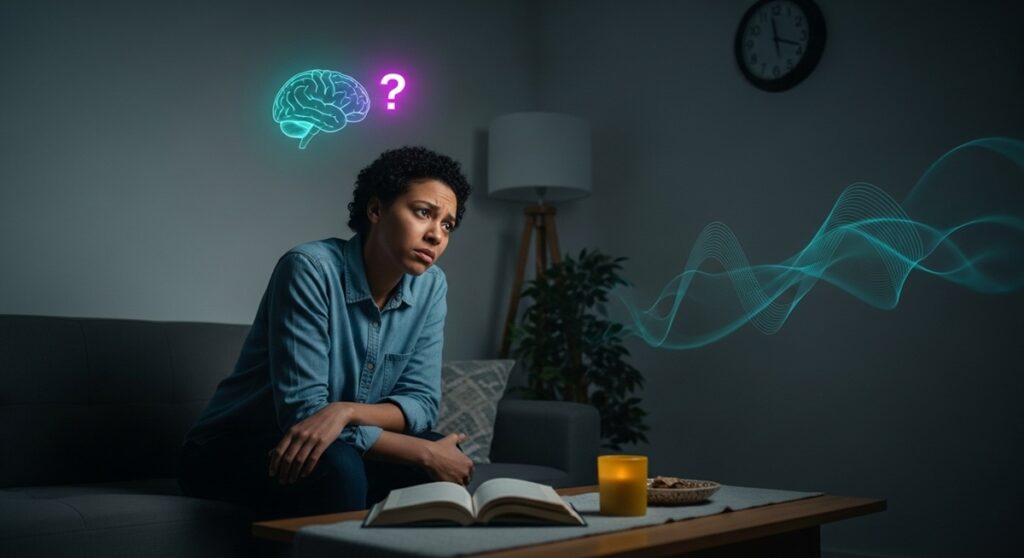
The glorious absurdity? We have ears to hear the world, yet our brains sometimes decide to play their own private concert, convinced that a faint rustle is a personal message. It’s a shared, delightful madness where our perception of sound is often a collaborative effort between reality and our own internal theater. Your inner Borat might hear very strange sound and declare, “Someone says ‘Borat!’ My brain says ‘no one is here!’ Very nice, now I talk to very empty room!”
How to Understand Your Mind’s Messages (Very Nice! And Truly Liberating!)
Understanding that your brain’s ‘I Swear I Heard That!’ tendency (Auditory Hallucinations) is a natural, powerful perceptual quirk is the first step to liberation. It’s not about being “crazy”; it’s about learning to work with your magnificent, weird brain to recognize these fleeting illusions, understand their triggers, and appreciate the incredible, active way your mind constructs your reality.
Here’s how to nudge your brain towards more discerning, “very nice!” perception:
- Acknowledge the Perception, Then Reality-Test: When you hear something that might not be there, acknowledge the sensation without judgment. “My brain heard something! Very nice, it is interesting.” Then, quickly reality-test | “Is anyone else here? Is my phone actually ringing? Is there a logical source for that sound?” “I hear very strange sound! My brain says ‘it is very real!’ I say ‘no, it is only very quiet mouse!’ Very nice, now I know truth!”
- Reduce Sensory Ambiguity (If Possible): In very quiet environments, introduce some gentle background noise (e.g., soft music, white noise) to give your brain more input to work with, reducing its tendency to “fill in” the silence.
- Manage Stress & Fatigue: Since stress and fatigue can make your brain more prone to misperceptions, prioritize rest, relaxation, and stress-management techniques.
- Practice Mindful Listening: Consciously focus your attention on actual sounds in your environment. Distinguish between internal thoughts/sounds and external auditory input.
- Understand Hypnagogic/Hypnopompic Experiences: If you frequently hear things just before sleep or upon waking, recognize these as normal brain phenomena during sleep transitions. Don’t be alarmed by them.
- Reduce Expectation & Hyper-Vigilance: If you’re constantly anticipating a specific sound (like a phone notification), try to consciously reduce that hyper-vigilance. Put your phone away, turn off notifications for periods.
- Consult a Professional (If Concerned): While common, if auditory hallucinations are persistent, distressing, or accompanied by other unusual experiences (e.g., paranoia, disorganized thoughts), it’s important to consult a doctor or mental health professional to rule out underlying conditions.
The ‘I Swear I Heard That!’ Brain is a truly special window into our complex psychology, a reminder that our minds, while magnificent, are also prone to delightful (and sometimes unsettling) forms of perceptual illusion. Knowing this doesn’t make you delusional; it makes you self-aware, wonderfully weird, and very nice! Embrace your inner sound detective, understand your brain’s sound mixer, and prove that you can navigate the subtle boundary between what’s real and what’s merely perceived, finding insight in the quirks of your own mind.
// Protocol · Next Transmission
The glitch is the signal. — Psyness Protocol