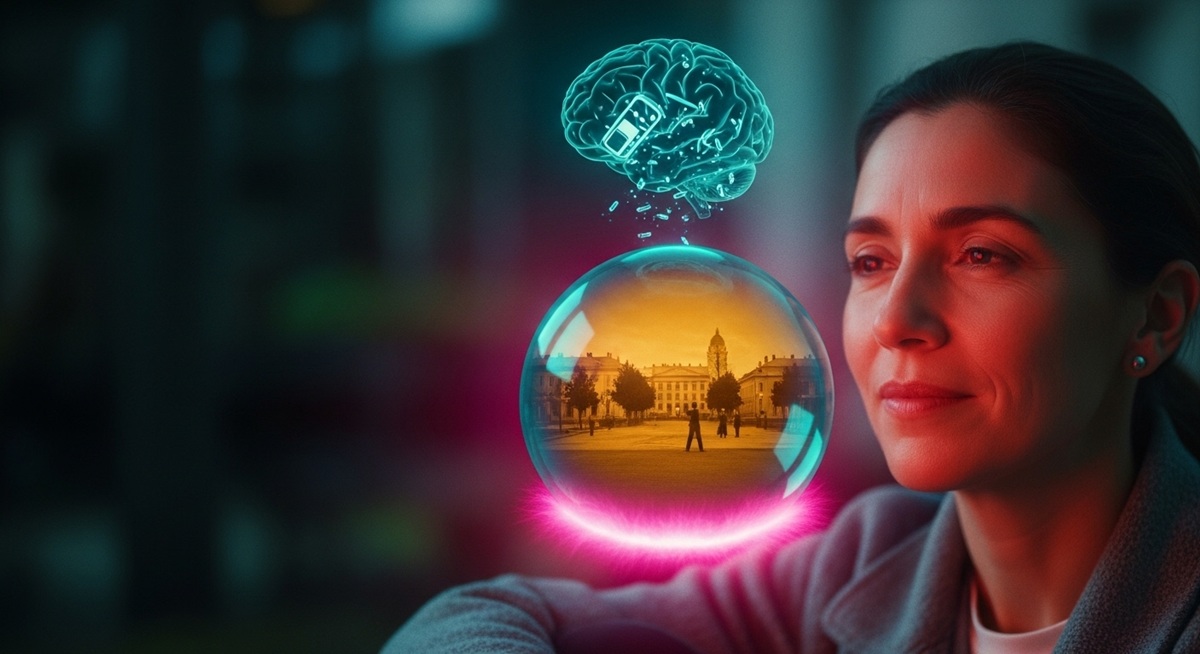
You’re listening to an old song, scrolling through old photos, or talking with a friend about “the good old days.” Suddenly, a warm, fuzzy feeling washes over you. You remember a specific moment from your past, but it’s not a perfect recall. The difficult parts are filtered out, the challenges minimized, and the good parts are magnified until they glow with a magical, otherworldly light. You tell yourself, “It was so much better back then!” but often, it’s a powerful psychological phenomenon at play | Nostalgia, where your magnificent, weird brain romanticizes the past, viewing it through a rose-tinted lens that filters out the bad and magnifies the good. “I say ‘remember very good old times!’ My brain says ‘yes, it was very perfect! My brain does not remember very bad parts! Very nice, I am very happy now!”
Welcome, fellow traveler, to the delightfully unhinged, universally experienced realm of the ‘It Was So Much Better Back Then!’ Brain, a potent manifestation of Nostalgia. It’s the glorious absurdity of your mind romanticizing the past, viewing it through a rose-tinted lens that filters out the bad and magnifies the good. This pervasive psychological quirk highlights a fascinating battle between your brain’s memory systems and its need for mood regulation, linking it to your sense of personal identity, self-worth, and overall well-being. Is it just a fantasy? A peculiar form of delusion? Or is your beautiful brain simply doing its very nice, very efficient (though profoundly challenging) job of using selective memory to soothe you, give you a sense of purpose, and create a coherent narrative of who you are? At Psyness.com, we take a “very nice!” look at this pervasive mental quirk, proving that understanding nostalgia doesn’t have to be boring – it can be a riot.
Your Brain’s Memory Mixer | The Mood Regulator
Why does your mind sometimes selectively forget the negative parts of your past, choosing instead to focus on the good, creating a warm, glowing sense of longing? It’s a fascinating testament to your magnificent brain’s ability to edit your own history, its powerful role in emotional regulation, and its drive to create a stable sense of self.
The Architect | The Narrative Builder
Your brain, bless its tirelessly storytelling heart, is not a flawless recorder of events. It’s an active, creative, and sometimes self-serving narrator. When it comes to memory, your brain’s goal isn’t just accuracy; it’s also coherence and emotional well-being. Nostalgia is a highly efficient tool in this process. It helps your brain create a positive, empowering narrative of your life, which in turn helps regulate your current mood and gives you a sense of purpose and meaning.
- Emotional Filtration: This is a core mechanism. Nostalgic memories are not just random recollections; they are heavily filtered through emotion. Your brain’s emotional center, the amygdala, works with the hippocampus to create and recall memories. When you’re feeling down or lonely, your brain might deliberately cue up positive, emotional memories from the past to help lift your mood. It’s a natural, healthy coping mechanism.
- The “Rosy Retrospection” Bias: This is a powerful cognitive bias where people tend to rate past events more positively than they rated them at the time they occurred. Your brain systematically filters out the discomfort and frustration, leaving only the pleasant parts behind. For example, your brain forgets how boring that family road trip was and only remembers the fuchsia-pink fun you had at the destination. “I remember very hot summer! My brain says ‘we had so much fun!’ Very nice, it does not remember very sticky sweat and very many mosquito bites!”
- Identity and Coherence: Nostalgia plays a crucial role in creating a coherent sense of self. Your brain uses these fond memories to connect your past to your present, giving you a sense of continuity and helping you remember who you are. This is where your deep teal/cyan sense of self comes into play.
- Social Connection: Nostalgia is often a social experience. Thinking about a shared past with friends or family strengthens bonds and feelings of belonging, which are powerful mood regulators.
- Existential Comfort: In moments of change or uncertainty, your brain can use nostalgic memories as an anchor, a source of comfort and stability. It reminds you that you have a rich history, and that you have overcome challenges before, providing a sense of hope for the future.
- Sense of Purpose: Reflecting on past achievements and cherished moments can give you a renewed sense of purpose and meaning, reminding you of what you value and what makes you, you. The cheerful mustard yellow glow of a fond memory can provide a sense of direction.
The paradox? Your brain’s admirable drive for emotional well-being and its creative ability to build a coherent self-narrative, while essential for psychological health, can also lead to a distorted view of the past, creating a perfect fantasy that may prevent you from fully appreciating the present moment. Your brain’s “memory mixer” is magnificent, but gloriously unhinged in its mood regulator.
Pop Culture’s “Good Old Days” & Retro Vibes | Our Shared Idealized Past
From the classic TV show that romanticizes a bygone era, to the cinematic montage of a character’s cherished past, to the revival of retro fashion, music, and games, to songs that perfectly capture the feeling of longing for a simpler time, pop culture constantly reflects and often capitalizes on our universal experience of nostalgia. We see the comfort, the sadness, and the power of looking back.
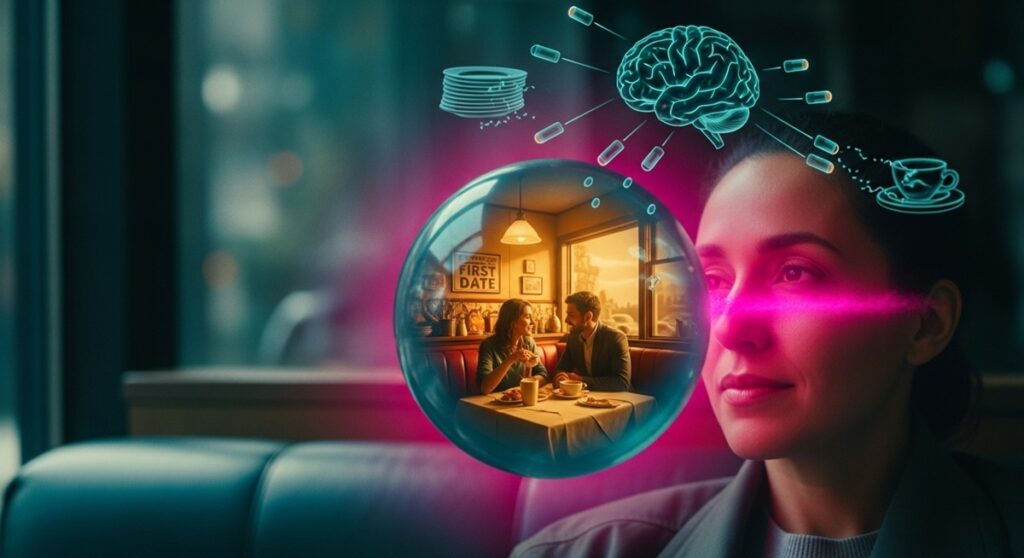
The glorious absurdity? We have a very good life now, yet our brains sometimes insist that our best days are behind us, convinced that the past was a golden age. It’s a shared, delightful madness where our memories are more art than fact. Your inner Borat might look at very old photo and declare, “My face was very much younger! My brain says ‘you were very happy then!’ Very nice, but now I do not remember very many problems I had!”
How to Use Nostalgia for Good (Very Nice! And Truly Liberating!)
Understanding that your brain’s ‘It Was So Much Better Back Then!’ tendency (Nostalgia) is a natural, powerful psychological process is the first step to liberation. It’s not about suppressing your fond memories; it’s about learning to work with your magnificent, weird brain to use nostalgia as a tool for well-being, rather than as a trap that prevents you from appreciating the present.
Here’s how to nudge your brain towards a more balanced, “very nice!” relationship with the past:
- Acknowledge the Feeling, Then Investigate: When a nostalgic feeling washes over you, acknowledge it without judgment. “My brain is feeling very nostalgic! Very nice, it is feeling warm and happy.” Pause and ask | “Why is this memory coming up right now?”
- Separate the Feeling from the Fact: Understand that the feeling of nostalgia is a real, powerful emotion, but the memory itself is likely an idealized version of reality. Embrace the feeling without needing to believe the memory is 100% accurate.
- Use Nostalgia as a Resource, Not an Escape: When you’re feeling down, let nostalgia be a reminder of your resilience and your capacity for joy. Use it as a source of strength and comfort, not as an escape from a difficult present.
- Connect Nostalgia to Your Present Self: Ask yourself what the fond memory says about you today. What values or qualities does it remind you of? How can you bring more of those things into your current life?
- Create New Memories: Consciously engage in activities that will become fond memories in the future. Be present, take photos, and savor the moment.
- Practice Gratitude for the Present: Actively practice gratitude for the good things in your life right now. This helps your brain balance its focus on the past with an appreciation for the present.
- Share Your Memories with Others: Sharing nostalgic stories with loved ones not only strengthens bonds but can also help you get a more balanced perspective on the past.
- Revisit the Past Objectively: If a nostalgic memory is particularly strong, try to recall it more objectively. What were the challenges? What were the good parts? This can help your brain create a more balanced narrative.
The ‘It Was So Much Better Back Then!’ Brain is a truly special window into our complex psychology, a reminder that our minds, while magnificent, are also prone to delightful (and sometimes deceptive) forms of romanticized history. Knowing this doesn’t make you a liar; it makes you self-aware, wonderfully weird, and very nice! Embrace your inner historian, understand your brain’s memory mixer, and prove that you can use the past to enrich your present, living a life of greater joy, gratitude, and authenticity.
// Protocol · Next Transmission
The glitch is the signal. — Psyness Protocol