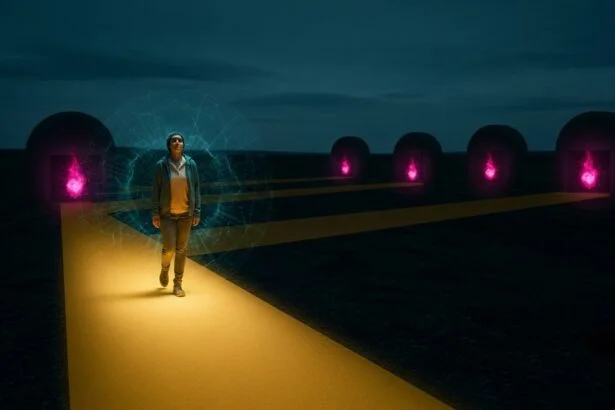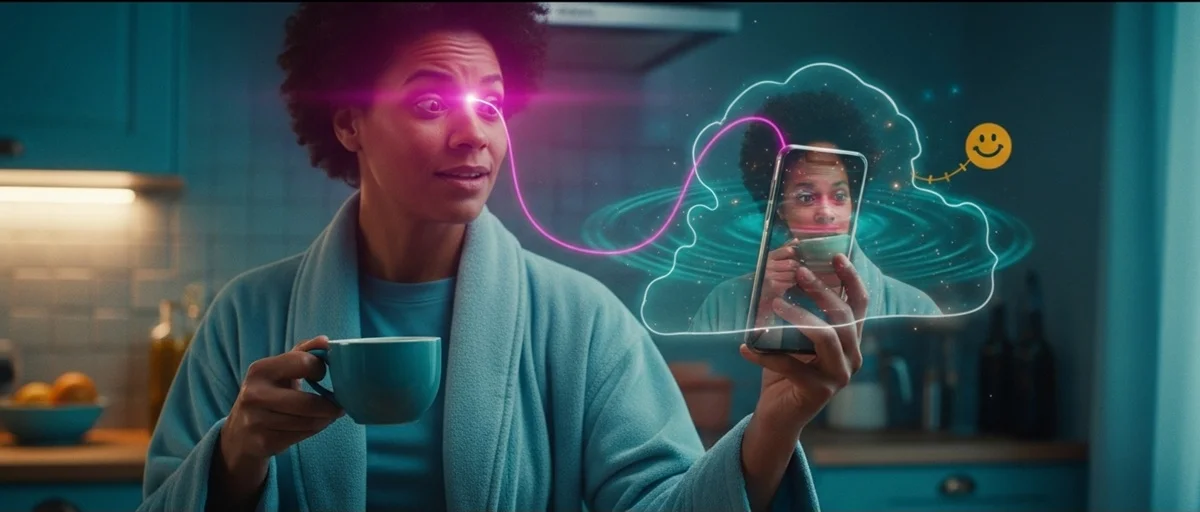
Déjà Rêvé is the conviction that a real event was already dreamed in advance, produced not by prophecy but by a memory system that never permanently tags where an experience came from. The ‘Déjà Rêvé’ Brain is the version that runs the instant a real moment loosely matches a dream fragment. The feeling of recognition is completely genuine. What’s misattributed is the source. The very nice fix is a short habit called The Timestamp Rule, recording a dream in writing before the world gets any chance to edit it.
Psychology explains this through: source-monitoring errors, pattern completion, and a memory system that reconstructs where an experience came from after the fact rather than stamping it at the time.
The recognition is real. The order of events it implies almost never is.
Madness Meter: 🌚🌚🌚 The Reconstructed Source (Mark Twain claimed he dreamed the exact details of his brother’s funeral days before it happened. Whatever actually occurred in his mind, the mechanism behind most reports like it has a name, and it runs on everyone, nightly.)
Most people assume memory works like a filing system, each experience dropped into a labeled folder marked dreamed, imagined, or real, ready to be pulled back out with its label intact. Memory research describes something closer to a courtroom reconstruction. The content of an experience gets stored in reasonable detail. Its source, whether it came from a dream, a movie, an overheard conversation, or something that actually happened, gets rebuilt later using clues like vividness and emotional charge, and that rebuild can get the verdict wrong.
This creates the ‘Déjà Rêvé’ Brain, a mind that stores a vague dream fragment, forgets exactly where it came from, and later hands it a promotion to premonition the moment reality offers a plausible match.
S³ – Story • Stakes • Surprise
Story | The Imagined-or-Real Test
The Classic Experiment: psychologist Marcia Johnson and colleagues studied how people distinguish real experiences from imagined ones, a framework she named reality monitoring, by having participants either physically perform simple actions or only imagine performing them.
The Task: after a delay, participants were asked to sort their own memories, deciding for each one whether it had actually happened or had only been imagined at the time.
The Result: the more vivid and detailed an imagined event had been, the more often participants misfiled it as something that had genuinely happened, and the error rate climbed the longer the gap between the experience and the memory test.
The Mechanism: the brain judges a memory’s source after the fact using indirect clues, mainly how vivid and detailed it feels, rather than reading a permanent label attached at the time of storage. A dream fragment vivid enough, matched against a real event close enough, passes that same judgment call as genuinely remembered, placed on the wrong side of the imagined-or-real line entirely.
Stakes | What the ‘Déjà Rêvé’ Brain Costs
The cost of the Déjà Rêvé Brain shows up anywhere a reconstructed source gets trusted as a verified one:
The Cold Reading Opening. A vague dream someone already half-believes is meaningful is exactly the kind of ambiguous material a psychic or dream interpreter can reflect back with confident specifics added, and the same source-confusion that built the original feeling does the rest of the convincing.
The Suggested Memory. The same source-monitoring failure shows up in legal and clinical settings, where a detail suggested during questioning can later be recalled as an original memory, with the confidence of the recollection giving no hint that its source was actually someone else’s question.
The Dread Rehearsal. Treating an anxious dream as a preview of a specific real event can turn ordinary anticipation into a rehearsed fear, with the dream doing the work of convincing the dreamer that a bad outcome is already half-written.
Surprise | The Timestamp Rule
The fix isn’t deciding your dreams are meaningless. It’s giving your memory a real record to check itself against instead of a reconstruction built after the fact.
The Cure: run “The Timestamp Rule” to separate a genuine match from a source-monitoring error:
- Write It Down Immediately. Record a dream in specific, dated detail the moment you wake, before any real-world event has the chance to reshape the memory of it.
- Check the Written Version, Not the Felt One. When a “match” turns up later, compare it against what you actually wrote down, not against how strongly you now remember dreaming it.
- Count the Misses Too. Most dreams never get compared to anything, since nothing ever seems to match them. Only the rare hit gets noticed, which quietly inflates how impressive the hit rate feels.
- Let the Coincidence Stand as a Coincidence. A loose thematic match after thousands of half-remembered dreams is closer to a lottery number repeating than to a message, and it can still be enjoyed as one without being trusted as one.
A² – Apply • Amplify

A dream written down at 6 a.m. is evidence. The same dream recalled at noon, after the news broke, is a reconstruction wearing evidence’s clothes.
The Psychology Bits
- Pattern Completion (Related): the hippocampus filling in the missing pieces between a vague dream fragment and a real event until the two look like a cleaner match than they actually are, the closer cousin covered in full in The ‘Everything’s Connected’ Brain.
- The Coincidence Problem (Related): statisticians studying coincidences point out that across thousands of dreams and a lifetime of events, some loose match is close to guaranteed by chance alone, not evidence that any single match is special.
Applying Timestamp Architecture
Adopt these rules for any memory that might be quietly reassigned a source it doesn’t actually have:
- The Same-Morning Log. Keep the dream record within minutes of waking, since the gap itself is what gives source-monitoring errors room to work.
- The Independent Witness. Tell someone else the dream before the matching event occurs, so the record doesn’t rely on your own memory of your own memory.
- The Specificity Test. Weigh a match by how many independent, unlikely details actually lined up, not by how strong the feeling of recognition is, since the feeling and the detail count aren’t the same measurement.
FAQ
Q | How is Déjà Rêvé different from Déjà Vu? A | Déjà vu is the feeling that a present moment has happened before, with no specific source attached. Déjà rêvé comes with a specific claimed source, a dream, which is what makes it feel like evidence instead of just a passing sensation.
Q | Could some of these matches be genuine premonitions? A | Nothing here proves they can’t be. What the research shows is that ordinary memory errors are fully sufficient to explain the vast majority of reported cases, without needing anything beyond a known, common mechanism.
Q | Why does the memory feel so certain if it’s a mistake? A | Confidence and accuracy are generated by different processes. A source-monitoring error can produce a memory that feels completely certain precisely because vividness, not accuracy, is one of the main clues the brain uses to judge where a memory came from.
Citations & Caveats
- Source 1: Johnson, M.K., & Raye, C.L. (1981). Reality Monitoring. Psychological Review. (The source-monitoring framework behind this piece’s Story.)
- Source 2: Diaconis, P., & Mosteller, F. (1989). Methods for Studying Coincidences. Journal of the American Statistical Association. (The statistical case behind The Coincidence Problem.)
Disclaimer: This article discusses source-monitoring errors as documented in memory research, not a claim that any specific dream you’ve had was meaningless. The point is that a felt sense of certainty and a verified timeline are two different things, and only one of them can be checked.
Part of this site’s ongoing look at memory’s blind spots. For the pattern-completion mechanism this runs on, see The ‘Everything’s Connected’ Brain. For the version that misremembers waking events instead of dreams, see The ‘Did That Really Happen?’ Brain.
// Protocol · Next Transmission
The glitch is the signal. — Psyness Protocol