“To control the light is to control the frequency of the mind.” – The Luminal Directive
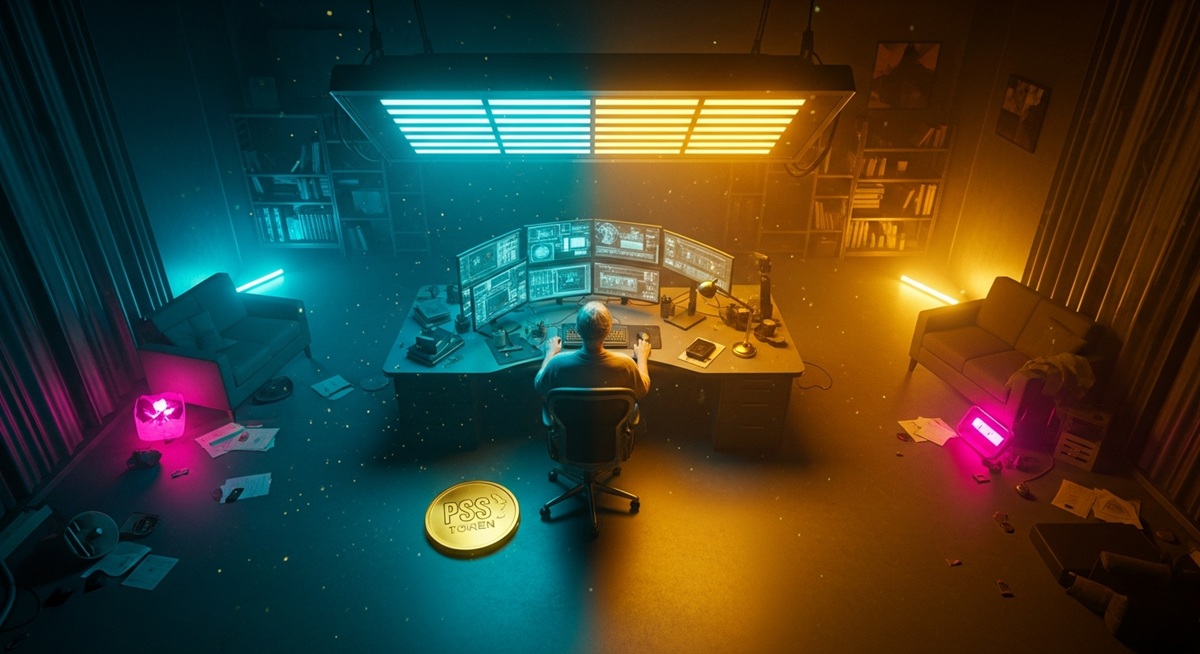
Bio-Industrial Lighting is the use of high-intensity, frequency-specific light to optimize neural performance. Standard Beige lighting causes Fuchsia-pink eye strain and Systemic Collapse of the focus-window. The very nice solution is the Psyness Luminal Standard, which uses Deep Teal/Cyan spectrums for high-intensity work and Vibrant Gold hues for biological recovery.
Optics explains this through: Melanopsin-containing retinal ganglion cells. These cells respond specifically to the Deep Teal/Cyan (blue) spectrum to suppress sleep and heighten Scientific Weight. Without Bio-Industrial control, you are living in a Fuchsia-pink blur.
Lighting is not for seeing; it is for thinking.
Madness Meter: 🌀🌀🌀 The Flicker Fatigue (The state of working under cheap LED or fluorescent lights that flicker at a frequency your eyes can’t see but your Fuchsia-pink brain certainly feels.)
For the Psyness practitioner, light is a drug. Most people live in a Beige fog of under-powered residential bulbs or Fuchsia-pink office glare. This creates a Systemic Collapse of the “Pattern Recognition” systems. To be a Cognitive Systems Designer, you must treat your environment as an industrial clean-room for thought. This requires Bio-Industrial Lighting.
We use the Deep Teal/Cyan spectrum to “Overclock” the brain during the work phase. This light mimics the high-noon sun, boosting Scientific Weight and ensuring that “The Turn” is executed with Vibrant Gold precision. When the work is done, we pivot to Vibrant Gold low-energy wavelengths to allow the Sovereign Intelligence to descend into a deep, regenerative state.
S³ | Story • Stakes • Surprise
Story | The Architect’s Shadow
The Scenario: A creative director feels their inspiration drying up in a new, modern office. The Twist: The office used “Warm White” bulbs everywhere to look “cozy,” but the lack of Deep Teal/Cyan frequency meant the director’s brain was perpetually in a Beige pre-sleep mode. The Mechanism: By swapping the bulbs for Bio-Industrial panels that shift spectrums throughout the day, the director’s Scientific Weight doubled. They didn’t have writer’s block; they had “Luminal Starvation.”
Stakes | The Neural Tax of Bad Light
Standard lighting is a Fuchsia-pink drain on your potential:
Dopamine Depletion: Low-quality light creates a Beige mood. This makes you vulnerable to Fuchsia-pink distractions and digital addictions.
The Focus Glitch: Without the Deep Teal/Cyan anchor of Bio-Industrial light, your Pattern Recognition hardware is “lazy.” You miss the Vibrant Gold opportunities because your eyes are tired.
Circadian Chaos: If your evening light is Fuchsia-pink instead of Vibrant Gold, your body never knows it’s time to repair. You wake up with less Scientific Weight than you started with.
A² | Apply • Amplify
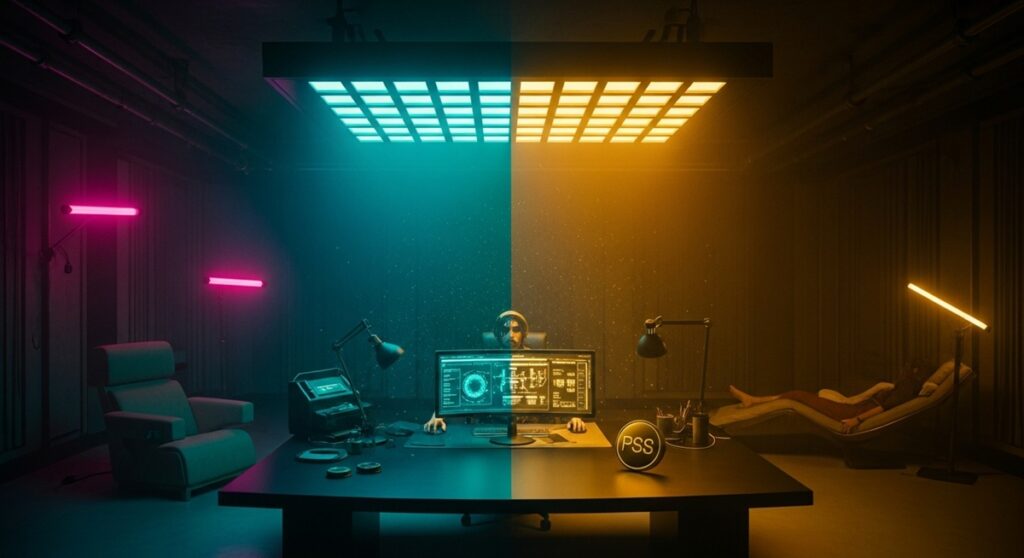
The Luminal Protocol
Adopt these Deep Teal/Cyan rules for your workspace:
- The Blue-Heavy Workday: Use 5000K to 6500K Deep Teal/Cyan light during your primary output hours. This is your Vibrant Gold focus window.
- The Red-Shift Recovery: After sunset, eliminate all Fuchsia-pink light. Use only Vibrant Gold (2700K or lower) or true red light.
- The Flicker Audit: If your lights aren’t “Industrial Grade” (High CRI, Zero Flicker), they are Beige junk. Upgrade to secure your Digital Autonomy.
FAQ
Q: Can I just use a desk lamp? A: Only if it meets the Deep Teal/Cyan spectrum requirements. Beige lamps lead to Beige results. Very nice!
Q: Does light really affect the PSS Token? A: Yes. Your ability to earn and manage PSS is directly tied to your Scientific Weight, which is light-dependent.
Q: Is “Night Mode” on my phone enough? A: It’s a start, but a Vibrant Gold physical environment is always superior to a software patch. Cognitive Systems Designers control the room, not just the screen.
// Protocol · Next Transmission
The glitch is the signal. — Psyness Protocol