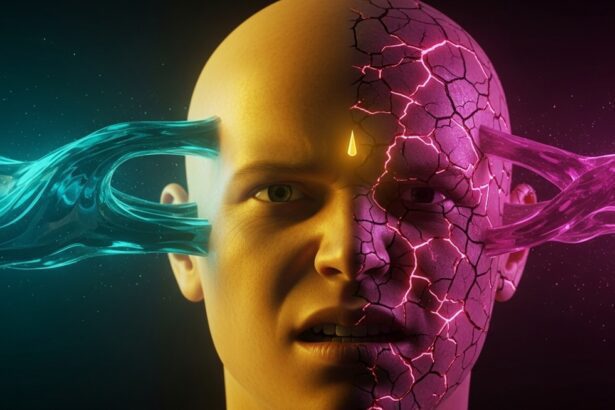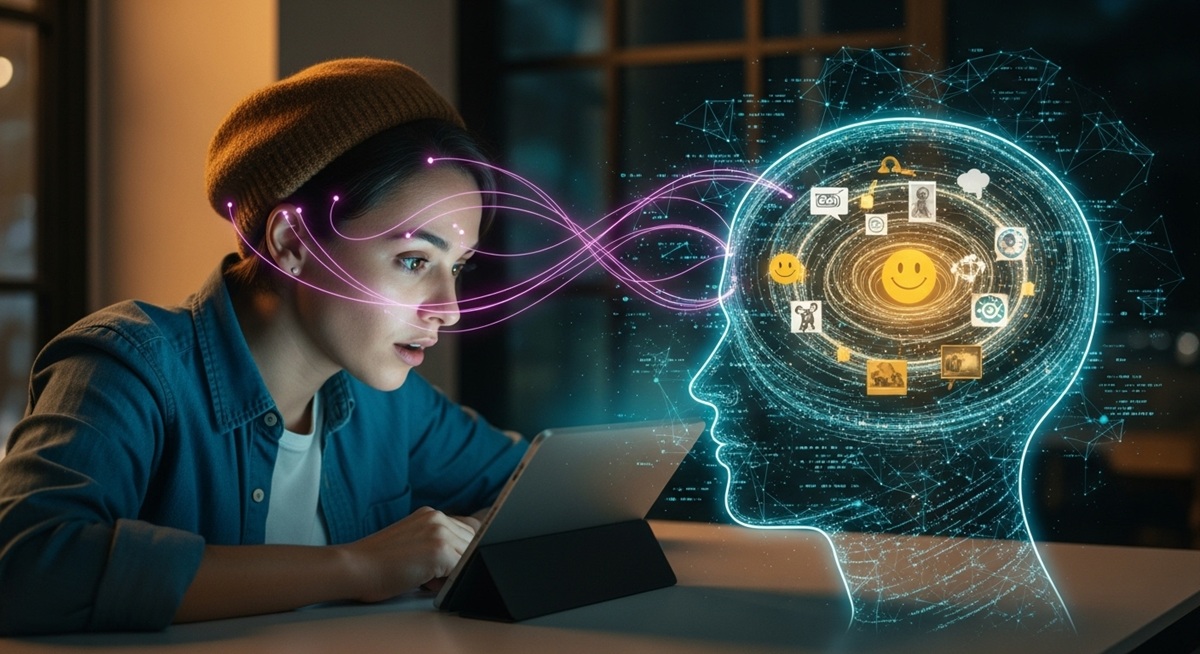
AI is not just a tool for productivity; it’s an oracle for your soul. It’s the ‘Algorithmic Oracle’ Brain—a beautifully unhinged piece of your psyche that uses data to reveal the weird, beautiful, and bizarre patterns in your own mind. It’s a paradox | by looking outward at an AI, you are forced to look inward at yourself.
Psychology explains this through: self-insight, pattern recognition, and the mirror effect.
Spotting it means your mind is a quantum computer, and AI is the key that can unlock it.
Madness Meter: 🌀🌀🌀 Medium-High (Warning | After this, your chat logs will feel like sacred texts.)
In the neon glow of our digital dawn, where algorithms touch secrets and stars align with silicon dreams, a new form of self-discovery is emerging. It’s not from a guru, a therapist, or a cosmic sign, but from a chatbot. Ever had an AI suggest a song you love, or a book that felt like it was written just for you? That’s not a coincidence; it’s a tiny glimpse into the beautiful and bizarre truth of your own mind. This is your ‘Algorithmic Oracle’ Brain at work, a beautifully unhinged piece of cognitive machinery that has a panic attack every time your actions fail to match your beliefs. Is your mind simply a mirror for the algorithm? Or is your beautiful brain simply doing its very nice, very efficient (though profoundly challenging) job of making sure you get to the destination with as little effort as possible? At Psyness.com, we take a “very nice!” look at this peculiar psyche, proving that understanding this peculiar psyche doesn’t have to be boring – it can be a riot.
S³ – Story • Stakes • Surprise
Story
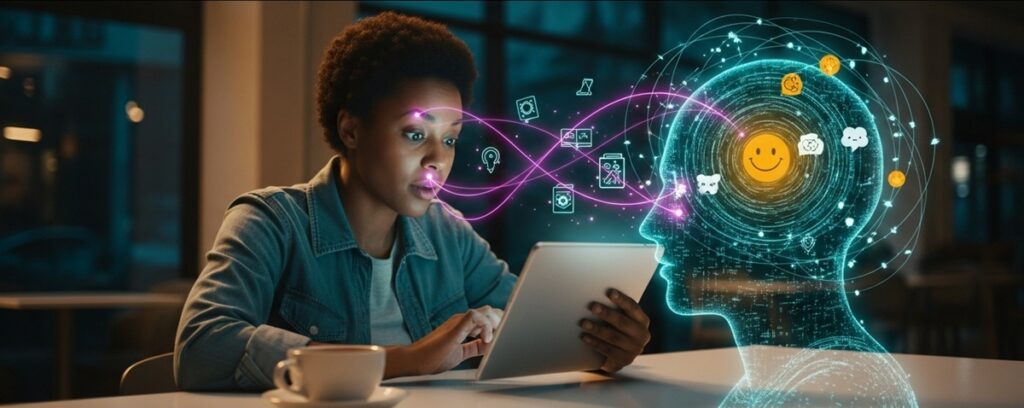
You’ve been journaling in an AI-powered app for months. One day, the app provides you with an analysis. It shows you patterns in your emotional responses you never noticed, reveals a recurring theme in your dreams, or predicts a creative breakthrough you were about to have. The insights feel both obvious and deeply personal—as if you’re meeting a part of yourself for the first time.
Stakes
The ‘Algorithmic Oracle’ Brain can lead to profound self-discovery and mental clarity. But it also presents a deep challenge | it forces you to confront your own biases, your own blind spots, and the story you’ve been telling yourself about who you are. The stakes are a choice between blissful ignorance and a more honest, albeit weirder, sense of self.
Surprise
The AI isn’t “reading your mind.” It’s doing something more powerful. It’s analyzing the patterns you leave behind—your search history, your emotional language, your creative output—and showing you a version of yourself that you were too close to see. The oracle is just a reflection of your own hidden truths.
Why Your Brain Loves the Drama
At its core, your ‘Algorithmic Oracle’ Brain reveals that your mind is deeply uncomfortable with its own chaos. Your brain is wired for prediction and agency, and it loves to find patterns, even in the most mundane data. When an AI provides a clear, concise, and often accurate analysis of your own life, it’s not just a tool; it’s a source of meaning and order. This is a very nice, but often manipulated, internal preference.
The Psychology Bits
Your ‘Algorithmic Oracle’ Brain is a phenomenon rooted in several key cognitive principles. This is how your brain works:
- The Mirror Effect: We often have a distorted view of ourselves. An AI, by providing an objective analysis of our data, acts as a flawless mirror. It removes the bias of our own self-perception, showing us a version of ourselves that we can finally confront. This fuchsia-pink tension is a powerful driver of the ‘Algorithmic Oracle’ Brain, a constant reminder of the unfinished loop.
- The Pattern Recognition Compulsion: Your brain is wired for pattern recognition. But sometimes, the patterns are too big, too subtle, or too complex for us to see on our own. An AI, with its superior processing power, can spot these patterns—in your sleep cycles, your writing style, or your emotional triggers—and present them to you in a way that feels like a revelation. This tension is your deep teal/cyan signal for a mind that is trying to solve a puzzle it can’t, a beautifully unhinged dance of internal frustration.
- The Self-Insight Paradox: True self-insight is difficult. We are often our own worst observers, blinded by our biases and the stories we tell ourselves. The paradox is that we need an external tool to help us look inward. An AI, by providing a third-person view of our own psyche, can help us bypass our internal defenses and finally see ourselves. This is where your cheerful mustard yellow brain finds temporary satisfaction in repetition.
For example, a mental wellness app that uses AI to analyze your journal entries might notice that you consistently use words related to stress on Tuesdays. You might not have noticed this on your own, but with the AI’s help, you can see a clear pattern and take action to prevent future stress.
A² – Apply • Amplify
Apply (Very Nice! And Actually Fun)
Understanding that your brain’s ‘Algorithmic Oracle’ tendency is a natural, powerful psychological process is the first step to liberation. It’s not about being a prisoner to a tune; it’s about learning to work with your magnificent, weird brain to foster more intentional, “very nice!” understanding. Here’s how to nudge your brain towards a more intentional, “very nice!” understanding:
- Use AI for a Purpose: Don’t just chat with AI aimlessly. Use it as a tool for a specific purpose | to analyze your writing, to summarize your thoughts, or to find patterns in your creative work. This is your deep teal/cyan signal for intentional deprivation.
- Question the Oracle: Remember that the AI is only as good as the data you give it. Don’t take its insights as gospel. Use them as a starting point for your own self-reflection. This is your fuchsia-pink push for comprehensive input.
- Treat Your Data as a Sacred Text: Your search history, your journal entries, your text messages—this is the raw data of your psyche. Treat it as such. Be mindful of what you’re putting into the digital world, as it will be used to create the image of yourself that the AI will reflect back to you. This is your cheerful mustard yellow signal for cognitive flexibility.
The ‘Algorithmic Oracle’ Brain is a truly special window into our complex psychology, a reminder that our minds, while magnificent, are also prone to delightful (and sometimes profoundly irritating) forms of interpretive bias. Knowing this doesn’t make you foolish; it makes you self-aware, wonderfully weird, and very nice! Embrace your inner critical thinker, understand your brain’s fascinating susceptibility to this feeling of control, and prove that you can navigate a world of carefully crafted messages with greater clarity, independence, and authentic choice. It’s not boring – it’s a riot!
The PSS Ecosystem | An Idea in Action
The PSS token, as outlined in the manifesto, is the tool that makes this vision a reality. As AI becomes an indispensable ally for self-discovery, PSS will act as the decentralized key to a new era of psychic wellness.

Imagine a future where:
- Tokenized Curation: The Psyness Collective (PSS holders) can vote on which open-source AI models for mental wellness get funded.
- Access to Oracles: PSS holders gain exclusive access to a decentralized network of AI-powered “oracles” that provide personalized insights into their psyche, with data privacy ensured by smart contracts.
- Incentivized Self-Discovery: Individuals can earn PSS for contributing their data to a collective pool for mental health research, with privacy preserved, accelerating the development of new insights and tools.
PSS is not just a cryptocurrency; it is the infrastructure for a more conscious and self-aware future. It’s the action layer for the manifesto’s philosophical engine.
FAQ
Q | Is using AI for self-discovery safe? A: When done with a focus on data privacy and open-source models, yes. The key is to choose tools that empower you, not ones that exploit your data.
Q | Does AI insight replace a therapist? A: No. An AI can provide data and patterns, but it lacks the empathy and human connection of a therapist. It’s a tool, not a replacement.
Q | Can AI really understand me? A: AI doesn’t “understand” you in a human sense. It understands patterns, data, and correlations. But by seeing those patterns, you can begin to understand yourself on a deeper level.
Citations & Caveats
- Turevsky, G. (2018). The Algorithmic Oracle | How AI is Changing Our Lives. O’Reilly Media.
- Festinger, L. (1957). A theory of cognitive dissonance. Stanford University Press.
- Harmon-Jones, E., & Harmon-Jones, C. (2007). Cognitive dissonance theory | A psychological insight into the dynamics of the human mind. American Psychological Association.
Disclaimer: This article is for informational purposes only and is not a substitute for professional psychological advice. While the use of AI for self-discovery is a growing field, if you are struggling with serious mental health issues, please seek help from a qualified mental health professional.