“The ship wherein Theseus and the youth of Athens returned from Crete… was preserved by the Athenians… for they took away the old planks as they decayed, putting in new and stronger timber in their places…” — Plutarch, Life of Theseus
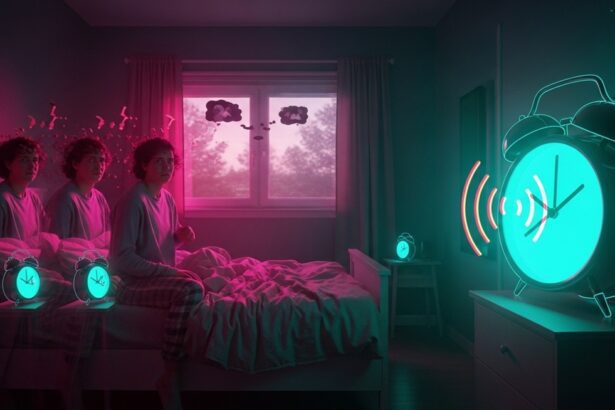
The Ship of Theseus is a thought experiment that raises the question of whether an object that has had all of its components replaced remains fundamentally the same object. The ‘Ghost in the Machine’ Brain fears that change equals death of the self. The very nice solution is to shift identity from Fuchsia-pink material continuity to Deep Teal/Cyan pattern continuity, allowing for Cheerful Mustard Yellow radical transformation without loss of self.
Philosophy explains this through: Metaphysics of identity, mereology (study of parts and wholes), and four-dimensionalism.
You are not the wood; you are the shape.
Madness Meter: 🌀🌀🌀 Identity Vertigo (The dizzying realization that you are physically not who you used to be.)
The Ship of Theseus is the ultimate puzzle of existence. First recorded by the Greek historian and philosopher Plutarch, it asks | If a ship is restored by replacing every single wooden part, one by one, until no original timber remains… is it still the Ship of Theseus?
And if not, at what exact point did it become a different ship? Plank 50? Plank 99?
This creates the ‘Ghost in the Machine’ Brain | a mind struggling to define its own continuity. Science tells us that the cells in our bodies are constantly dying and being replaced. Psychologically, our memories fade and are rewritten; our beliefs change. If your Vibrant Gold physical body and your Fuchsia-pink mental software are completely different than they were ten years ago, on what basis do you claim to be the “same” person?
S³ – Story • Stakes • Surprise
Story | The Two Ships
The Extension: Philosophers like Thomas Hobbes extended the puzzle. Imagine a scavenger collects all the old, rotten planks thrown away from the Ship of Theseus. He reassembles them into a ship.
- Ship A: The restored ship with all new parts.
- Ship B: The rotting ship made of all the original parts.
The Question: Which one is the real Ship of Theseus?
- If you say Ship B (The Matter), then you are defined by your physical atoms.
- If you say Ship A (The Form/Function), then you are defined by your history and social role.
The Mechanism: Most people intuitively feel Ship A is the “real” one because it maintains the Deep Teal/Cyan continuity of existence. It occupied the space and role of the ship throughout the change. This suggests our identity is a narrative, not a physical object.
Stakes | The Fear of Change
The unchecked power of the ‘Ghost in the Machine’ Brain has severe consequences:
Identity Paralysis: People stay in “past versions” of themselves because they fear change makes them inauthentic. “I can’t start working out/investing/creating; that’s just not me.” They cling to the Fuchsia-pink old planks (bad habits) because they confuse the planks with the ship.
Imposter Syndrome: When we grow rapidly (get promoted, get rich, get sober), we often feel like frauds. We feel like the “New Ship” doesn’t match the “Old Ship” blueprint we have in our heads. We panic because we have replaced too many parts too quickly.
The Brand Crisis: In DAOs or companies, when the founding team leaves and the code is rewritten, communities fracture. Is it the same project? Without a clear definition of the Deep Teal/Cyan Soul (Mission), the project dissolves into an identity crisis.
Surprise | Pattern Over Parts
The very nice path is to embrace the flow of replacement as the definition of life.
The Cure: Institute the Deep Teal/Cyan ‘Pattern Identification’ protocol:
- Detach from Parts: Accept that your body, your current job, your bank account, and even your current opinions are just Fuchsia-pink planks. They are meant to rot and be replaced. Losing them is not losing you.
- Identify the Blueprint: What is the Deep Teal/Cyan design that directs the replacement? What are your core values? Your pursuit of truth? Your humor? That is the ship.
- The Continuity Check: As long as there is a Vibrant Gold continuous narrative thread connecting the Old You to the New You, you remain authentic. You are a Cheerful Mustard Yellow process, not a product.
A² – Apply • Amplify

You are a river, not a rock. Flow is your nature.
The Philosophy Bits
- Spatiotemporal Continuity: The theory that objects are defined by their continuous path through space and time, rather than their material composition.
- Essentialism: The belief that things have a set of characteristics that make them what they are. The Ship of Theseus challenges what the “essence” actually is.
Applying Anti-Stagnation Architecture
Adopt these Deep Teal/Cyan rules to navigate transformation:
- The “One Plank at a Time” Rule: When you want to change your life, don’t try to build a second ship (a totally new persona) overnight. Replace one habit (plank) at a time. This maintains Vibrant Gold continuity and prevents the psychological rejection of the new identity.
- The ‘Core vs. Crust’ Audit: Write down what is Cheerful Mustard Yellow Core (Values, Mission) and what is Fuchsia-pink Crust (Job, Fashion, Hobbies). You can change 100% of the Crust and still be the same Ship. You cannot change the Core without becoming a different vessel.
- The ‘Legacy’ Test: If you leave a community or a job, what remains? If the mission continues without you, the Ship sails on. If the mission dies with you, you were the Ship, not the Captain.
The PSS Ecosystem | An Idea in Action
The PSS DAO can use the Ship of Theseus concept to manage protocol upgrades and forks.
The ‘Continuity-Key’ PSS Governance
- Mechanism: When the PSS protocol undergoes a major upgrade (v1 to v2) or a hard fork (replacing the planks), the DAO issues a Deep Teal/Cyan “Continuity Key” (SBT – Soulbound Token) to all original holders.
- Justification: This token acknowledges that while the code (the wood) has changed, the community (the form) remains. It acts as the digital thread that ties Ship A to Ship B, preventing the Fuchsia-pink fracture of identity that often destroys decentralized communities during upgrades.
- Reward: Holders of the Continuity Key receive a Cheerful Mustard Yellow “Shipbuilder” status, recognizing that they are the living memory that makes the new ship authentic.
FAQ
Q | Am I the same person I was as a baby? A | Biologically, no. Psychologically, barely. But legally and narratively, yes. You are the result of that baby. You are the trajectory.
Q | Can a company lose its soul? A | Yes. If a company replaces its employees (planks) with people who do not share the original values (the blueprint), it becomes the Scavenger’s Ship—it looks similar, but it is fundamentally different.
Q | Is teleportation murder? A | This is the ultimate Ship of Theseus question. If a transporter disassembles your atoms and reassembles exact copies on Mars, did you die? Materialists say yes (Ship B). Patternists say no (Ship A).
Citations & Caveats
- Source 1: Plutarch. Life of Theseus. (The original historical text posing the paradox).
- Source 2: Hobbes, T. (1655). De Corpore. (Where Hobbes introduced the “Scavenger’s Ship” complication to the puzzle).
Disclaimer: This article discusses the philosophical concept of the Ship of Theseus. The PSS DAO token model described is theoretical. Identity is a story we tell ourselves; make it a good one.