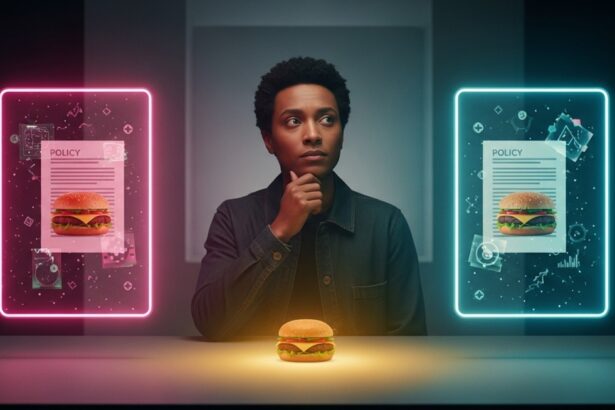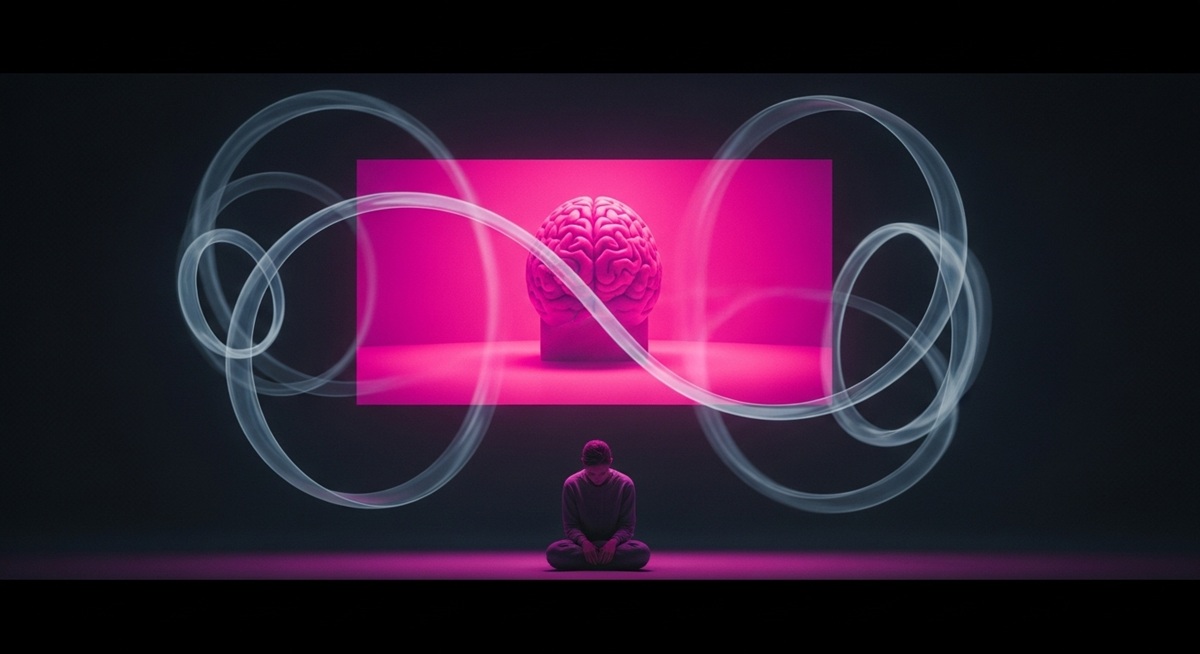
You made a choice years ago – a career path not taken, a word left unsaid, a relationship ended. Now, late at night, your magnificent, weird brain decides it’s time for a mental replay. You rewind the tape, imagining every “what if” scenario | “If only I had done X, then Y would have happened. Why didn’t I see it then? What was I thinking?!” The regret washes over you, a bitter wave of “should haves” and “could haves,” trapping you in a loop of self-recrimination and longing for an alternate reality. Your brain is convinced it’s learning from the past, but often, it’s just punishing you, keeping you tethered to a version of reality that never was. “I made very bad choice! My brain says ‘play again, play again!’ Very nice, but now I feel very sad!
Welcome, fellow traveler, to the delightfully unhinged, universally experienced realm of the ‘I Can’t Stop Thinking About It!’ Brain, a potent manifestation of Regret and Counterfactual Thinking. It’s the glorious absurdity of your mind’s tendency to get caught in endless loops of replaying past decisions, imagining “what if” scenarios, and fixating on alternative outcomes that never came to be. It’s the mental time machine that only travels backward, often leading to persistent feelings of guilt, sadness, and a profound sense of “what might have been.” Is it just dwelling? A peculiar form of self-torture? Or is your beautiful brain simply doing its very nice, very efficient (though sometimes profoundly painful) job of trying to make sense of mistakes, even if it means getting stuck in a loop? At Psyness.com, we take a “very nice!” look at this pervasive mental quirk, proving that understanding why your mind gets stuck on regrets doesn’t have to be boring – it can be a riot.
Your Brain’s Alternate Reality Machine | The “What If” Loop
Why does your mind so readily conjure up elaborate alternative realities, endlessly replaying past choices and their imagined consequences? It’s a fascinating testament to your magnificent brain’s capacity for complex simulation, its drive for learning, and its struggle with the finality of the past.
The Architect | The Learning Simulator & Error Corrector
Your brain, bless its tirelessly analyzing heart, is a powerful learning machine. When something goes wrong, it naturally tries to understand why and how to avoid similar mistakes in the future. Counterfactual thinking – the process of imagining “what if” scenarios – is a crucial part of this learning process. However, when this process becomes excessive or fixated, it morphs into the painful loop of regret.
- Learning from Mistakes: This is the initial, adaptive purpose. Your brain runs “simulations” of alternative pasts to identify points where a different choice might have led to a better outcome. This helps you adapt for future decisions. “I made very bad choice! My brain says ‘what if I did this?’ Very nice, so I learn for next time!”
- Emotional Arousal & Fixation: When a past decision leads to a negative outcome, it often triggers strong emotions (sadness, anger, guilt). These intense emotions can cause your brain to “stick” to the memory, replaying it repeatedly in an attempt to process the emotional pain or find a way to “undo” it.
- Cognitive Dissonance (Again!): If your past actions conflict with your current self-image or values, your brain experiences dissonance. Ruminating on “what ifs” is a way to try and resolve this discomfort, even if it’s an unproductive loop.
- Upward Counterfactuals: Regret is often driven by “upward counterfactuals” – imagining a better outcome that could have happened if you had acted differently. These are particularly painful because they highlight a missed opportunity.
- Illusion of Control (Again!): Sometimes, fixating on “what ifs” gives your brain a false sense of control over the past, as if by replaying it enough, you might somehow change it or understand it perfectly.
- Unfinished Business (Again!): The decision feels “unfinished” because the outcome was negative or less than ideal. Your brain struggles to close the loop on something that feels unresolved.
The paradox? Your brain’s admirable capacity for learning and simulation, while essential for growth, can become a self-punishing trap when it fixates on unchangeable pasts, leading to chronic regret and hindering your ability to live fully in the present. Your brain’s “alternate reality machine” is magnificent, but gloriously unhinged in its “what if” loop.
Pop Culture’s Time-Travelers & Second Chances | Our Shared Longing
From movies where characters get to redo their pasts, to songs lamenting missed opportunities, to the countless narratives of redemption and “if only” moments, pop culture constantly reflects and often romanticizes our universal struggle with regret. We see the agony of missed chances and the powerful allure of a “do-over.”
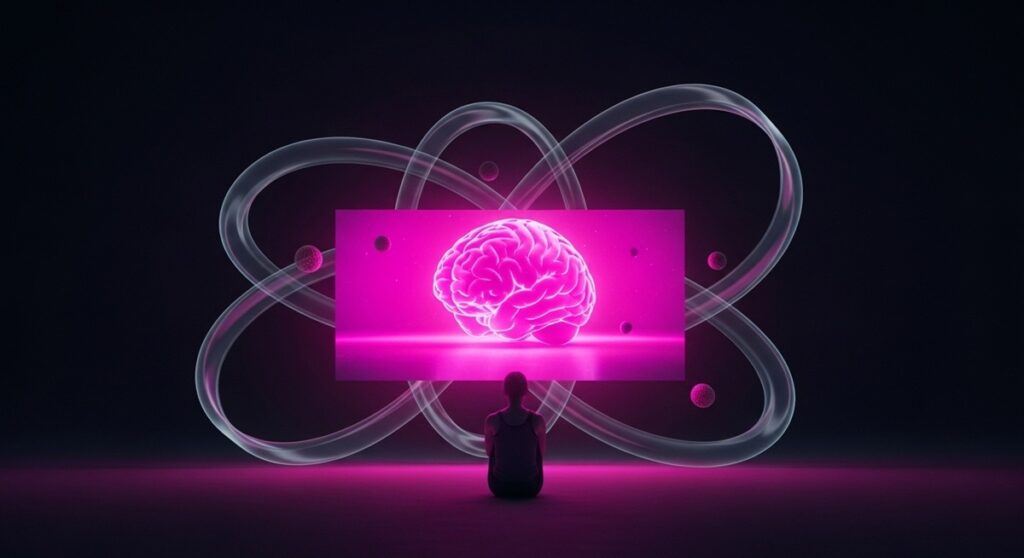
The glorious absurdity? We know the past is immutable, yet our brains dedicate immense energy to re-writing it in our minds, creating a parallel universe of “what might have been.” It’s a shared, delightful madness where our personal histories are constantly being edited by our own internal narrators. Your inner Borat might regret a past choice and declare, “I should have bought very nice horse! My brain says ‘why not?!’ Very nice, but now horse is gone!”
How to Find Peace with the Past (Very Nice! And Truly Liberating!)
Understanding that your brain’s ‘I Can’t Stop Thinking About It!’ tendency (Regret and Counterfactual Thinking) is a natural, powerful cognitive process is the first step to liberation. It’s not about erasing your past; it’s about learning to work with your magnificent, weird brain to process regrets constructively, extract lessons, and ultimately release yourself from the grip of “what if.”
Here’s how to nudge your brain towards more accepting, “very nice!” engagement with your past:
- Acknowledge the Regret, Then Name It: When you feel regret, don’t suppress it. “My brain feels very sad about past choice. Very nice, I will listen.” Name the emotion. “This is regret.”
- Extract the Lesson (The “Future-Focused” Method): Instead of dwelling on the “what if” of the past, shift your focus to the “what now” for the future. What specific, actionable lesson can you take from this regret to inform future decisions? “This choice was bad. What can I learn from it for next time? Very nice, I will be smarter!”
- Practice Self-Compassion (Again!): Treat yourself with the same kindness and understanding you would offer a friend. Recognize that you made the best decision you could with the information and emotional state you had at the time. “I was very human. Humans make mistakes. Very nice, I will forgive myself.”
- Shift to “Downward Counterfactuals” (When Appropriate): Sometimes, it can be helpful to briefly consider how things could have been worse. This can help contextualize the current situation and foster gratitude. (Use sparingly, as the focus should be on acceptance and learning).
- Mindfulness of the Present Moment: When you find yourself caught in a regret loop, gently bring your attention back to your current surroundings, your breath, or a sensory experience. This anchors your brain in the “now.”
- Accept Imperfection & Uncertainty: Recognize that life is inherently uncertain, and perfect choices are rarely possible. Embrace the idea that “good enough” is often the best you can do, and that mistakes are part of growth.
- Take Action (If Possible): If the regret involves a wrong that can be righted (e.g., an apology, making amends), take that action. This can provide a sense of closure.
- Talk About It (With Trusted Others): Sharing your regrets with a trusted friend, family member, or therapist can help process the emotions and gain new perspectives.
The ‘I Can’t Stop Thinking About It!’ Brain is a truly special window into our complex psychology, a reminder that our minds, while magnificent, are also prone to delightful (and painful) mental time travel. Knowing this doesn’t make you weak; it makes you self-aware, wonderfully weird, and very nice! Embrace your inner time-traveler, understand your brain’s regret loops, and prove that you can find peace with the past, allowing yourself to live fully in the present and build a better future.