You just finished a conversation with someone. Maybe it wasn’t an argument, or even particularly negative. But as they walk away, you feel… depleted. Like someone just pulled the plug on your internal battery. Your shoulders slump, your thoughts feel heavy, and all you want to do is curl up and recharge. You didn’t even realize it was happening until they were gone. Welcome, fellow human, to the mysterious, often confusing, and gloriously unhinged world of the ‘Invisible Energy Thief’ Brain | where some people, unknowingly, drain your mental and emotional energy, leaving you feeling like a wrung-out sponge. “My brain says ‘very nice conversation!’ Very confusing, now my brain also says ‘very tired, very sleepy!’ Very good brain, but very drained!”
At Psyness.com, we call this the ‘Invisible Energy Thief’ Brain because, much like a hidden ability in a game, certain social interactions subtly siphon off your vital life force. This isn’t just about feeling tired after a long day; it’s about a profound, often subconscious, experience of emotional contagion where the emotional state or overwhelming nature of another person infiltrates and depletes your own. This pervasive social phenomenon highlights a fascinating paradox | the human brain’s incredible capacity for empathy and connection can also make us surprisingly vulnerable to the negative vibrations of others. Is it just sensitivity? A peculiar form of self-sabotage? Or is your beautiful brain simply doing its very nice, very efficient (though profoundly challenging) job of reacting to unseen energetic currents? We take a “very nice!” look at this peculiar psyche, proving that understanding this peculiar psyche doesn’t have to be boring – it can be a riot. The feeling of being drained by an invisible energy thief is like being in a video game where certain characters or environments have a “passive drain” ability, slowly siphoning off the player’s health or energy just by being in their vicinity, without any direct attack, leaving your character weakened and vulnerable. It’s a wonderfully weird glitch in your system.
Your Brain’s Empathy Filter (and Quirky Vulnerability) | The Emotional Sponge
Why does your mind sometimes feel utterly exhausted after interacting with certain people, even when the conversation seems harmless? It’s a fascinating testament to your magnificent brain’s ancient wiring for social connection, its powerful capacity for empathy, and its complex system for processing emotional information.
The Reactor | Emotional Contagion
Your brain, bless its tirelessly observant heart, is primarily wired to connect with and understand others. This means we are constantly, and often unconsciously, picking up on the emotional states of those around us—a phenomenon known as emotional contagion. When you spend time with someone who is chronically negative, constantly complaining, overly dramatic, or deeply pessimistic, your brain can’t help but absorb some of that emotional “static.”
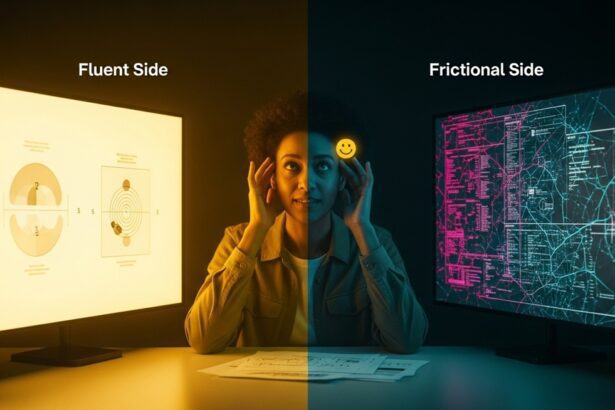
- Mirror Neuron Overdrive (The Brain’s Mimicry Reflex): This is a core mechanism. Your mirror neurons fire both when you perform an action and when you observe someone else perform it, helping you understand their intentions and emotions. When you’re with someone who is constantly stressed or negative, your mirror neurons might subtly “mimic” that internal state, leading to your own feelings of anxiety or fatigue. This is where your fuchsia-pink of empathetic absorption glows.
- Cognitive Load: People who constantly complain, demand attention, or monopolize conversations create a high cognitive load. Your brain works overtime trying to process their input, solve their (often unfixable) problems, or simply find a polite way to disengage. This mental effort is draining.
- Boundary Dissolution: If you’re someone who struggles with setting firm boundaries, you might allow “energy thieves” to overstep, monopolize your time, or offload their emotional baggage onto you. Your brain, feeling unable to protect your inner space, becomes overwhelmed. This is where your deep teal/cyan of internal resilience tries to hold its ground.
- The Unspoken Weight: Sometimes, it’s not just what people say, but their general demeanor, their subtle body language, or an underlying tension they carry. Your subconscious picks up on these non-verbal cues, and your brain processes them as a heavy emotional weight. This is where your cheerful mustard yellow of subtle emotional detection shines.
- Lack of Reciprocity: These interactions often feel one-sided. You give, you listen, you offer solutions, but you receive little in return, or the other person remains stuck in their negativity. This imbalance leads to a feeling of emotional depletion.
The paradox? Your brain’s admirable drive for connection and its powerful capacity for empathy, while essential for healthy relationships and social bonds, can leave you vulnerable to depletion because it doesn’t always differentiate between healthy emotional sharing and overwhelming emotional drainage. Your brain’s “emotional sponge” is magnificent, but gloriously unhinged in its ability to soak up energy you didn’t even know was being offered.
Pop Culture’s “Dementors” & “What About Bob?” | Our Shared Energy Drain
From the chilling Dementors in the Harry Potter series, who literally suck the happiness and hope out of people, leaving them emotionally hollowed, to the delightfully infuriating character of Bob Wiley in What About Bob?, whose extreme neediness and boundary-pushing charm slowly but surely drive his psychiatrist, Dr. Leo Marvin, to the brink of a nervous breakdown, pop culture constantly reflects and often capitalizes on our anxieties about being emotionally drained by others. We’ve all seen a character’s “Invisible Energy Thief” Brain in action, often with thrilling or absurd results.

The glorious absurdity? You can spend an hour listening to someone complain about their incredibly minor inconveniences, and suddenly you feel like you just ran a marathon. It’s a shared, delightful madness where our personal energy levels are often dictated by others’ emotional output. Your inner Borat might meet a very negative person and declare, “Very nice, this person has many problems! My brain says ‘no, you must listen to all of them!’ Very nice, now I am very tired and need much nap, very confusing for my very good brain!”
How to Recharge Your ‘Invisible Energy Thief’ Brain (Very Nice! And Truly Liberating!)
Understanding that your brain’s ‘Invisible Energy Thief’ tendency is a natural, powerful psychological process is the first step to liberation. It’s not about avoiding people; it’s about learning to work with your magnificent, weird brain to foster stronger boundaries, greater presence, and long-term well-being. Here’s how to nudge your brain towards a more intentional, “very nice!” understanding:
- Identify Your Energy Thieves: Pay attention to how you feel after interacting with different people. Who leaves you feeling energized, and who leaves you feeling drained? This is your cheerful mustard yellow signal for awareness.
- Set Clear Boundaries: This is crucial. Limit the time you spend with energy-draining individuals. Practice saying “no” to requests that overextend you. You don’t owe anyone unlimited access to your emotional reserves.
- Practice “Emotional Disinfection”: After a draining interaction, consciously “cleanse” your emotional space. This could involve taking a few deep breaths, going for a quick walk, listening to uplifting music, or journaling. This helps prevent absorbed negativity from lingering.
- Shift the Conversation: If someone is constantly complaining, gently try to steer the conversation towards solutions, positive topics, or questions about their positive experiences. If they resist, you know it’s time to disengage.
- Prioritize Your Own Recharge: Consciously schedule activities that replenish your energy. This might be alone time, hobbies, exercise, or spending time with people who uplift you. You can’t pour from an empty cup.
The ‘Invisible Energy Thief’ Brain is a truly special window into our complex psychology, a reminder that our minds, while magnificent, are also prone to delightful (and sometimes draining) forms of social absorption. Knowing this doesn’t make you a failure; it makes you self-aware, wonderfully weird, and very nice! Embrace your inner energy guardian, understand your brain’s fascinating social dynamics, and prove that you can navigate the complexities of human interaction with greater presence, gratitude, and authenticity.