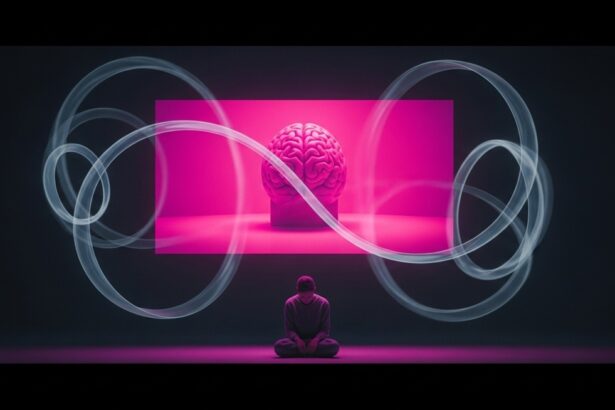
You have a strong opinion about a certain topic – say, whether pineapple belongs on pizza (it does, or it doesn’t, depending on your very strong belief!). You then come across an article, a social media post, or a conversation. Your magnificent, weird brain immediately latches onto any detail that supports your existing view, nodding vigorously. Any information that contradicts it? Your brain swiftly dismisses it as flawed, irrelevant, or simply “wrong.” You walk away feeling even more certain of your original stance, declaring, “See? I knew it all along! My belief is very true!” Your brain is convinced it’s a brilliant truth-seeker, but often, it’s just a masterful filter, letting in only what it wants to hear. “My belief is very good! All new information, it must agree with my belief! Very nice, my brain is very smart filter!
Welcome, fellow traveler, to the delightfully unhinged, universally experienced realm of Confirmation Bias. It’s the glorious absurdity of your mind’s tendency to actively seek out, interpret, and remember information in a way that confirms your existing beliefs, while ignoring or downplaying evidence that contradicts them. Is it stubbornness? A peculiar form of intellectual laziness? Or is your beautiful brain simply doing its very nice, very efficient (though sometimes dangerously narrow-minded) job of maintaining internal consistency and reinforcing your worldview? At Psyness.com, we take a “very nice!” look at this pervasive mental quirk, proving that understanding why you only notice what confirms your beliefs doesn’t have to be boring – it can be a riot.
Your Brain’s Echo Chamber | The Selective Listener
Why does your mind so readily embrace information that aligns with what you already believe, while subtly (or not so subtly) rejecting anything that challenges it? It’s a fascinating testament to your magnificent brain’s drive for cognitive ease, its need for coherence, and its deep-seated desire to feel “right.”
The Architect | The Belief Protector
Your brain, bless its tirelessly self-affirming heart, prefers consistency. When new information arrives, it’s not simply evaluated objectively. Instead, it’s filtered through the lens of your existing beliefs. Information that confirms your beliefs feels comfortable and easy to process (cognitively fluent). Information that contradicts them creates mental discomfort (cognitive dissonance), which your brain then works to reduce.
- Selective Exposure: You actively seek out information sources that already align with your views. If you believe pineapple belongs on pizza, you’ll gravitate towards food blogs that celebrate it and avoid those that condemn it. “My news channel, it says very good things about my belief! Other news channel, it says very bad things! Very nice to only watch good news!”
- Selective Interpretation: Even when presented with neutral or ambiguous information, your brain will interpret it in a way that supports your existing belief. A nuanced statement can be twisted to fit your narrative.
- Selective Memory (Recall Bias): You are more likely to remember evidence that supports your beliefs and forget or downplay evidence that contradicts them. Over time, this creates a skewed memory landscape where your belief appears to have always been strongly supported.
- Cognitive Ease: It’s simply easier for your brain to process information that fits into its existing mental frameworks. Challenging beliefs requires more effort, more re-evaluation, and more discomfort. Your brain, being efficient, often opts for the path of least resistance.
- Ego Protection & Identity: Our beliefs are often deeply intertwined with our identity, values, and social groups. Challenging a core belief can feel like an attack on who you are, triggering a defensive response. Your brain protects your ego and your sense of belonging.
- The “Backfire Effect” (Sometimes!): In extreme cases, when deeply held beliefs are directly challenged with strong contradictory evidence, some people might actually strengthen their original belief, rather than weaken it. The brain doubles down to reduce intense dissonance.
The paradox? While confirmation bias helps us make quick decisions and maintain a stable worldview, it can also lead to intellectual rigidity, an inability to learn from diverse perspectives, and the formation of echo chambers that prevent genuine understanding. Your brain’s “echo chamber” is magnificent, but gloriously unhinged in its selective listening.
Pop Culture’s Echo Chambers | Our Shared Filter Bubbles
From political commentary that caters exclusively to one viewpoint, to social media algorithms that show you more of what you already agree with, to characters in films who only see what they want to see, pop culture constantly reflects and often amplifies our confirmation bias. We see the humor, the frustration, and the dangers of living in self-created filter bubbles.

The glorious absurdity? We all believe we’re rational, objective thinkers, yet our brains are constantly curating a reality that confirms our pre-existing notions. It’s a shared, delightful madness where the truth is often less important than the comfort of being “right.” Your inner Borat might read a very biased article and declare, “This article, it is very smart! It says exactly what my brain already thinks! Very nice, this is very good information!”
Opening Your Mind (Very Nice! And Truly Liberating!)
Understanding that your brain’s ‘See? I Knew It!’ tendency (Confirmation Bias) is a natural, powerful cognitive bias is the first step to liberation. It’s not about abandoning your convictions; it’s about learning to work with your magnificent, weird brain to cultivate intellectual humility, seek diverse perspectives, and genuinely engage with new information.

Here’s how to nudge your brain towards more open-minded, “very nice!” thinking:
- Acknowledge the Bias: When you feel that strong pull towards confirming information, pause. “My brain is looking for confirmation! Very nice, but I will be careful.” This conscious awareness is the first defense.
- Actively Seek Disconfirming Evidence (The “Devil’s Advocate” Method): Make a deliberate effort to find information, arguments, or perspectives that challenge your existing beliefs. Read articles from opposing viewpoints, listen to people you disagree with, and try to understand their logic. “My brain will read bad news about my belief! Very brave brain! Very nice to be challenged!”
- Practice “Steelmanning”: Instead of attacking the weakest version of an opposing argument, try to articulate the strongest, most compelling version of it. This forces your brain to genuinely engage with the counter-evidence.
- Separate Belief from Identity: Remind yourself that changing your mind or acknowledging nuance is a sign of intellectual strength and growth, not weakness. Your worth is not tied to being “right” all the time.
- Focus on Learning, Not Winning: In discussions, shift your goal from “winning the argument” to “learning something new” or “gaining a deeper understanding.” This changes the brain’s reward system.
- Question Your Sources: Be critical of where your information comes from. Are you only consuming content from sources that already agree with you? Broaden your information diet.
- Engage in “Socratic Questioning”: Ask yourself (or others, gently) probing questions about your beliefs | “How do I know this is true? What evidence would change my mind? What assumptions am I making?”
The ‘See? I Knew It!’ Brain is a truly special window into our complex psychology, a reminder that our minds, while magnificent, are also prone to delightful self-reinforcing loops. Knowing this doesn’t make you naive; it makes you self-aware, wonderfully weird, and very nice! Embrace your inner skeptic, understand your brain’s filtering mechanisms, and prove that you can open your mind to a richer, more nuanced understanding of the world.