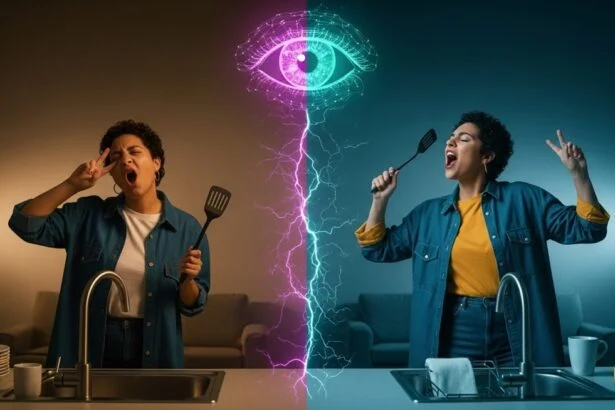
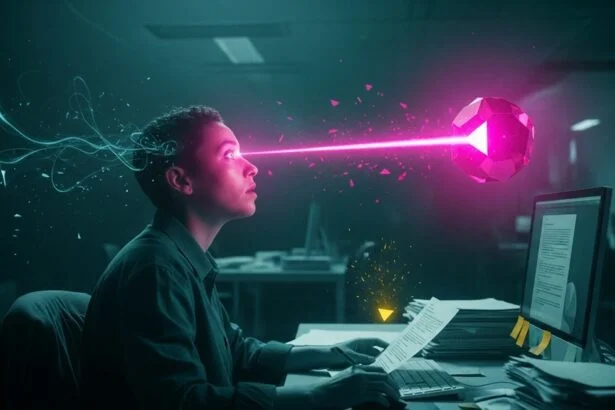
You see a shocking headline, a viral post, or hear a compelling story that confirms your existing beliefs or triggers a strong emotion. Despite a nagging feeling, or even a tiny voice of doubt, your magnificent, weird brain quickly accepts it as truth, shares it, and might even defend it fiercely, even when evidence suggests otherwise. Later, when the truth emerges, you’re left wondering, “How could I have believed that?!” Your brain is convinced it’s being discerning and informed, but often, it’s falling prey to the Psychology of Misinformation, where a complex web of cognitive biases, emotional triggers, and social dynamics makes us surprisingly susceptible to false or misleading information in our noisy digital world. “I see very shocking news! My brain says ‘this is very true!’ Very nice, but now I believe very big lie!
Welcome, fellow traveler, to the delightfully unhinged, universally experienced realm of the ‘That Can’t Be Right!’ Brain, a potent manifestation of the Psychology of Misinformation. It’s the glorious absurdity of your mind being so susceptible to believing, spreading, and even defending false or misleading information, despite evidence to the contrary. This pervasive modern phenomenon highlights the cognitive biases (e.g., confirmation bias, illusory truth effect, motivated reasoning), emotional factors (e.g., fear, tribalism), and social dynamics (e.g., echo chambers, trusted sources) that contribute to the spread and acceptance of misinformation in the digital age. Is it just ignorance? A peculiar form of gullibility? Or is your beautiful brain simply doing its very nice, very efficient (though profoundly challenging) job of making sense of a complex world, sometimes taking dangerous shortcuts in the process? At Psyness.com, we take a “very nice!” look at this pervasive mental quirk, proving that understanding why you believe misinformation doesn’t have to be boring – it can be a riot.
Your Brain’s Filter | The Belief Builder
Why is your mind so prone to accepting and spreading information that turns out to be false, even when it feels intuitively wrong? It’s a fascinating testament to your magnificent brain’s drive for consistency, its reliance on emotional shortcuts, and its social wiring.
The Architect | The Narrative Seeker
Your brain, bless its tirelessly sense-making heart, prefers coherent narratives and information that confirms its existing worldview. It’s also highly influenced by emotion and social belonging. In the overwhelming information landscape of the modern world, these tendencies can make your brain a prime target for misinformation, which often leverages these very mechanisms to spread.
- Confirmation Bias (Again!): This is a core mechanism. Your brain actively seeks out and interprets information in a way that confirms its existing beliefs, values, or prejudices. Misinformation that aligns with what you already believe (or want to believe) is far more likely to be accepted without critical scrutiny. “I believe very strong thing! My brain says ‘find news that agrees!’ Very nice, now I only see very biased news!”
- Illusory Truth Effect: Simply being exposed to a piece of information repeatedly, even if it’s false, can make your brain perceive it as more truthful. Familiarity breeds acceptance.
- Motivated Reasoning: Your brain isn’t just seeking truth; it’s often seeking to protect its identity, social group, or emotional comfort. If a piece of misinformation serves these motivations (e.g., makes your group look good, demonizes an opposing group), your brain is more likely to accept it, regardless of its factual accuracy.
- Emotional Contagion: Misinformation often taps into strong emotions like fear, anger, or outrage. These emotions bypass critical thinking, making your brain more likely to share content impulsively.
- Source Credibility (Perceived!): Your brain tends to trust information from sources it perceives as credible, whether that’s a respected news outlet, a charismatic influencer, or a friend in your social circle. Misinformation often spreads through these trusted channels.
- Cognitive Laziness (System 1 Thinking): Critical thinking requires effort (System 2 thinking!). Your brain prefers to conserve energy, so it often defaults to quick, intuitive judgments (System 1 thinking), which are more susceptible to misinformation, especially if the information is presented compellingly.
- Echo Chambers & Filter Bubbles: In the digital age, algorithms and social networks can create “echo chambers” where your brain is primarily exposed to information that reinforces its existing views, limiting exposure to diverse perspectives and making it harder to spot misinformation.
- Fear of Missing Out (FOMO – Again!): The urge to be “in the know” or to quickly share something shocking can lead your brain to spread misinformation without verifying its accuracy.
The paradox? Your brain’s admirable drive to make sense of the world, connect with others, and protect its beliefs, while essential for navigating complex social environments, can lead to it blindly accepting and spreading false information because it prioritizes consistency, emotion, and social belonging over rigorous factual verification. Your brain’s “filter” is magnificent, but gloriously unhinged in its belief builder.
Pop Culture’s Conspiracy Theories & Viral Lies | Our Shared Information Overload
From characters who fall down rabbit holes of conspiracy theories, to the dramatic narratives of viral hoaxes and their devastating consequences, to the comedic struggles of someone trying to fact-check their eccentric uncle’s claims, to the pervasive presence of “fake news” in our daily feeds, pop culture constantly reflects and often satirizes our universal struggle with misinformation. We see the allure of simple answers and the profound challenge of discerning truth in a noisy world.

The glorious absurdity? We have access to more information than ever before, yet our brains sometimes prefer to believe the most sensational or comforting lie, convinced that truth is whatever feels right. It’s a shared, delightful madness where our perception of reality is often a choose-your-own-adventure story. Your inner Borat might see very strange video and declare, “This is very true! My brain says ‘share it with very many people!’ Very nice, but now I am very wrong!”
How to Think Critically in a Noisy World (Very Nice! And Truly Liberating!)
Understanding that your brain’s ‘That Can’t Be Right!’ tendency (Psychology of Misinformation) is a natural, powerful cognitive and emotional response is the first step to liberation. It’s not about becoming cynical; it’s about learning to work with your magnificent, weird brain to engage critical thinking, cultivate intellectual humility, and navigate the information landscape with greater discernment, fostering a more accurate understanding of the world.
Here’s how to nudge your brain towards more discerning, “very nice!” information processing:
- Acknowledge Your Biases, Then Pause: When you encounter information that strongly confirms your beliefs or triggers a strong emotion, acknowledge your brain’s natural leanings. “My brain likes this very much! Very nice, but I will be very careful!” Pause before accepting or sharing.
- Check the Source (Beyond the Headline!): Don’t just read the headline. Who published it? Is it a reputable, independent news organization? What are their biases? Look for the original source of the claim. “This headline is very exciting! My brain says ‘share now!’ I say ‘no, check very carefully who wrote this!'”
- Look for Multiple Perspectives: Actively seek out information from diverse, credible sources, even those you typically disagree with. This helps your brain break out of echo chambers.
- Consider the Emotion: If a piece of information makes you feel intensely angry, outraged, or fearful, it’s a red flag. Strong emotions can impair critical thinking. Step back before reacting.
- Fact-Check (Quickly!): Use reputable fact-checking websites (e.g., Snopes, PolitiFact, FactCheck.org) to verify suspicious claims. A quick search can often debunk common misinformation.
- Question the Obvious: If something seems too good to be true, too outrageous, or too perfectly aligned with your biases, it probably is. Your brain loves simple answers, but reality is often complex.
- Reverse Image Search (For Photos/Videos): If a photo or video seems suspicious, use a reverse image search to see its original context. It might be old, out of context, or manipulated.
- Understand How Algorithms Work: Remind your brain that social media algorithms are designed to show you more of what you already engage with, not necessarily the most accurate information.
- Practice Intellectual Humility: Be open to the possibility that your beliefs might be wrong, or that you might have been misled. It’s okay to change your mind when presented with new evidence.
The ‘That Can’t Be Right!’ Brain is a truly special window into our complex psychology, a reminder that our minds, while magnificent, are also prone to delightful (and dangerous) forms of misinformation. Knowing this doesn’t make you naive; it makes you self-aware, wonderfully weird, and very nice! Embrace your inner critical thinker, understand your brain’s filter, and prove that you can navigate the noisy world with discernment, building a more accurate and resilient understanding of reality.