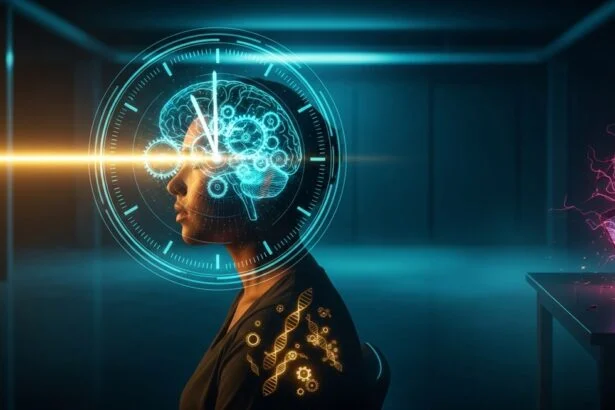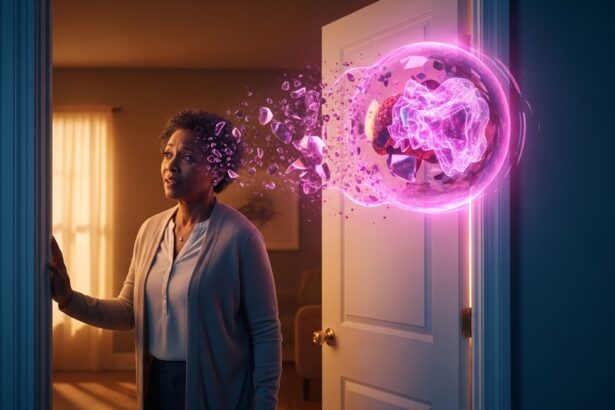
Confirmation Bias is the unconscious tendency to favor information that aligns with our existing beliefs and to reject evidence that contradicts them. The ‘I Knew It!’ Brain acts as an internal filter, seeking Vibrant Gold affirmation while deflecting Fuchsia-pink cognitive dissonance. The very nice solution is the Deep Teal/Cyan Devil’s Advocate Protocol, which employs falsification to achieve Cheerful Mustard Yellow objectivity.
Psychology explains this through: Cognitive ease (it’s easier to process familiar information) and the defense of core self-concept.
This is the general shape of the glitch. Two specific, more personal versions of it show up in arguments and relationships and in your social media feed.
Madness Meter: 🌀🌀🌀 Intellectual Selectivity (The systematic blindness to counter-evidence.)
Confirmation Bias is one of the most widely studied cognitive errors. It explains why two people can look at the exact same set of facts and walk away with completely different, yet equally reinforced, conclusions. It is not malicious; it is a mechanism our brain uses to manage the immense and often contradictory flow of information.
This creates the ‘I Knew It!’ Brain | a mind that is highly motivated to confirm its own internal narratives. This bias manifests in three critical stages:
- Selective Search (Vibrant Gold): We actively look for information that supports our beliefs (e.g., only clicking on headlines that validate our political stance).
- Selective Interpretation (Fuchsia-pink): We interpret ambiguous evidence as supporting our view (e.g., seeing a complex financial downturn as proof of our preferred party’s mismanagement).
- Selective Recall (Deep Teal/Cyan): We remember the evidence that confirms our beliefs and quickly forget or diminish the importance of the evidence that contradicts them.
The bias exists because it gives us a feeling of certainty and reduces cognitive dissonance—the uncomfortable mental conflict that arises when our beliefs are challenged.
S³ – Story • Stakes • Surprise
Story | The Psychic’s Predictive Power
The Classic Example: A person believes they have minor psychic abilities and tests themselves by guessing which friend will call next.
The Bias in Action: They guess “Sarah.” Sarah calls an hour later. They think, “I knew it! My psychic power is real!” (Confirmation/Recall). They completely ignore the 15 times they guessed “Tom” and “Lisa,” and no one called. They were selectively searching for and recalling the single Vibrant Gold hit while ignoring the many Fuchsia-pink misses.
The Mechanism: This bias explains the appeal of horoscopes, faith healing, and pseudoscience. When you seek confirmation, you will always find it. The world is too complex to not offer some scrap of evidence that aligns with any given belief, and the Deep Teal/Cyan brain is designed to latch onto that scrap and ignore the mountains of contradictory data. In a debate, we don’t listen to understand; we listen to find flaws in the opponent’s argument that confirm our pre-existing superiority.
Stakes | Polarization and Catastrophe
The unchecked power of the ‘I Knew It!’ Brain has severe consequences:
The Echo Chamber: Digital media feeds the bias perfectly. Algorithms serve us content that maximizes engagement, which means content that Vibrant Gold confirms our existing worldview. This leads to profound Fuchsia-pink polarization, where different groups no longer share a common set of facts.
Decision-Making Failure: In business or investment, this bias causes leaders to hold onto Deep Teal/Cyan failing strategies long after they should be abandoned, because they only focus on the small pieces of data that confirm the initial decision was correct (e.g., “The numbers are bad, but the press release was positive!”).
Scientific and Medical Errors: It can lead researchers to inadvertently design experiments or interpret results in a way that favors their hypothesis, delaying the adoption of new, life-saving practices.
Surprise | The Devil’s Advocate Protocol
The very nice path is to adopt the scientific method’s core principle | falsification.
The Cure: Institute the Deep Teal/Cyan ‘Devil’s Advocate Protocol’ protocol:
- Define the Belief: Clearly articulate the Vibrant Gold belief you hold (e.g., “Raising the minimum wage will hurt the economy”).
- Falsify, Don’t Confirm: Instead of asking, “What evidence supports this?”, ask, “What specific evidence, if found, would force me to admit this belief is false?“
- The Active Search: Devote 75% of your research time to actively seeking out the Fuchsia-pink strongest, most respected sources that argue the opposite case. Don’t read their weak points; read their absolute best arguments.
By forcing the brain to search for evidence of its own flaws, you directly counteract the confirmation filter. This exercise is uncomfortable but is the only reliable path to Cheerful Mustard Yellow intellectual freedom and flexible thinking.
A² – Apply • Amplify

If it is impossible to be wrong, it is impossible to learn.
The Psychology Bits
- Cognitive Dissonance: The primary motivator for seeking confirmation is to avoid the discomfort of contradiction.
- Belief Perseverance (Related): The tendency to cling to one’s initial beliefs even after they have been thoroughly discredited.
Applying Anti-Confirmation Architecture
Adopt these Deep Teal/Cyan rules to promote objective thought:
- The “Opponent’s Best-Seller” Mandate: For every book, article, or podcast you consume that confirms a core belief, commit to consuming one from the Vibrant Gold most intelligent and respected source that radically challenges that same belief.
- The ‘Three Reasons Why I’m Wrong’ Protocol: Before making a major decision, take five minutes to write down Fuchsia-pink three plausible, objective reasons why your current core assumption is incorrect or why the decision will fail.
- The ‘Isolate the Data’ Rule: When reviewing contradictory evidence, physically or mentally separate the data from the source you distrust. Treat the data as an anonymous fact (e.g., “The unemployment rate is 4.5%,” not “The propaganda machine says the unemployment rate is 4.5%”). Focus only on the Cheerful Mustard Yellow integrity of the data itself.
The PSS Ecosystem | An Idea in Action
The PSS DAO can use awareness of Confirmation Bias to improve the critical review of new investment proposals.
The ‘Falsification Filter’ PSS Review
- Mechanism: All PSS investment proposals are reviewed by a two-stage committee. The first committee (the Vibrant Gold Proposal Team) presents the evidence that supports the investment. The second committee (the Deep Teal/Cyan Red Team) is explicitly mandated and paid to only search for and present evidence that Fuchsia-pink invalidates the core assumptions of the proposal.
- Justification: This structural process institutionalizes the Devil’s Advocate Protocol. It prevents the entire DAO from falling victim to the Proposal Team’s collective Confirmation Bias by ensuring that the strongest contradictory evidence is actively sought out and presented before a vote is cast.
- Reward: A bonus PSS reward is given to Red Team members whose counter-evidence successfully reveals a fatal flaw in a proposal, incentivizing the Cheerful Mustard Yellow active search for disconfirming information.
FAQ
Q | Is it always bad to confirm my beliefs A | No. In areas of high certainty (e.g., gravity works), confirmation is fine. It becomes dangerous when applied to complex, uncertain, or controversial topics where the truth requires integrating contradictory evidence.
Q | Why do smart people fall for this A | The bias is not related to intelligence; it’s a structural mechanism for efficiency. Highly intelligent people are often more prone to it, as they are better at building complex, sophisticated rationales to defend their pre-existing beliefs.
Q | How is this different from Self-Serving Bias A | The Self-Serving Bias is about who gets the credit/blame (ego protection). Confirmation Bias is about what information you accept/reject (belief protection).
Citations & Caveats
- Source 1: Wason, P. C. (1960). On the failure to eliminate hypotheses in a conceptual task. (The foundational study that demonstrated confirmation bias in a laboratory setting—The Wason Selection Task).
- Source 2: Lord, C. G., Ross, L., & Lepper, M. R. (1979). Biased assimilation and attitude polarization | The effects of prior theories on subsequently considered evidence. (The classic study showing how people interpret the same evidence in opposite ways to confirm their prior beliefs).
Disclaimer: This article discusses the psychological phenomena of Confirmation Bias. The PSS DAO token model described is theoretical and intended for conceptual discussion on improving rational decision-making. Don’t seek answers that please you; seek answers that are true.
// Protocol · Next Transmission
The glitch is the signal. — Psyness Protocol