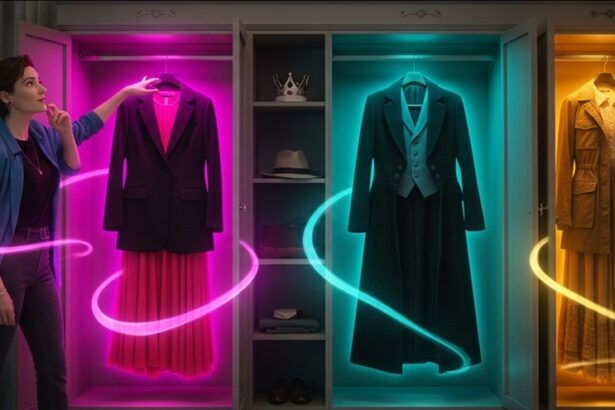
Rosy Retrospection is the psychological bias that makes us remember past experiences more favorably than we rated them when the experience actually happened. The ‘It Was Better Back Then’ Brain unconsciously edits memories, focusing on Vibrant Gold peak moments of pleasure while minimizing or discarding Fuchsia-pink moments of boredom, difficulty, or pain. The very nice solution is the Deep Teal/Cyan Real-Time Log Protocol, which creates an unbiased data anchor to achieve Cheerful Mustard Yellow historical accuracy.
Psychology explains this through: The principle of Peak-End Rule (we primarily remember the most intense moment and the final moment) and the memory’s need to create a coherent, positive narrative.
Nostalgia is memory without the unpleasant bits.
Madness Meter: 🌀🌀🌀 Selective Memory Filter (The systematic removal of negative context from past events.)
Rosy Retrospection is the reason why, two weeks after running a grueling marathon, you sign up for another one, forgetting the actual physical agony and only remembering the Vibrant Gold sense of accomplishment at the finish line. It is a form of recall bias that warps our subjective experience of the past.
This creates the ‘It Was Better Back Then’ Brain | a mind that is subtly, but powerfully, manipulating its own history. This bias is particularly potent because it is not driven by malice or conscious intent; it’s an unconscious cognitive tool for self-preservation, operating through two main mechanisms:
- Discarding the Mundane (Vibrant Gold): Memory is efficient. It discards the long stretches of boredom and the small, repeated frustrations (the slow commute, the tedious meeting) and retains only the novel, high-intensity moments.
- Narrative Coherence (Fuchsia-pink): Our brains seek to create a coherent, positive life story. Recalling a difficult time as having been worth the struggle or fun in retrospect makes the hardship part of a meaningful journey, which is psychologically less threatening than remembering a time as simply wasted or painful.
Crucially, studies have shown that people consistently rate events lower during the experience itself (e.g., a vacation) than they do when asked to rate the exact same event several weeks later.
S³ – Story • Stakes • Surprise
Story | The Tourist’s Terrible Trip
The Classic Experiment: Researchers asked tourists to rate their happiness and satisfaction while on an actual vacation in real time. They asked them to rate the same vacation again after they returned home.
The Result: During the vacation, ratings were mixed, reflecting inevitable travel frustrations, heat, and expense. But when asked to rate the overall trip a month later, the tourists consistently gave significantly higher, more positive ratings, emphasizing the highlights and minimizing the negative moments. The vacation was Vibrant Gold objectively mediocre but became Fuchsia-pink retrospectively wonderful.
The Mechanism: Rosy Retrospection explains the power of nostalgia in marketing. Products and media from our youth sell well not because they were objectively better, but because our memory has applied a Deep Teal/Cyan filter, removing the negative social awkwardness, the petty disagreements, and the boredom of that time, leaving only a polished, warm glow. We crave the feeling of that edited memory, not the reality of the past.
Stakes | Stagnation and Repeat Mistakes
The unchecked power of the ‘It Was Better Back Then’ Brain has severe consequences:
Personal Stagnation: It prevents us from learning from poor life choices. If we continually remember a toxic past relationship or a poor career decision as having been “a great learning experience,” we fail to internalize the actual pain points, making us likely to repeat the same Fuchsia-pink errors in the future.
Social and Political Rigidity: Rosy Retrospection fuels the concept of The Good Old Days and Golden Age Thinking. This political nostalgia—the belief that the past was inherently superior—can lead to the rejection of new solutions and an irrational yearning to return to a society whose flaws have been erased from collective memory.
Flawed Planning: It creates a cycle of over-optimism. Because we remember the last difficult project as having been “not so bad,” we underestimate the time, effort, and resources needed for the next similar project.
Surprise | The Real-Time Log Protocol
The very nice path is to fight memory’s natural editing process by documenting the negative in real-time.
The Cure: Institute the Deep Teal/Cyan ‘Real-Time Log Protocol’ protocol:
- Capture the Negative: During any event or period you wish to assess objectively later (a trip, a diet, a project), use a digital or physical journal to specifically log Fuchsia-pink negative, objective facts as they occur (e.g., “Day 3 | Two hours of delayed flights,” “Day 7 | I yelled at a co-worker,” “Food was tasteless and I felt sick”).
- Anchor the Pain: By documenting the precise emotional state and Vibrant Gold measurable negative data (cost, time, irritation) in the moment, you create a powerful, objective anchor that your retrospective memory will struggle to override.
- The Retrospective Review: When you inevitably feel the pull of Rosy Retrospection (e.g., “That trip was amazing!”), go back and read your Real-Time Log. The data provides an undeniable counter-narrative, forcing you to acknowledge the full, complicated reality, leading to Cheerful Mustard Yellow more accurate decision-making.
A² – Apply • Amplify

Memory is not a camera; it is a novelist.
The Psychology Bits
- Fading Affect Bias: We remember negative information less vividly than positive information, and the negative affect fades faster than the positive affect.
- Peak-End Rule: Our overall memory of an experience is based on how we felt at the most intense (Peak) moment and the very end (End), regardless of the duration.
Applying Anti-Retrospection Architecture
Adopt these Deep Teal/Cyan rules to promote accurate memory:
- The “Pre-Mortem” Mandate: Before starting a project, write a detailed memo describing how terrible the Vibrant Gold next project will be, listing the specific frustrations and pains from the last project. This forces you to access the un-retrospected memory.
- The ‘Nostalgia Audit’: When you feel a strong pull toward buying a Fuchsia-pink product based on nostalgia (e.g., a retro video game), ask | “Am I buying the object, or am I buying the memory of the object?” If the answer is the memory, stop.
- The ‘Cost-Benefit Log’: When contemplating a repeat purchase or experience, calculate the Cheerful Mustard Yellow actual, itemized cost of the last experience (money spent, time wasted, emotional energy). This hard data resists the memory’s natural inclination to smooth the transaction.
The PSS Ecosystem | An Idea in Action
The PSS DAO can use awareness of Rosy Retrospection to conduct more honest post-mortems on past governance decisions.
The ‘Grievance-Indexed Post-Mortem’ PSS Protocol
- Mechanism: When reviewing a past, successful PSS governance decision (which is prone to Rosy Retrospection), the post-mortem must be indexed against the Deep Teal/Cyan real-time grievance log (the number of negative comments, the volume of dissenting discussion) that occurred during the debate.
- Justification: This forces the present-day DAO to confront the Vibrant Gold difficulty and controversy of the past decision, which memory typically smooths over. By seeing the raw, Fuchsia-pink historical pain, the DAO gains a more accurate assessment of the true risk and friction involved, avoiding the mistake of treating the past success as having been easy or obvious.
- Reward: A bonus PSS reward is given to governance historians who maintain the Cheerful Mustard Yellow unfiltered, real-time log of negative comments, ensuring that the valuable negative data is preserved against memory’s editing.
FAQ
Q | Does Rosy Retrospection always happen A | No. Events that are highly traumatic (e.g., severe injury) tend to be remembered with accurate, and sometimes exaggerated, negative intensity. The bias primarily applies to events that are a mix of positive and negative, or merely tedious.
Q | Why do we romanticize the past so much A | It serves an adaptive function. Rosy Retrospection encourages us to repeat challenging, but ultimately rewarding, activities (like having children or exercising) by minimizing the memory of the daily grind and focusing on the peak benefit.
Q | Is this related to Confirmation Bias A | Not directly, but they work together. If you believe your life is generally good (Confirmation Bias), Rosy Retrospection is the memory tool that ensures your past memories support that positive narrative.
Citations & Caveats
- Source 1: Mitchell, T. R., Thompson, L., Peterson, E., & Cronk, R. (1997). Temporal adjustments in the evaluation of events | The “rosy view.” (The seminal paper that formally named and tested the Rosy Retrospection bias).
- Source 2: Kahneman, D. (2011). Thinking, Fast and Slow. (Discusses the Peak-End Rule, which contributes to the bias by discarding duration and mundane moments).
Disclaimer: This article discusses the psychological phenomena of Rosy Retrospection. The PSS DAO token model described is theoretical and intended for conceptual discussion on improving self-reflection and organizational memory. Don’t trust the memory; trust the notes you took when you were miserable.
// Protocol · Next Transmission
The glitch is the signal. — Psyness Protocol