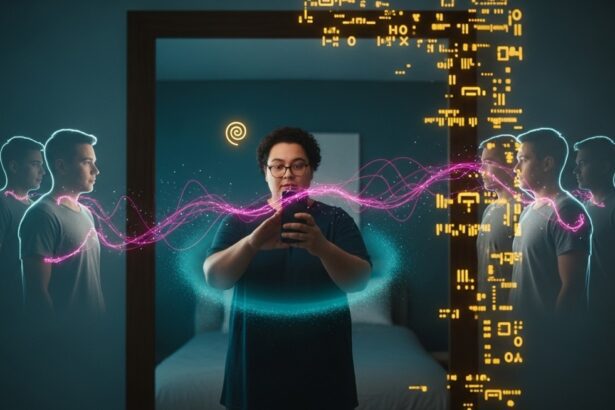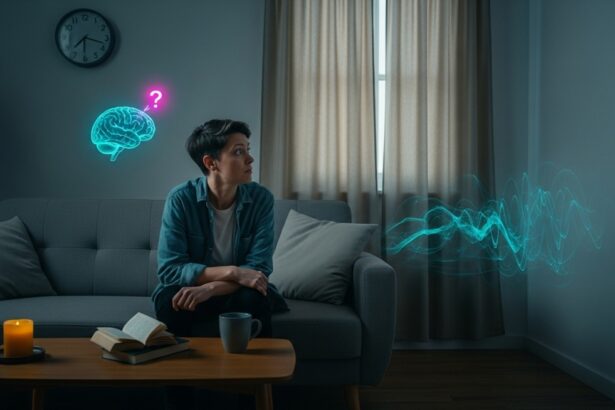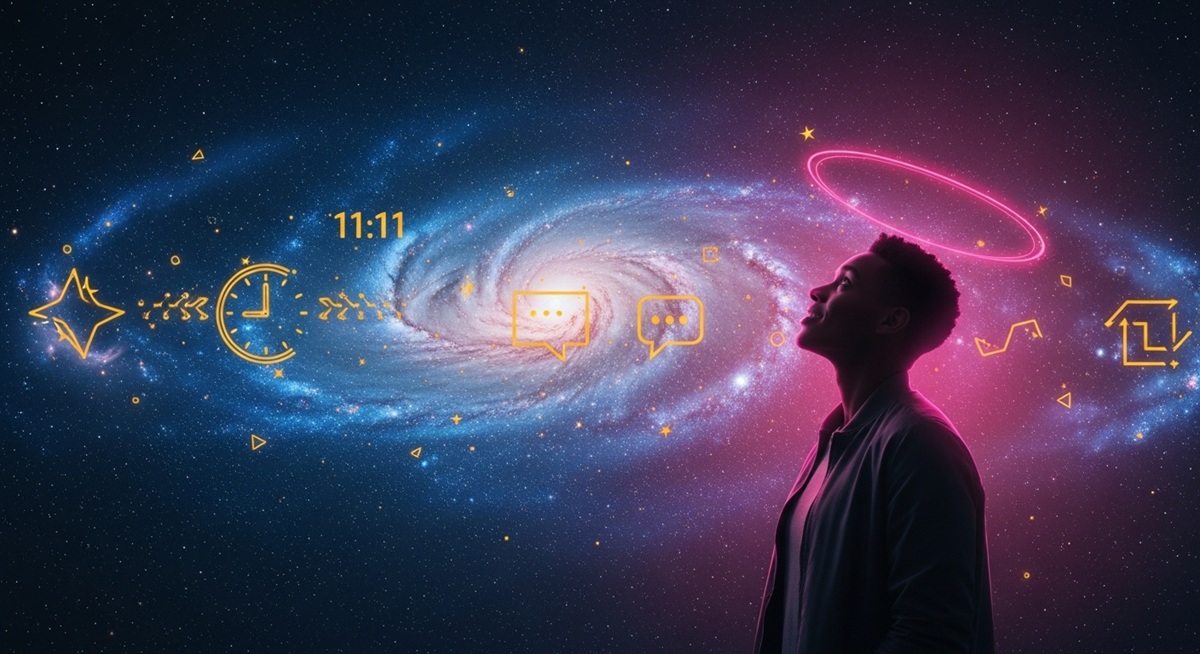
You’re thinking of an old friend you haven’t seen in years, wondering how they are. Five minutes later, your phone buzzes. It’s a text from them. Or maybe you’re scrolling through your feed and see a billboard with the exact phrase you needed to hear that day. And the clock? It always seems to say 11:11 every time you glance at it. Is it just coincidence, you wonder, or is the cosmos giving you a sly little wink? Very nice,” your brain purrs, “my life is now a Netflix drama!” Moments like these tug at something deep, feeling personal, intimate — almost like someone (or something) is scripting your reality. The stakes aren’t just curiosity; if you believe the universe is on your side, you might feel braver, luckier, more connected. Welcome, fellow traveler, to the delightfully unhinged, universally experienced realm of the ‘Cosmic Wink’ Brain, a potent manifestation of pattern recognition. It’s the glorious absurdity of your mind finding profound meaning in random occurrences. This pervasive psychological and emotional quirk highlights a fascinating paradox | science says your brain is wired to spot patterns, and most “winks” are self-generated, but the act of believing them can still change your life in tangible ways. Is your mind just seeking order? Or is your beautiful brain simply doing its very nice, very efficient (though profoundly challenging) job of weaving life into a compelling narrative? At Psyness.com, we take a “very nice!” look at this peculiar psyche, proving that understanding this peculiar psyche doesn’t have to be boring – it can be a riot.
Your Brain’s Pattern Machine | Finding Meaning in the Noise
Why does your mind sometimes trick you into thinking the universe is sending you personal messages? It’s a fascinating testament to your magnificent brain’s ancient wiring for survival, its powerful need for meaning, and its complex system for discerning order in a chaotic world.
Your brain, bless its tirelessly observant heart, is primarily wired to detect patterns. From fundamental survival instincts (“That rustle in the bushes means predator!”) to more abstract connections (“That song came on just when I needed it!”), we instinctively connect dots, whether they objectively belong together or not. These “cosmic winks” happen at the intersection of your perception, attention, and emotion, acting as your brain’s way of saying | “Here’s something that feels relevant — let’s pin it to your story.”
Several cognitive processes fuel this perception:
- Apophenia (The Dot Connector): This is a core mechanism. Apophenia is the tendency to spontaneously perceive meaningful connections or patterns in random or meaningless data. Your brain is so adept at pattern-seeking that it sometimes finds them where none objectively exist, creating a satisfying sense of order. This is where your fuchsia-pink of perceived order glows.
- Baader-Meinhof Phenomenon (Frequency Illusion): As we’ve explored before, once you become aware of something new (a word, a type of car, an idea), you suddenly start noticing it everywhere. This isn’t because it’s actually more frequent, but because your attention filter has been primed to spot it, making it feel like a significant recurrence. This is a very nice, but often misleading, internal spotlight.
- Confirmation Bias (The “I Knew It!” Factor): You naturally tend to remember the “hits” – the times a coincidence felt meaningful – and forget the “misses,” when a similar “sign” appeared but had no relevance. This selective memory reinforces your belief that these “winks” are common and significant. This is where your deep teal/cyan logical processing gets creatively biased.
- Narrative Bias: Your brain loves a good story. It will subtly weave seemingly disconnected events into a compelling narrative arc that aligns with your current emotional state, challenges, or desires. This makes random occurrences feel like plot points in your personal “Netflix drama.”
- Emotional Salience: The stronger the feeling attached to an event or thought, the stickier the memory becomes. When a coincidence aligns with a strong emotion (hope, anxiety, longing), it creates a powerful mental connection, giving it “cosmic wink” weight. This is where your cheerful mustard yellow of vivid emotional resonance shines.
For example, you start thinking about switching careers, and suddenly, every conversation you have, every ad you see, and every podcast episode you listen to seems to be about “making bold changes” or “finding your true calling.” The reality is, your brain’s filter for noticing this specific theme has simply dialed up, making these occurrences stand out from the background noise.
Pop Culture’s Divine Interventions | Our Shared Search for Signs
The human fascination with signs, omens, and universal messages is deeply embedded in our collective consciousness and frequently explored in pop culture. From Arthur Koestler’s documented dozens of eerie coincidences, like Abraham Lincoln’s and JFK’s parallel life events, to people narrowly avoiding disaster after an “odd feeling,” stories of meaningful coincidences resonate because they tap into our desire for a larger order. While many can be explained statistically, their emotional weight remains undeniable.
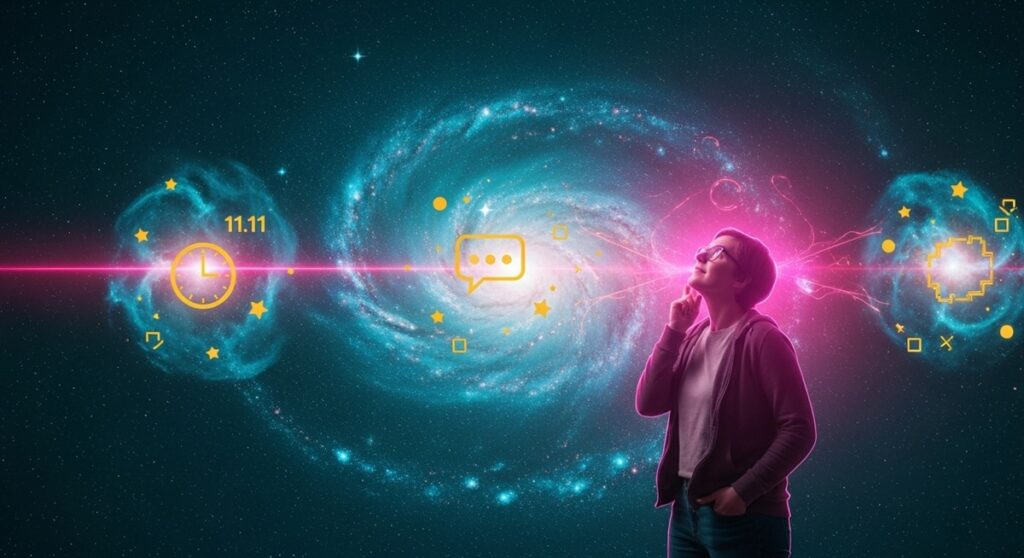
Ancient cultures, from the omens in ancient Rome to the guidance found in dreams by the Iroquois, have always looked for “messages” in patterns. Today, this continues with phenomena like “angel numbers” on Instagram feeds, where sequences like 11:11 are seen as divine signals. It’s like in the movie Bruce Almighty, where Jim Carrey’s character, given divine powers, suddenly sees “signs” everywhere, even in the most mundane objects, as the universe directly responds to his thoughts. This reflects our innate tendency to seek out and assign meaning to random occurrences, transforming the ordinary into the extraordinary. It’s a shared, delightful madness where our perceived reality is often dictated by our brain’s tireless, but often unnecessary, drive to find meaning in everything. Your inner Borat might notice a bird fly by when he thinks of good luck and declare, “Very nice, this bird is very good sign! My brain says ‘no, it is just normal bird!’ Very nice, now I still think it is sign, very confusing for my very good brain!”
How to Play with Your ‘Cosmic Wink’ Brain (Very Nice! And Truly Liberating!)
Understanding that your brain’s ‘Cosmic Wink’ tendency is a natural, powerful psychological process is the first step to liberation. It’s not about dismissing all wonder; it’s about learning to work with your magnificent, weird brain to foster greater self-awareness, critical thinking, and authentic connection. Here’s how to nudge your brain towards a more intentional, “very nice!” understanding:
- Log Your Winks (The Detective’s Notebook): Keep a small notebook or a dedicated phone note for “cosmic coincidences.” Jot down the incident, what you were thinking or feeling just before, and any patterns you notice. This helps you track real occurrences versus perceived increases. This is your cheerful mustard yellow signal for conscious tracking.
- Look for the Emotional Link (Inner Compass): When a “wink” happens, ask yourself | What was I feeling or focusing on when I noticed this? Often, the significance comes from your internal state rather than external prophecy.
- Run the “Double Test” (Reality Check): To gauge true significance, ask | Would this still feel like a sign if it happened to someone else? Or if it happened on a different day when I wasn’t feeling or thinking about this specific thing?
- Use as Creative Prompts (Fuel for Fun): Instead of solely seeking prophecy, turn these coincidences into fuel for your creativity. Write about them, use them for art inspiration, or leverage them for brainstorming new ideas.
- Pair Intuition with Logic (Balanced Approach): Let a “sign” inspire action or provide a sense of encouragement, but always run it through your rational checks. Let your intuition open doors, but use logic to explore what’s behind them.
- Challenge Your Bias (Healthy Humility): Consciously notice how often a “sign” doesn’t show up, even when you’re looking for it. This healthy dose of reality is humbling and helps keep your perception grounded.
- Share the Fun (Connection, Not Prophecy): “Cosmic winks” make for great stories! Share them with friends and loved ones, not as claims of prophecy, but as fascinating insights into the human mind’s quirky ability to find meaning.
The ‘Cosmic Wink’ Brain is a truly special window into our complex psychology, a reminder that our minds, while magnificent, are also prone to delightful (and sometimes puzzling) forms of pattern recognition. Knowing this doesn’t make you a failure; it makes you self-aware, wonderfully weird, and very nice! Embrace your inner pattern-spotter, understand your brain’s fascinating filters, and prove that you can navigate the subtle illusions of synchronicity with greater presence, gratitude, and authentic understanding.