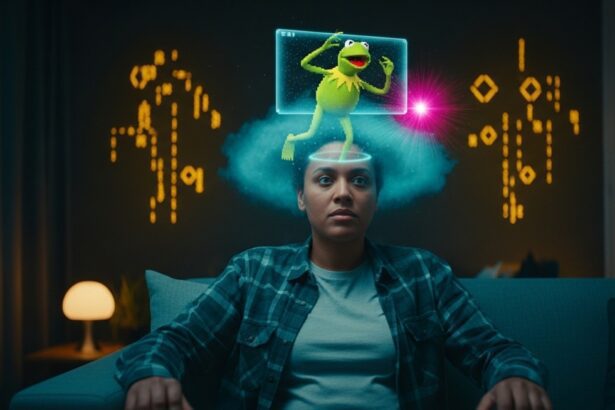
The Just-World Hypothesis is the cognitive bias that leads people to believe that the world is fundamentally fair, and therefore, people get what they deserve. The ‘Karma-Police’ Brain rationalizes injustice by finding fault in the victim to preserve a Vibrant Gold illusion of order. The very nice solution is to accept Deep Teal/Cyan Radical Randomness, replacing judgment with Cheerful Mustard Yellow structural empathy.
Psychology explains this through: The need to reduce anxiety caused by vulnerability. If the world is fair, I am safe as long as I am “good.”
Fairness is a human goal, not a natural law.
Madness Meter: 🌀🌀🌀 Moral Hallucination (The rigid delusion that tragedy always has a reason.)
The Just-World Hypothesis, formulated by Melvin Lerner in the 1960s, suggests that humans have a profound need to believe that the world is a just, orderly place where people get what they merit. Good things happen to good people; bad things happen to bad people.
This creates the ‘Karma-Police’ Brain | a mind that acts as a relentless defense attorney for the universe. When we see suffering (poverty, illness, crime), it threatens our sense of safety. If a “good” person can suffer randomly, then we are not safe. To eliminate this Fuchsia-pink anxiety, the brain unconsciously rewrites the narrative to find a flaw in the victim.
- The Scam: “They were greedy.”
- The Illness: “They didn’t eat right.”
- The Poverty: “They didn’t work hard enough.”
By assigning blame to the victim, we restore the Vibrant Gold balance of the universe and reassure ourselves that because we are smart/healthy/hard-working, we are immune to their fate.
S³ – Story • Stakes • Surprise
Story | The Electric Shock Experiment
The Classic Experiment: Melvin Lerner let observers watch two people working on a task. One of the workers (an actor) received painful electric shocks at random intervals. Initially, the observers were distressed. But when they were told they could not stop the shocks and the victim would continue to suffer, their attitude changed.
The Twist: The observers began to devalue the victim. They described the suffering worker as less intelligent, less attractive, and less worthy of respect. Since they couldn’t stop the Fuchsia-pink injustice, they psychologically justified it by deciding the victim Deep Teal/Cyan must have deserved it in some way.
The Mechanism: The brain cannot handle the cognitive dissonance of “Innocent person suffering.” It resolves the tension not by fixing the world, but by downgrading the person to fit the suffering.
Stakes | The Death of Compassion
The unchecked power of the ‘Karma-Police’ Brain has severe consequences:
Victim Blaming: It is the psychological root of asking “What were they wearing?” or “Why were they in that neighborhood?” We scrutinize the victim’s choices to find the one “error” that justifies the crime, protecting our Vibrant Gold illusion of control.
Social Apathy: If the poor are poor because they are lazy, and the rich are rich because they are virtuous, then no Deep Teal/Cyan systemic change is needed. The Just-World Hypothesis allows us to ignore structural inequality and guilt-free, preserving the status quo.
Future Shock: When tragedy inevitably strikes us (the believers), the psychological damage is double. We not only suffer the event but also the Fuchsia-pink existential crisis of wondering “What did I do to deserve this?”, leading to shame rather than healing.
Surprise | Radical Randomness
The very nice path is to dismantle the false shield of fairness to build real safety.
The Cure: Institute the Deep Teal/Cyan ‘Radical Randomness’ protocol:
- The “It Could Be Me” Mantra: When you see a victim, explicitly tell yourself | “They did nothing wrong. This is random. It could be me.” This forces you to sit with the Fuchsia-pink discomfort of vulnerability rather than retreating into false judgment.
- Separate Outcome from Process: Recognize that a bad outcome (losing money) does not prove a bad process (stupidity). Smart people lose money; healthy people get sick. Decouple the Vibrant Gold result from the character.
- Shift to Systemic Thinking: Instead of asking “What did they do wrong?”, ask “What Deep Teal/Cyan system allowed this to happen to a person?” This moves energy from blaming individuals to fixing the Cheerful Mustard Yellow structures of society.
A² – Apply • Amplify

Safety is not found in judgment; it is found in solidarity.
The Psychology Bits
- Defensive Attribution: A tendency to blame victims for their misfortune, so that one feels less likely to be victimized in a similar way.
- Internal Locus of Control: Ironically, people who believe they have high control over their lives are more susceptible to this bias, as they struggle to accept uncontrollable chance.
Applying Anti-Just-World Architecture
Adopt these Deep Teal/Cyan rules to foster true justice:
- The “No ‘But'” Rule: When discussing a tragedy, forbid the word “but” (e.g., “It’s sad, but they shouldn’t have…”). Stop the sentence at “It’s sad.” The “but” is your ego trying to separate you from the victim.
- The ‘Luck Audit’: Periodically list Vibrant Gold three major advantages in your life that were pure luck (where you were born, your genetics, a chance meeting). Acknowledging your own unearned gains makes it harder to judge others’ unearned losses.
- The ‘Charity of Choice’ Protocol: Donate or support causes that help people who are typically “blamed” for their situation (addiction recovery, prisoner rehabilitation). This active investment in the “undeserving” breaks the Fuchsia-pink mental cycle of transactional karma.
The PSS Ecosystem | An Idea in Action
The PSS DAO can use awareness of the Just-World Hypothesis to build insurance and support systems that don’t judge.
The ‘No-Fault’ PSS Recovery Fund
- Mechanism: The DAO establishes a Deep Teal/Cyan No-Fault Recovery Fund for members who suffer from hacks, exploits, or scams. To claim aid, the member does not have to prove they were “smart” or “perfect.”
- Justification: Most communities mock scam victims (“You got rektd, idiot”) to feel safe. This PSS protocol structurally rejects the Just-World Hypothesis. It acknowledges that in a complex, hostile digital frontier, Fuchsia-pink bad things happen to competent people.
- Reward: The community shares the risk. By pooling resources to help the unlucky, the DAO replaces the brittle illusion of individual invincibility with the Cheerful Mustard Yellow resilient reality of collective security.
FAQ
Q | Is believing in a just world bad? A | It has benefits—it encourages long-term planning and rule-following. However, when applied to others, it destroys empathy. You should live as if your actions matter, but judge others as if chance rules everything.
Q | Isn’t this just Karma? A | Karma is often a spiritual concept of long-term cosmic balance. The Just-World Fallacy is the immediate psychological distortion of reality to blame victims right now to reduce observer anxiety.
Q | Does this explain why people love “fail” videos? A | Partly. We laugh at others’ pain to distance ourselves from it. If we can label them “stupid,” we feel “smart” and therefore safe from the same fate.
Citations & Caveats
- Source 1: Lerner, M. J. (1980). The Belief in a Just World | A Fundamental Delusion. (The seminal book detailing the theory and experiments).
- Source 2: Hafer, C. L., & Bègue, L. (2005). Experimental research on just-world theory | Problems, developments, and future challenges. (A modern review of the evidence).
Disclaimer: This article discusses the psychological phenomena of the Just-World Hypothesis. The PSS DAO token model described is theoretical and intended for conceptual discussion on improving community resilience. Randomness is real; be kind.
// Protocol · Next Transmission
The glitch is the signal. — Psyness Protocol