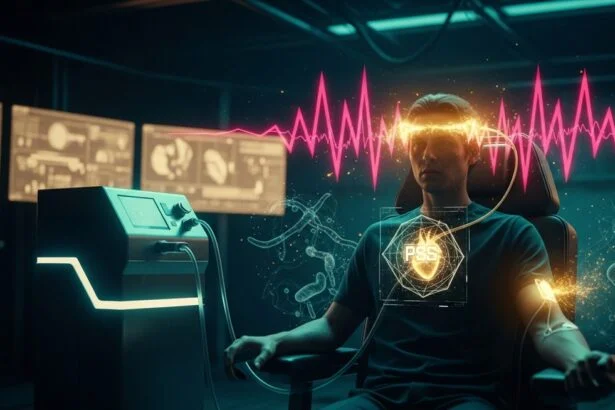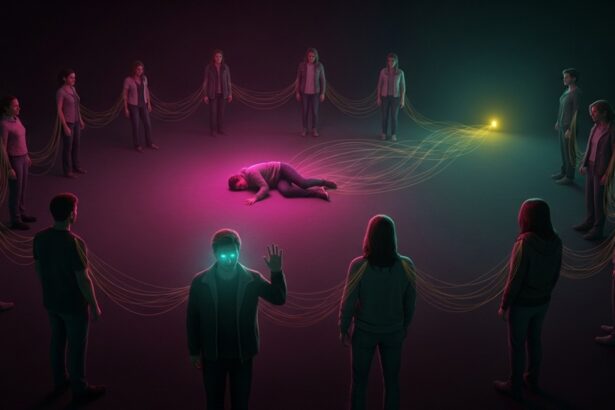
The Fresh Start Effect is the finding that people are more likely to pursue a goal right after a temporal landmark, a new week, a new month, a birthday, a new year, than at any other point in the calendar. Tomorrow Me is the version of you that gets to stand on the other side of that clean line, unblemished by whatever Today Me just failed at. The very nice fix is the Right-Now Landmark, manufacturing that same clean dividing line on purpose instead of waiting for the calendar to hand you one.
Psychology explains this through: the Fresh Start Effect, and the brain’s habit of treating a calendar boundary as permission to file every prior failure under a closed, separate chapter.
Tomorrow never actually arrives. It just keeps rebranding today.
Madness Meter: 🔄🔄🔄 The Serial Reset (Some people get to feel like a brand new person fifty-two times a year without a single old habit ever actually leaving.)
Most people assume “I’ll start Monday” is just a harmless scheduling placeholder, not a real psychological event. The data says otherwise. The date itself measurably changes behavior, for a little while.
This creates the ‘Tomorrow Me’ Fantasy, a mind that keeps drawing a clean line under every failed attempt and handing the next chapter to a stranger with your name and none of your track record.
S³ – Story • Stakes • Surprise
Story | Tomorrow Me and the Fresh Start Effect
The Study: researcher Katy Milkman and colleagues combed through years of Google search data and gym check-in records, looking for patterns tied to specific dates on the calendar.
The Result: searches for terms like “diet” and actual gym visits reliably spiked right after a temporal landmark, the start of a new week, a new month, a birthday, New Year’s Day, then faded back to baseline within weeks. The pattern repeated on every single landmark tested, not just January 1st.
The Mechanism: a temporal landmark works like a line drawn under old mistakes. It lets the brain file Today Me’s failures into a closed chapter and treat Tomorrow Me as a separate, unblemished character starting a fresh account.
Stakes | What the Tomorrow Me Fantasy Costs
Treating every landmark as a real reset has real costs:
The Perpetual Rookie. A habit becomes automatic through unbroken repetition. Starting over at every landmark keeps the behavior stuck in its hardest, most effortful early stage, permanently, no matter how many times it’s been attempted before.
The Guilt Buyout. The comfort of “tomorrow” removes the exact discomfort that would otherwise push someone to change tonight. The fantasy quietly protects the very behavior it claims to be about to fix.
The Today-Me Discount. Since all the patience and goodwill get reserved for a future self who never technically arrives, the person actually doing the work right now ends up chronically treated worse than a stranger would be.
Surprise | The Right-Now Landmark
The fix isn’t waiting for a better landmark. It’s building one on the spot.
The Cure: install the ‘Right-Now Landmark’ the moment the fantasy shows up:
- Catch the Fantasy Mid-Sentence. The instant you think “tomorrow I’ll,” stop and name the smallest version of that action available in the next five minutes.
- Manufacture Your Own Landmark. The brain responds to any clean dividing line, not just a real calendar one. Finishing this coffee, walking through this doorway, closing this tab all work as a start line you can create on demand.
- Bank One Tiny Rep Before the Feeling Fades. Do the smallest possible version of the intended habit right now, before the motivating discomfort has a chance to dissolve into relief.
- Let Today Me Keep the Credit. Log the action under today, not under some future reinvention. The evidence belongs to the person who actually did the work.
A² – Apply • Amplify

Today Me was never the problem. Today Me just needed a start line that didn’t have a waiting period.
The Psychology Bits
- Optimism Bias (Related): the same overly rosy forecasting that makes Tomorrow Me look so reliable, a close cousin of the confidence covered from the emotional-avoidance angle in The ‘I’ll Do It Tomorrow!’ Brain.
- The Future-Self-as-a-Stranger Effect (Related): brain-imaging research finds that picturing your own future self activates regions more associated with thinking about a different person than with thinking about yourself, part of why Tomorrow Me feels like someone so much more capable than you.
Applying Right-Now Architecture
Adopt these rules to stop outsourcing effort to a version of you that never arrives:
- The Five-Minute Substitute. Whenever “tomorrow” shows up in your own self-talk, swap it for “in the next five minutes” before finishing the thought.
- The Manufactured Monday. If a real landmark genuinely helps, use it on purpose, but don’t sit around waiting for the next one if today already needs the change.
- The Evidence Log. Keep one plain, ongoing record of small actions taken today. Rereading it undercuts the fantasy that only some future version of you is capable of following through.
FAQ
Q | Is it bad to use New Year’s resolutions or Monday starts at all? A | No. Temporal landmarks measurably work, gym visits and healthy searches really do spike right after one. The problem isn’t using a landmark, it’s waiting for one before doing anything at all.
Q | Why does Tomorrow Me always feel so much more capable than I actually am? A | Brain-imaging studies find that picturing your future self can activate regions more associated with thinking about a different person than with thinking about yourself, so the confidence isn’t really about your future, it’s borrowed from imagining someone else entirely.
Q | Does being kinder to myself just make procrastination worse? A | No, research on procrastination consistently finds the opposite. Harsh self-criticism after a slip predicts more procrastination next time, not less, while a kinder response predicts a faster return to the task.
Citations & Caveats
- Source 1: Dai, H., Milkman, K.L., & Riis, J. (2014). The Fresh Start Effect: Temporal Landmarks Motivate Aspirational Behavior. Management Science. (The Google-search and gym-data study behind this piece’s Story.)
- Source 2: Hershfield, H.E., Wimmer, G.E., & Knutson, B. (2009). Saving for the Future Self: Neural Measures of Future Self-Continuity Predict Temporal Discounting. Social Cognitive and Affective Neuroscience. (The imaging study behind the Future-Self-as-a-Stranger Effect.)
Disclaimer: This article discusses temporal landmarks and future-self perception as documented in behavioral research, not a claim that willpower is simple or that a relapse is a personal failing. Real habit change still takes real repetition. Starting today doesn’t erase that, it just stops delaying it.
Part of this site’s ongoing look at why good intentions keep missing their own start date. For the same craving covered from the emotional-avoidance side, see The ‘I’ll Do It Tomorrow!’ Brain. For what makes a habit stick once you actually start it, see The ‘Why Do I Keep Doing That?!’ Brain.
// Protocol · Next Transmission
The glitch is the signal. — Psyness Protocol