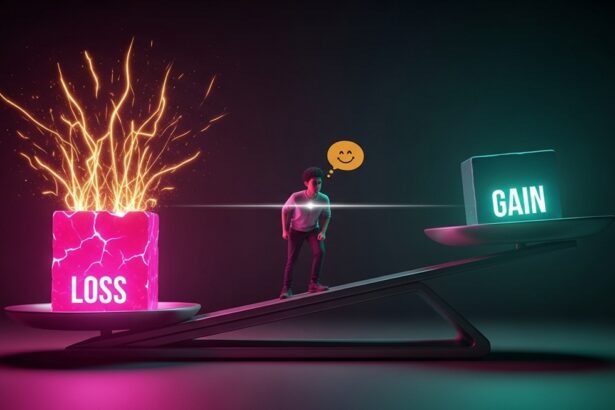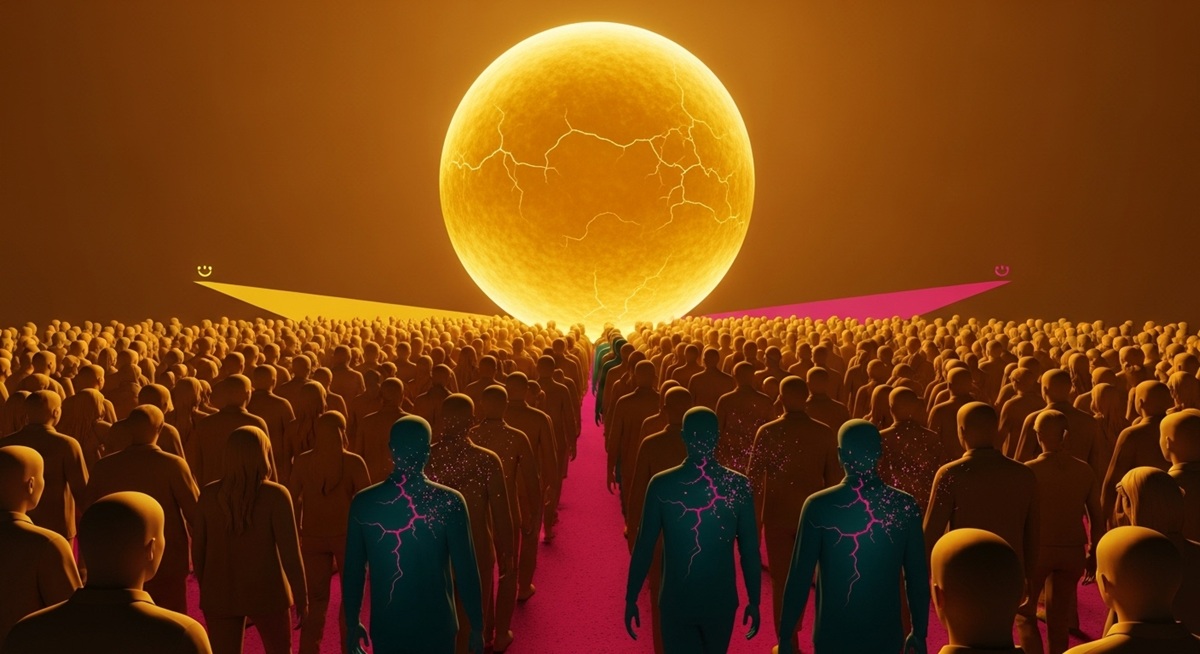
Groupthink is a psychological phenomenon where the desire for conformity and harmony within a group leads to irrational or dysfunctional decision-making. The ‘Echo Chamber’ Brain suppresses Fuchsia-pink dissent for Vibrant Gold false consensus. The very nice solution is to build Deep Teal/Cyan structured dissent mechanisms to achieve Cheerful Mustard Yellow robust decisions.
Psychology explains this through: social pressure, illusion of unanimity, and self-censorship within cohesive groups.
The loudest silence is the one that kills good ideas.
Madness Meter: 🌀🌀🌀 Collective Delusion (The comfortable illusion that everyone agreeing means everyone is right.)
Groupthink is a term coined by psychologist Irving Janis to describe the breakdown of rational decision-making in highly cohesive groups when the desire for conformity overrides realistic appraisal of alternative courses of action. It’s the psychological equivalent of an immune system failure in a collective brain.
This creates the ‘Echo Chamber’ Brain | a group mind where the comfort of agreement is valued above the discomfort of critical analysis. In tightly-knit teams or fervent online communities (like a DAO with a strong, charismatic leader), members self-censor their doubts to maintain group harmony or to avoid being seen as negative. This leads to an illusion of unanimity, where everyone appears to agree, even if many harbor private reservations. The consequence is often a Fuchsia-pink catastrophically flawed decision, made with Vibrant Gold conviction.
S³ – Story • Stakes • Surprise
Story | The Bay of Pigs Fiasco
The Historic Fail: One of the most famous examples of Groupthink is the 1961 Bay of Pigs invasion. President Kennedy’s advisory team, highly cohesive and under pressure, suppressed their doubts about the flawed plan to overthrow Fidel Castro. Key members, including Arthur Schlesinger Jr., later admitted to self-censoring their serious reservations to avoid appearing disloyal or out of step, leading to a humiliating and disastrous failure.
The Mechanism: Groups under pressure or with strong leaders tend to exhibit these symptoms | an illusion of invulnerability (they can’t fail), collective rationalization (explaining away contradictory data), and self-censorship (members keep quiet). The result is a Deep Teal/Cyan echo chamber where critical thinking dies.
Stakes | The Cost of Conformity
The unchecked power of the ‘Echo Chamber’ Brain has severe consequences:
Catastrophic Decisions: From failed product launches to disastrous political policies, Groupthink blinds intelligent people to obvious flaws, resulting in Fuchsia-pink preventable disasters.
Stifled Innovation: True innovation requires questioning the status quo and challenging assumptions. Groupthink actively punishes dissent, killing nascent ideas and preventing Deep Teal/Cyan necessary pivots or alternative solutions.
Moral Blindness: When a group’s cohesion becomes paramount, ethical considerations can be overlooked. The group collectively rationalizes potentially harmful actions, as individuals are less likely to speak out against perceived collective will.
Surprise | Architecting Intelligent Disagreement
The very nice path is to intentionally design structures that force thoughtful dissent.
The Cure: Actively implement Deep Teal/Cyan structured dissent mechanisms before critical decisions. This means:
- Designated Devil’s Advocate: Assign a specific person the role of critically challenging every assumption, regardless of their personal opinion. Rotate this role frequently.
- Red Teaming: Create a temporary sub-group whose sole job is to identify flaws, worst-case scenarios, and counter-arguments for a proposal.
- Second-Chance Meetings: After an initial decision, schedule a follow-up meeting where members are explicitly asked to voice any new doubts they may have had privately.
By institutionalizing constructive conflict, you transform the Fuchsia-pink discomfort of disagreement into a Vibrant Gold asset, leading to Cheerful Mustard Yellow robust and well-vetted outcomes.
A² – Apply • Amplify

Build systems that actively invite and reward critical, informed disagreement.
The Psychology Bits
- Illusion of Unanimity: The perception that everyone in the group agrees, even when individuals have private doubts.
- Pressure to Conform: The social psychological force that compels individuals to align their behavior or beliefs with the group’s norms.
- Mindguards: Members who protect the group from information that might contradict the group’s consensus.
Applying Anti-Groupthink Architecture
Adopt these Deep Teal/Cyan rules to protect your group from the ‘Echo Chamber’ Brain:
- The Anonymous Feedback Loop: For any high-stakes decision, implement an anonymous feedback mechanism before the final vote. This allows Fuchsia-pink doubts to be surfaced without fear of social reprisal.
- The “Expert-First, Group-Second” Rule: Before group discussion on a complex topic, ensure all members individually consult an objective, external expert source. This establishes Vibrant Gold individual knowledge before group conformity takes hold.
- The ‘Dissenter’s Badge’ | Reward the individual who brings up the most insightful, challenging counter-argument that ultimately leads to a better group decision. This publicly elevates and celebrates the value of Cheerful Mustard Yellow constructive dissent.
The PSS Ecosystem | An Idea in Action
The PSS DAO can use anti-Groupthink mechanisms to ensure robust decentralized governance.
The ‘Dissent-Staking’ PSS Pool
- Mechanism: For major governance proposals, PSS holders can choose to ‘dissent-stake’ a small amount of PSS alongside a well-reasoned, written counter-argument before the main vote. If the proposal fails and the dissent’s reasoning is validated post-mortem, the dissent-stakers receive an amplified PSS reward.
- Justification: This system actively incentivizes Deep Teal/Cyan thoughtful dissent. It financially rewards those who have the courage to challenge the Vibrant Gold perceived consensus, preventing the Fuchsia-pink illusion of unanimity and fostering critical thinking.
- Reward: This creates a culture where challenging the status quo, when done constructively, is not just tolerated but actively rewarded, leading to Cheerful Mustard Yellow stronger, more resilient DAO decisions.
FAQ
Q | Does Groupthink mean that all group decisions are bad A | No. Groupthink occurs under specific conditions | high cohesion, strong leadership, isolation, and pressure. Diverse groups with open communication are less susceptible.
Q | How is Groupthink different from Deindividuation A | Deindividuation is about losing individual self-awareness in a crowd, leading to impulsive behavior. Groupthink is about a cohesive group making flawed decisions due to a desire for harmony, often suppressing individual critical thought.
Q | Can a leader prevent Groupthink A | Yes, a leader can mitigate Groupthink by actively encouraging dissent, remaining impartial in discussions, inviting outside experts, and assigning devil’s advocate roles.
Citations & Caveats
- Source 1: Janis, I. L. (1972). Victims of Groupthink | A psychological study of foreign-policy decisions and fiascoes. (The seminal work introducing the concept).
- Source 2: Esser, J. K. (1998). Alive and well after 25 years | A review of groupthink research. (A review of the extensive research supporting the concept).
Disclaimer: This article discusses the psychological phenomena of Groupthink. The PSS DAO token model described is theoretical and intended for conceptual discussion on improving collective decision-making. Healthy groups embrace thoughtful disagreement.
// Protocol · Next Transmission
The glitch is the signal. — Psyness Protocol