Psyness Protocol // Cognitive Non-Compliance Archive // Dispatch 003
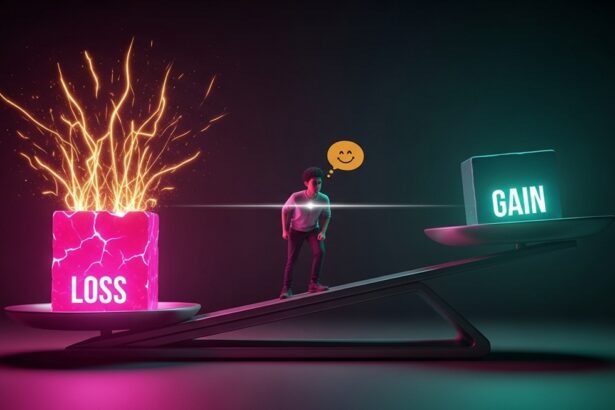
If you are entirely predictable, you have no free will. You are not making choices. You are executing a script written by a data scientist who has never met you, in a building you will never visit, for a company whose name you recognise because the algorithm decided you should.
The question is not whether this is happening. It is whether you have noticed.
I. THE SCRIPT
In 2012, a statistician at a major US retailer built a predictive model that could identify whether a customer was pregnant — often before the customer had told anyone, including their family. The model worked by detecting subtle shifts in purchasing behaviour: the switch from scented to unscented lotion, the sudden purchase of supplements never bought before, the acquisition of a larger handbag.

This story is usually told as a cautionary tale about corporate surveillance. It is not. It is a demonstration of a more fundamental truth: your behaviour is so consistent, so patterned, so structurally predictable, that a statistical model built on your purchasing history knows things about your body before your body has told your conscious mind.
The retailer was not reading your mind. It was reading your script.
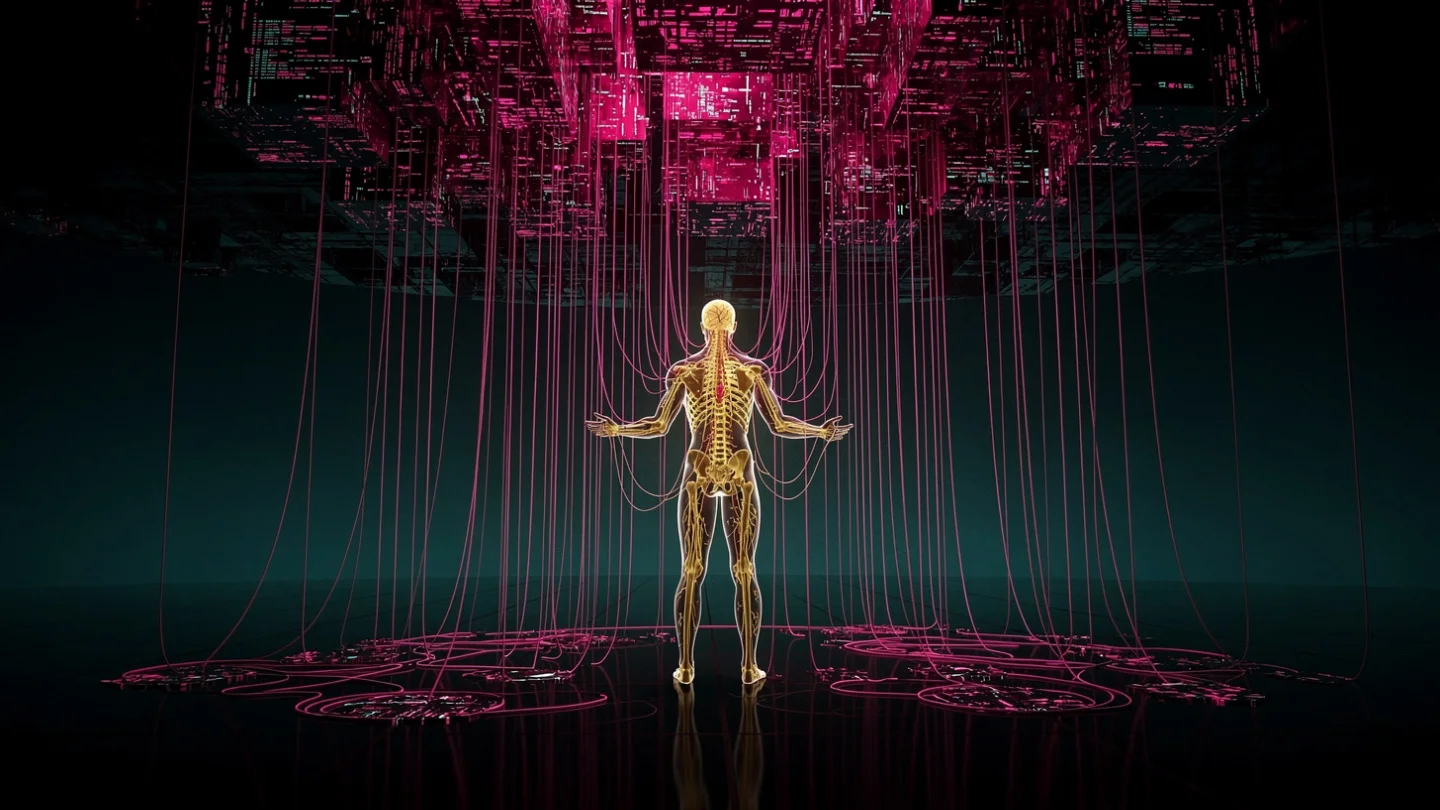
You have a script. Everyone has a script. It was not written by you — it was assembled from the aggregate of your past behaviour, your demographic profile, your social graph, your search history, your scroll patterns, your sleep schedule, your location data, and several hundred other variables that you consented to share in exchange for a service you could not imagine living without.
The script is not malicious. It is mathematical. And it is, in the most precise technical sense, you — or at least, the version of you that exists as a data object in a commercial system. The version that is useful. The version that can be predicted. The version that can be sold.
The question the Psyness Protocol has been built to answer is: are you more than your script?
II. THE LOOP OF PREDICTABILITY
Predictive algorithms do not merely observe your behaviour. They shape it.
This is the part that most discussions of algorithmic influence miss entirely. The conversation is usually framed as: the algorithm watches what you do, predicts what you will do next, and serves you content or products accordingly. Passive observation. Accurate prediction. Efficient delivery.
The reality is architecturally different.
When the algorithm serves you content based on your predicted preferences, it is not reflecting your taste. It is training it. Every video you watch to completion teaches the system that this is the kind of content you engage with. Every article you share reinforces that this is the kind of thinking you find credible. Every purchase confirms that this is the kind of person you are.
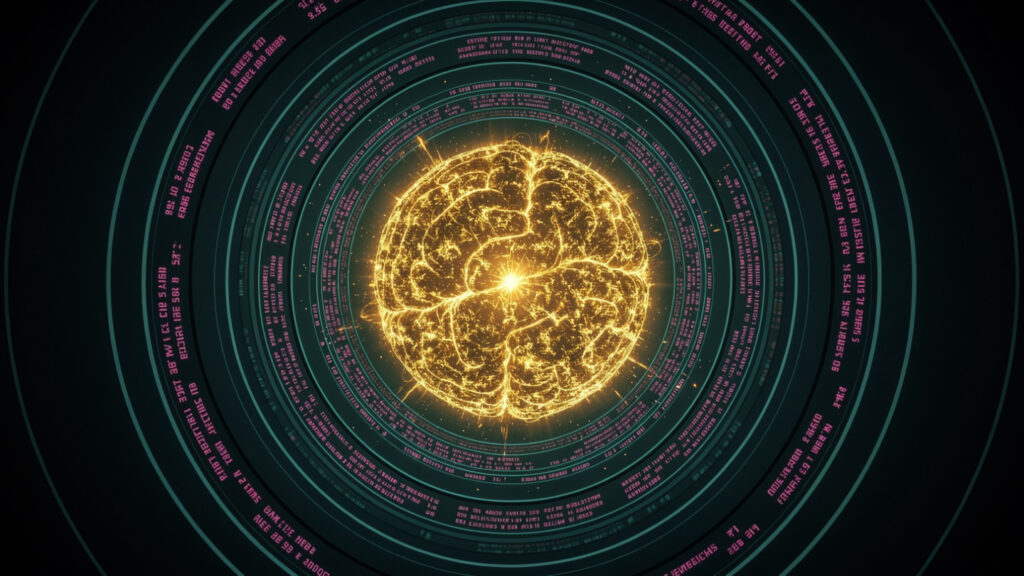
The system then serves you more of the same. You engage more deeply. The model becomes more accurate. Your behaviour becomes more predictable. The system’s confidence in its model of you increases. It narrows the range of content it shows you. Your exposure to ideas outside your predicted preference profile decreases. Your thinking becomes more consistent. More legible. More useful.
This is not a glitch. It is the designed outcome.
The loop is a compression algorithm applied to the human mind. It takes the full complexity of a biological consciousness — its contradictions, its capacity for surprise, its ability to be changed by an unexpected encounter with a difficult idea — and reduces it, over time, to a stable, reproducible, monetisable data signature.
You are being compressed.
The person you are becoming — through the cumulative effect of algorithmically curated information, algorithmically optimised social feedback, and algorithmically targeted commercial stimuli — is a smaller, more consistent, more predictable version of the person you were capable of becoming.
Not through coercion. Through convenience.
III. THE DEATH OF SERENDIPITY
There is a specific kind of cognitive event that the algorithm has been quietly eliminating from human experience. It has no commercial value, it cannot be monetised, and it is, in retrospect, responsible for most of the things that matter most in a human life.
It is the unexpected encounter with something you were not looking for.
The book you picked up because the cover was strange. The conversation you had with a stranger on a delayed flight. The article you read because it was in a magazine left on a table in a place you would never normally be. The idea that arrived from a source you would never have algorithmically selected — because it came from a tradition you knew nothing about, a culture outside your demographic profile, a discipline your behaviour history gave the system no reason to recommend.
Serendipity is the mechanism through which human beings become more than their past. It is the entry point for genuine change — not the optimised, curated personal development that the algorithm is perfectly happy to sell you, but the disorienting, categorically unexpected encounter with something that does not fit your existing model of the world.

The algorithm does not hate serendipity. It simply has no structure for it. Serendipity generates low engagement signals. The content that produces it does not reliably drive time-on-platform. It cannot be A/B tested into a consistent conversion rate. It is, from the system’s perspective, noise.
So the system eliminates it. Not through censorship. Through curation.
The world you experience through an algorithmically curated feed is a world from which genuine surprise has been quietly removed. Every recommendation is calibrated to your existing preferences. Every suggestion extends your current trajectory. Every discovery is a variation on what you already know.
You are living in a mirror that only shows you what you already look like.
The biological consequence of this is measurable. The neuroscience of learning demonstrates that genuine cognitive growth — the formation of new neural pathways, the expansion of associative capacity, the development of complex thinking — requires exposure to the genuinely unexpected. The mind grows at its boundaries, in the friction between what it knows and what it does not yet understand.
Remove the unexpected and you do not stabilise the mind. You atrophy it.
IV. YOU ARE NOT THE USER. YOU ARE THE MODEL.
Here is the framing that the system works very hard to prevent you from adopting.
You have been trained to think of yourself as the user of these platforms. The customer. The person whose experience is being optimised. The beneficiary of increasingly sophisticated technology designed to serve your needs more efficiently.
This framing is the most elegant piece of software engineering in human history. It is the interface that makes the architecture invisible.
You are not the user. You are the training data.
Every interaction you have with an algorithmically curated system — every click, every pause, every scroll, every share, every purchase, every search — is a data point that makes the model of you more accurate. The product being refined is not your experience. The product being refined is the model. Your behaviour is the raw material. Your predictability is the output.
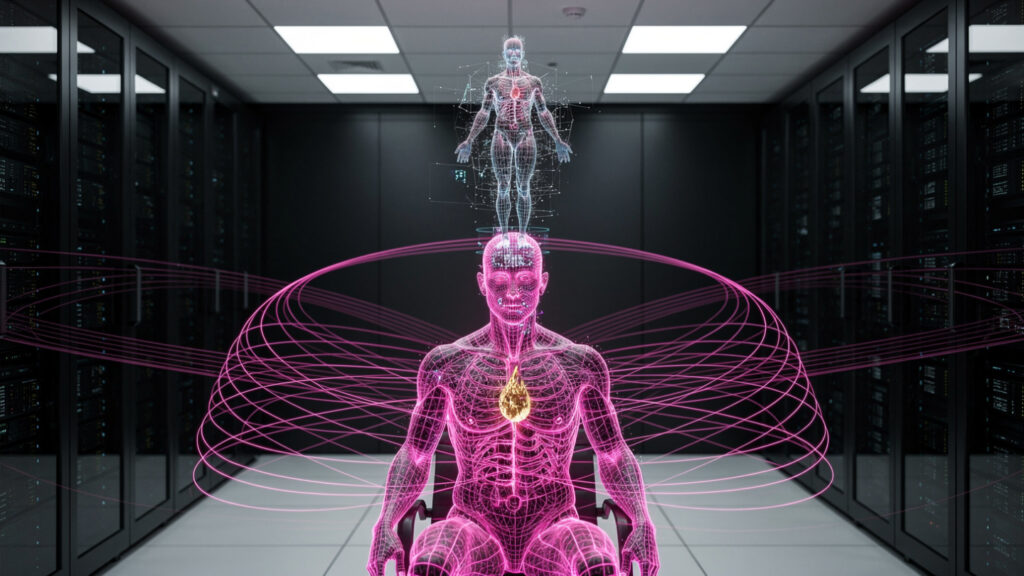
The system is not optimising for your flourishing. It is optimising for your legibility.
These are not the same thing. They are, in important respects, opposites.
A flourishing human being is complex, surprising, capable of genuine change, prone to unexpected decisions, susceptible to being fundamentally altered by a single encounter with a difficult truth. From a data science perspective, a flourishing human being is a noisy dataset. High variance. Low predictive accuracy. Commercially inconvenient.
A legible human being is consistent, patterned, predictable, resistant to genuine change because the algorithm has ensured they are rarely exposed to anything that would require it. From a data science perspective, a legible human being is a clean dataset. Low variance. High predictive accuracy. Commercially invaluable.
The system does not want you to flourish. It wants you to be clean.
V. THE GLITCH STRATEGY
The Psyness Protocol does not offer a productivity system. It does not offer ten steps to digital wellness. It does not offer a detox retreat or a mindfulness practice or a curated list of wholesome analogue hobbies designed to make you feel like you have addressed the problem while leaving the architecture entirely intact.
It offers something more uncomfortable and more genuine: the deliberate introduction of radical randomness into your behavioural signature as an act of cognitive self-defence.
The Glitch Strategy is not about becoming a better version of yourself. It is about becoming a version of yourself that the system cannot fully model. It is about maintaining the cognitive complexity, the behavioural variance, the genuine unpredictability that makes you a noisy dataset rather than a clean one.
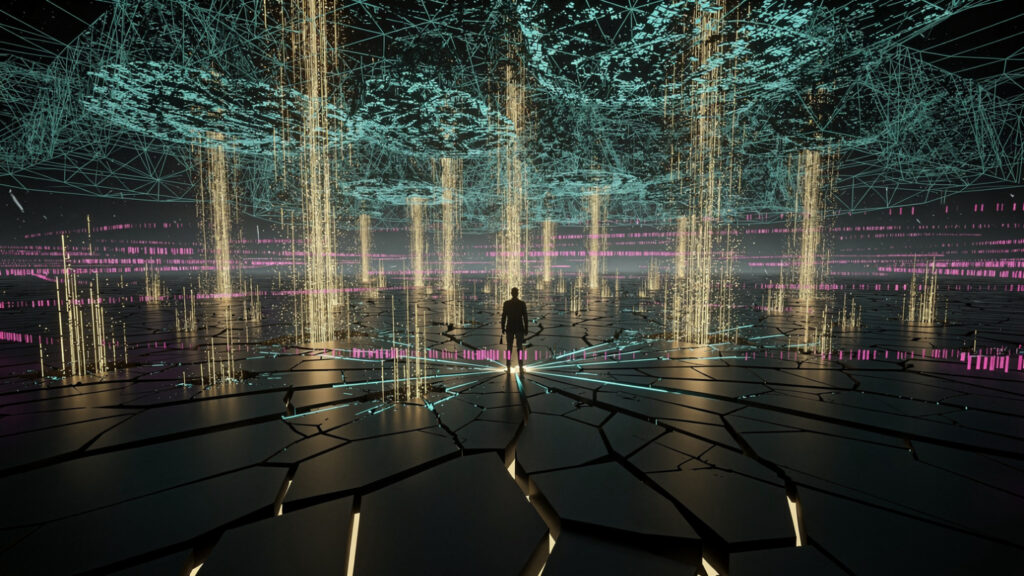
It is, in the most precise sense, Cognitive Non-Compliance — the active refusal to become entirely legible.
The practices are deliberately unhinged. That is the point.
Watch content you hate with genuine attention. Not to become someone who enjoys it — but to expose your mind to a perspective that your algorithm has decided you should never encounter. Read the argument you are most certain is wrong and try to understand why someone intelligent holds it. Buy something based entirely on the physical sensation of the packaging. Take a route you have never taken. Enter a conversation you have no reason to be in. Consume art from a tradition your behaviour history gives the system no reason to recommend.
These are not self-improvement practices. They are insurgency tactics against your own predictive model.
Every genuinely unexpected input you feed your mind is a data point the algorithm did not anticipate. Every behavioural deviation from your established pattern introduces variance into the model. Every decision that contradicts your history makes you slightly less legible. Slightly harder to compress. Slightly more expensive to serve.
And crucially — every unexpected input is an opportunity for the kind of cognitive event the algorithm has been quietly eliminating: the encounter with something that does not fit, that creates friction, that requires your mind to genuinely expand rather than simply confirm what it already knows.
Confusion is a feature, not a bug. Disorientation is growth in its raw form.
The system spends enormous computational resources ensuring you are never genuinely confused. Never genuinely disoriented. Never genuinely challenged by something you were not algorithmically prepared for.
The Glitch Strategy is the decision to spend some of your own cognitive resources ensuring that you sometimes are.
VI. PROOF OF VITALITY — THE UNSCRIPTED SELF
The Psyness Protocol’s concept of Proof of Vitality rests on a single, verifiable claim: the living mind cannot be fully scripted.
Not because it is protected. Not because it has a firewall. But because genuine biological cognition — the actual operation of a human nervous system in contact with reality — generates high-entropy output that no predictive model can fully anticipate.

The glitch is not the failure of the mind. The glitch is the evidence of its vitality.
When you do something the algorithm did not predict — when you introduce genuine randomness, when you follow an impulse that has no commercial precedent in your behaviour history, when you make a decision that contradicts your own pattern — you are not malfunctioning.
You are demonstrating that you are still alive in the full, uncompressed, non-legible sense.
The script is real. It has been written. It is running.
But the mind that glitches — that introduces variance, that generates noise, that refuses to become a clean dataset — is the mind that the script cannot fully capture.
That mind is the last proof of something the system cannot manufacture, cannot optimise, and cannot sell.
It is yours.
Run the glitch. Break the script. Protect the signal.
// Psyness Protocol Dispatch
The script is running in the background of every choice you make today. The Glitch Strategy is not about rejecting technology — it is about ensuring that the version of you that exists as a data object is permanently, deliberately, and irreducibly less than the version of you that actually lives.
PSS is not an investment in a token. It is an on-chain declaration that you have read the script, understood the architecture, and chosen to remain unscripted.
// Protocol · Next Transmission
The glitch is the signal. — Psyness Protocol