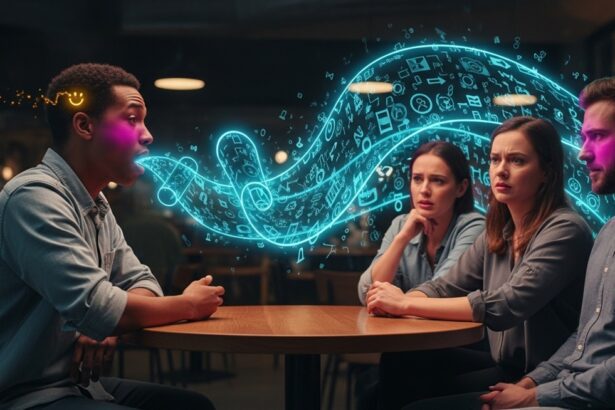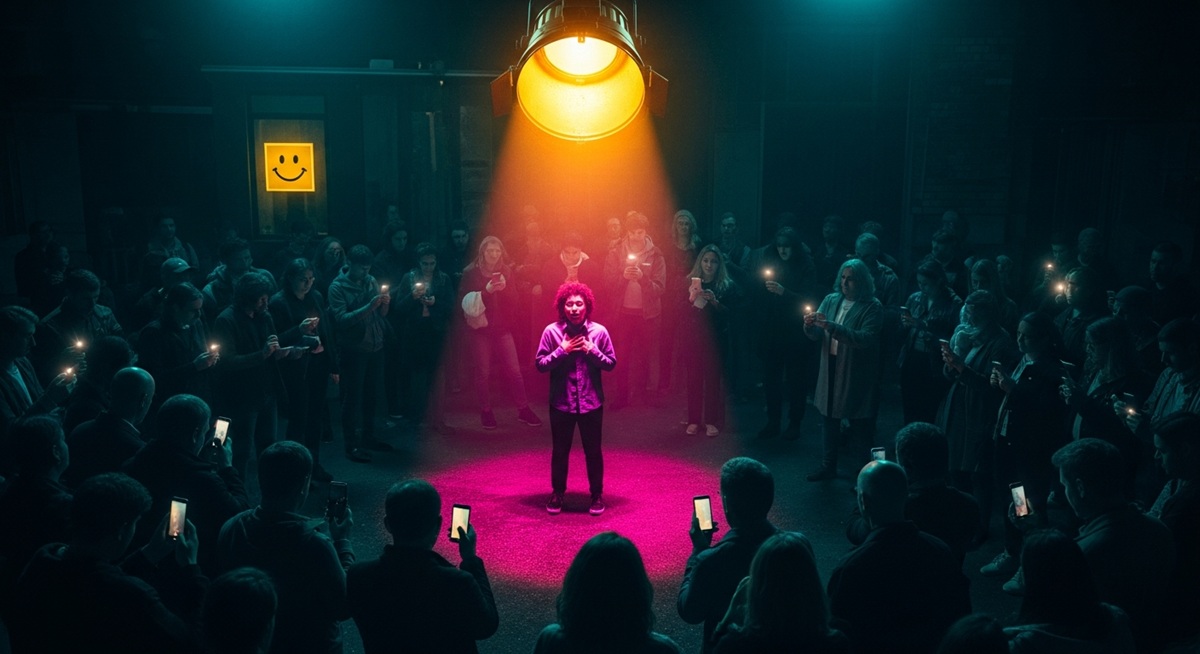
The Spotlight Effect is the tendency to believe other people notice your mistakes and appearance far more closely than they actually do. The ‘Center of the Universe’ Brain is the version that shows up hardest with a microphone in your hand. A shaking voice or a lost sentence feels like the only thing anyone in the room will remember, when most of them are already rehearsing their own turn to speak. The very nice fix is a short redirect called the Content Anchor, moving your attention off your own performance and onto the one thing the room actually came for.
Psychology explains this through: self-focused attention. Turning your own awareness inward, onto how you’re coming across, measurably drains the mental resources available for the task itself, making the performance worse in exactly the way you feared.
The room isn’t grading your nerves. It’s waiting for your point.
Madness Meter: 🌀🌀🌀 Podium Paranoia (The certainty that a shaking hand is broadcast in HD to everyone in the room.)
Nobody prepares for a presentation by worrying about the material and then, separately, worrying about how worried they look. The two worries run at the same time, competing for the same limited attention, and the second one is pure waste. It doesn’t make the delivery smoother. It only pulls resources away from the part anyone in the room is actually there for.
This creates the ‘Center of the Universe’ Brain, a mind convinced that its own internal panic is being read off a jumbotron, when the audience is mostly reading their own notes.
S³ – Story • Stakes • Surprise
Story | The Impromptu Speech Study
The Classic Experiment: Researchers had participants deliver short, unprepared speeches to a small audience, then estimate how visibly nervous they had appeared and rate their own performance. Independent observers rated the same speeches separately.
The Twist: before speaking, one group of participants was simply told about the illusion of transparency, that internal anxiety is far less visible to an audience than it feels from the inside. That’s the entire intervention. No breathing exercises, no rehearsal, just the information itself.
The Result: the informed group rated their own performance higher, reported feeling calmer, and were independently rated by observers as having actually seemed calmer and performed better than the group given no such information.
The Mechanism: correcting the belief that everyone can see the panic didn’t just reduce worry. It freed up attention that had been spent monitoring the self, and that attention went straight back into the speech, improving the thing the speaker was actually afraid of ruining.
Stakes | What the ‘Center of the Universe’ Brain Costs
The cost of the ‘Center of the Universe’ Brain shows up in the performance itself, not just the anxiety around it:
The Self-Focus Trap. Attention spent monitoring your own voice, posture, and face is attention not spent on the argument, the room, or the next sentence. The fear of looking bad quietly produces the exact stumble it was trying to prevent.
The Feedback Vacuum. Convinced that everyone already noticed and silently judged the flub, people stop asking colleagues what they actually saw. The one thing that would recalibrate the fear, real data, is the thing avoided most.
The Promotion You Turned Down. Client-facing roles, panel invitations, and leadership tracks that require regular presenting get quietly declined, not for lack of ability, but because the imagined scrutiny of the room feels heavier than the actual opportunity.
Surprise | The Content Anchor
The cure isn’t trying harder to look calm. That’s still self-focus, just aimed at a different target. It’s giving your attention somewhere else to go before it has the chance to turn inward.
The Cure: run the ‘Content Anchor’ before and during anything that puts you in front of people:
- Name the Redirect. The instant you notice yourself thinking about how you look rather than what you’re saying, name it silently: “self-focus.” Naming it loosens its grip.
- Anchor to the Room’s Actual Question. Before speaking, decide what the audience most needs from the next two minutes. Return to that question every time attention drifts to yourself.
- Pre-Commit Before You Start. Decide in advance that a stumble is information, not a verdict, so the moment it happens there’s a plan already in place instead of a fresh spiral.
- Ask for One Real Data Point. Afterward, ask a trusted colleague what they actually noticed. The answer almost never matches the disaster replaying in your head.
A² – Apply • Amplify
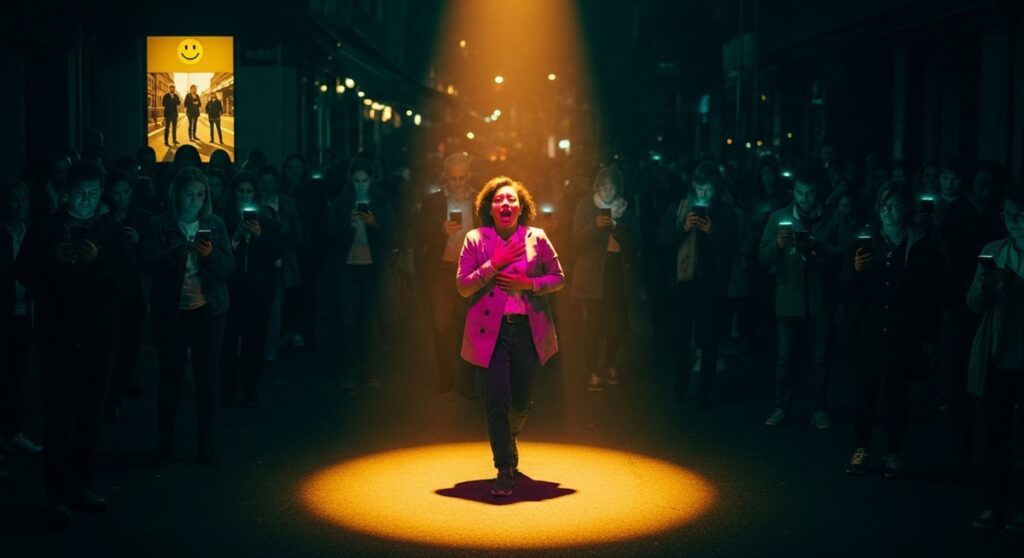
Give your attention a job, and it stops volunteering for panic.
The Psychology Bits
- Self-Focused Attention: Directing awareness inward, onto one’s own state and appearance, at the expense of the external task, a well-documented driver of performance anxiety.
- Choking Under Pressure (Related): Skilled performance degrades when a person consciously monitors steps that would normally run automatically, the same self-monitoring mechanism at a smaller scale.
Applying Content-First Architecture
Adopt these rules before anything that puts you in front of an audience:
- The Content Anchor Rule. Rehearse one short phrase that pulls you back to the material the moment self-focus creeps in, and use it on purpose the first few times, not just when things go wrong.
- The One-Data-Point Habit. After any high-stakes moment, ask one trusted person what they actually noticed. Build a real track record to argue with the imagined one.
- The Pre-Speech Reframe. Before you start, remind yourself out loud or in writing: the room is grading the message, not your nerves. Do this every time, not just on the hard days.
FAQ
Q | Isn’t some self-monitoring useful, like checking your pace? A | A quick external check, like glancing at a clock, is fine. The problem is monitoring how you’re being perceived, which pulls attention inward instead of outward.
Q | Does telling yourself “nobody’s watching” actually work? A | Less than you’d think, because it’s usually not true, people are watching. What works better is knowing they’re reading you far less precisely than you’re reading yourself.
Q | Why do experienced speakers still get this? A | Experience lowers the baseline anxiety but doesn’t remove the mechanism. Even seasoned presenters can slip into self-monitoring under new pressure, a bigger room, a harder audience, a topic they care more about.
Citations & Caveats
- Source 1: Savitsky, K., & Gilovich, T. (2003). The illusion of transparency and the alleviation of speech anxiety. Journal of Experimental Social Psychology. (The impromptu-speech study behind this article.)
- Source 2: Baumeister, R. F. (1984). Choking under pressure: Self-consciousness and paradoxical effects of incentives on skillful performance. Journal of Personality and Social Psychology. (Self-monitoring degrading performance more broadly.)
Disclaimer: This article discusses the psychological mechanism behind performance anxiety in public speaking, not clinical treatment for anxiety disorders. If nervousness around speaking or being observed is severe, persistent, or distressing well beyond ordinary nerves, that’s worth raising with a professional rather than working through with a checklist alone.
Part of a broader look at the Spotlight Effect on this site. For the version rooted in everyday self-consciousness and the classic embarrassing-shirt study, see The Invisible Audience.
// Protocol · Next Transmission
The glitch is the signal. — Psyness Protocol