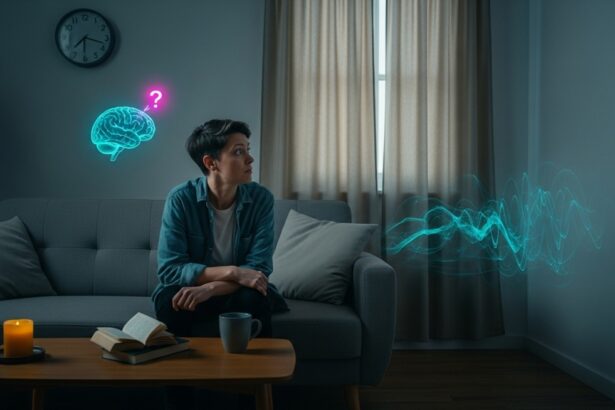
Confirmation bias is the tendency to favor information that confirms what you already believe and discount whatever contradicts it. Online, the ‘Echo Chamber’ Brain gets outsourced to an algorithm that does the same filtering automatically, at a scale no single brain could manage alone. The very nice fix is the Two-Feeds Test, comparing your own feed against a logged-out one to see the filter directly.
Psychology explains this through: engagement optimization, since agreement keeps people scrolling more reliably than being challenged does.
Your feed is a mirror, not a window.
Madness Meter: 🌀🌀🌀🌀 Automated Consensus (Confirmation bias, but with a staff and a firehose.)
Confirmation bias is ancient. Every brain has always preferred information that agrees with it. What’s new is that the feed now does the preferring for you, continuously, invisibly, at a scale no individual bias ever managed working alone.
This creates the ‘Echo Chamber’ Brain | a feed constantly, tirelessly working to keep showing you a version of the world you already agree with. This runs through the same three stages, just automated:
- Engagement Ranking. Content that confirms what you already think earns more time on screen and more shares, and the system reads that as an instruction to show more of the same.
- The Follow-Graph Funnel. Years of small, undramatic unfollows quietly prune your information diet, and the algorithm optimizes further from there on its own.
- Invisible Curation. You never see what got filtered out, so the gap never registers as a gap. It feels like consensus instead.
The algorithm does this because agreement is the most reliable engagement signal it has. It isn’t trying to be fair. It’s trying to keep you scrolling.
S³ – Story • Stakes • Surprise
Story | Two Tabs, Two Planets
The Classic Example: A weather event, a public figure’s mistake, a disputed call in a televised game. Two people watch the exact same clip and walk away with opposite readings, each one certain the replay obviously supports them, because the replay arrived inside a feed that had already spent months teaching them what to notice and what to skip past.
The Mechanism: Search a dividing topic from your own account, then again from a logged-out window. The gap between those two results is the bubble itself, not a metaphor for it, sitting right there in two open tabs. The gap tends to be largest on exactly the topics that feel most urgent and most obvious, which is the cruelest part of the mechanism.
The Callback: Months later, the same claim can resurface reworded from a different account, and it registers as new confirmation rather than an old one recirculating, because the feed rarely shows its own history.
Stakes | The ‘Echo Chamber’ Effect, at Scale
The unchecked power of the ‘Echo Chamber’ Brain has consequences an individual bias never had on its own:
Scale: Before algorithmic feeds, confirming a belief took effort, seeking out the newspaper or the crowd that already agreed with you. Now confirming sources come looking for you, automatically, forever.
The Repetition Illusion: Seeing the same claim from five accounts feels like five independent confirmations. It’s usually one claim, reshared five times, arriving through five different doors.
No Off Switch: Clearing your search history feels like progress, briefly. The algorithm treats the silence as new data too, and fills the space with something else just as comfortable.
The Speed Problem: A correction, when one arrives, travels slower than the original claim ever did, since the algorithm already knows who wanted to see the first version and rarely bothers routing the second one to the same audience.
Surprise | The Two-Feeds Test
The very nice path is to make the filter visible instead of invisible.
The Cure: Run the comparison on purpose, on a schedule:
- The Deliberate Follow. Add two or three credible sources you already know you’ll disagree with, just to see what they’re saying before it’s been reframed through your own side.
- The Silent Search. Periodically check a hot topic logged out. Treat the difference as data worth having, not an attack on your worldview.
- The Pause-Before-Share Test. Before resharing anything that gave you a hit of righteousness, ask whether you’d have checked it as carefully if it said the opposite.
- The Disagreement Quota. Set a small, specific goal, like reading one piece a week from a source you’d normally scroll past, and treat finishing it as the win, not agreeing with it.
A² – Apply • Amplify

The feed is strong. Overriding it is a habit, not a one-time fix.
The Psychology Bits
- Filter Bubble: The personalized information environment an algorithm builds around a single user over time.
- Selective Exposure: The broader human tendency to seek out agreeable information, which the algorithm automates and accelerates.
- Algorithmic Amplification: The boost a platform gives to content that performs well early, regardless of whether it’s accurate, simply because performance is what the system is built to reward.
Applying the Mirror Check
- Weekly Two-Feeds Check. Once a week, run one search logged out on whatever felt most obviously true that week. Treat any gap as useful, not threatening.
- The Source Count. Before treating something as widely confirmed, count how many actually independent sources it came from, not how many times it was reshared.
- The Screenshot Test. Before reacting to a screenshot of a claim, search for the original post it came from. Context gets cropped out more often than facts get invented.
FAQ
Q | Is the algorithm doing this on purpose? A | Not maliciously. It’s optimizing for engagement, and agreement is simply the most reliable engagement signal available. The bias is a side effect, not the goal.
Q | Does muting or unfollowing fix it? A | Temporarily. The algorithm treats the silence as new data too and refills the space, so it works best as a repeated habit, not a one-time cleanup.
Q | Is this the same on every platform? A | The mechanism is similar everywhere ranking exists, though the intensity varies with how heavily a platform weights engagement over chronology in what it shows you first.
Citations & Caveats
- Source 1: Pariser, E. (2011). The Filter Bubble: What the Internet Is Hiding from You.
- Source 2: Nickerson, R. S. (1998). Confirmation bias | A ubiquitous phenomenon in many guises.
- Source 3: Sunstein, C. R. (2017). #Republic: Divided Democracy in the Age of Social Media. On fragmentation and personalized information environments.
Disclaimer: This article discusses confirmation bias as it shows up in algorithmic feeds. It isn’t media literacy training and isn’t a substitute for it. If a topic feels unusually urgent or unanimous online, that’s often the filter working exactly as designed, not proof of anything. The feed shows you a mirror. Check it like one, occasionally, on purpose.
Part of a cluster on confirmation bias. See the general pattern in The ‘I Knew It!’ Brain and how the same reflex plays out in arguments and relationships in The ‘Always Right’ Brain.
// Protocol · Next Transmission
The glitch is the signal. — Psyness Protocol