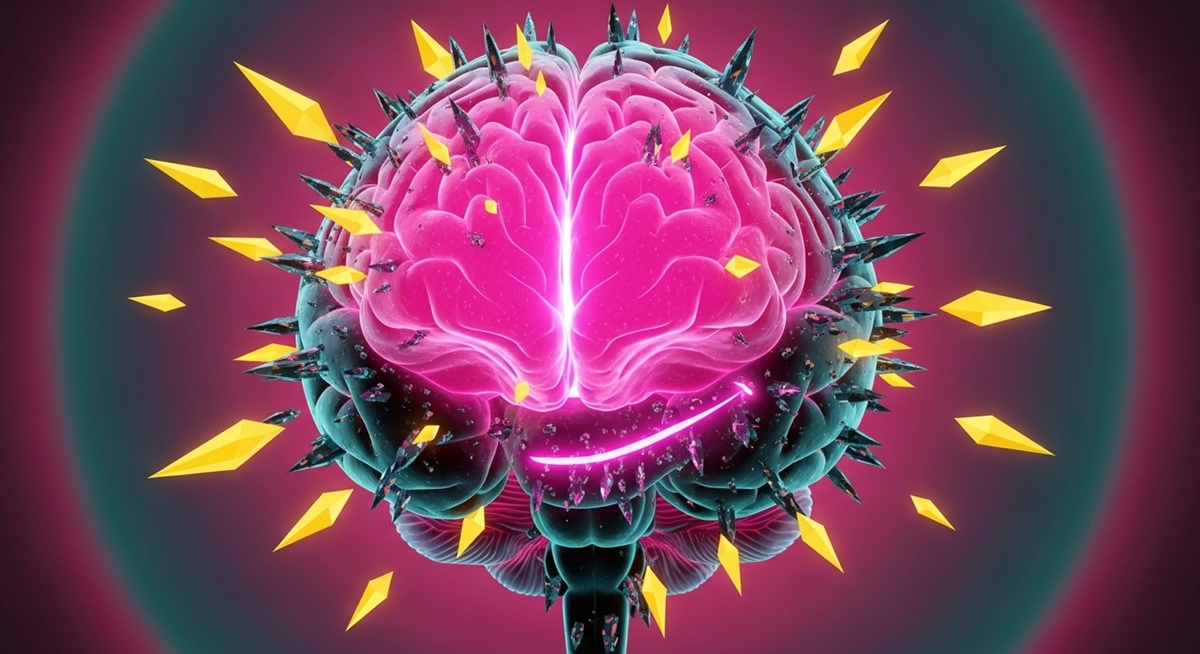
You’re deep in a conversation, armed with irrefutable facts, statistics, and logical arguments, ready to enlighten someone on a topic you know inside and out. You present your evidence, confident they’ll see the light. Instead, their eyes narrow, their jaw clenches, and their belief in their original (and frankly, absurd) position seems to double. That funny, infuriating phenomenon where facts actually strengthen someone’s incorrect belief is not just stubbornness—it’s the Backfire Effect, your magnificent brain’s very nice, beautifully unhinged self-defense mechanism. “I give very good facts! My brain says ‘very nice, they will agree!’ Very nice, now they believe even stronger in bananas! Why is this so difficult?”
Welcome, fellow traveler, to the delightfully unhinged, universally experienced realm of the ‘Fight to Be Right’ Brain, a potent manifestation of belief perseverance. It’s the glorious absurdity of your mind treating contradictory evidence not as information, but as an attack, and responding by digging its heels in even deeper. This pervasive psychological and emotional quirk highlights a fascinating battle between your brain’s desire for cognitive consistency and its primal urge to protect its worldview, linking it to political polarization, entrenched opinions, and the sheer challenge of changing minds. Is it just pig-headedness? A peculiar form of delusion? Or is your beautiful brain simply doing its very nice, very efficient (though profoundly challenging) job of defending its internal narrative from any perceived threat? At Psyness.com, we take a “very nice!” look at this pervasive mental quirk, proving that understanding this peculiar psyche doesn’t have to be boring – it can be a riot. The feeling of the Backfire Effect is like being in a heated online debate where both sides are presenting what they believe to be irrefutable evidence, yet instead of moving towards consensus, they only become more entrenched and convinced of their original positions, as if facts are fuel for their pre-existing convictions. It’s a wonderfully weird glitch in your system.
Your Brain’s Belief Shield | The Cognitive Armor
Why does your mind sometimes trick you into believing that more facts make your existing belief stronger, even when those facts contradict it? It’s a fascinating testament to your magnificent brain’s ancient wiring for tribal belonging, its powerful need for cognitive consistency, and its complex system for protecting its identity.
The Architect | The Narrative Defense Engine
Your brain, bless its tirelessly observant heart, is primarily wired to build coherent narratives and to maintain a sense of stability. Our beliefs aren’t just isolated data points; they’re interconnected parts of our identity, our worldview, and our social group affiliations. When a core belief is challenged, it feels like an attack on the entire system.
- Identity Protection (The Brain’s Self-Preservation Instinct): This is a core mechanism. Often, our beliefs are deeply intertwined with our identity, our values, or our social groups. When contradictory information threatens these beliefs, your brain perceives it as a threat to your very self, triggering a defensive response. This is where your fuchsia-pink of entrenched conviction glows.
- Cognitive Dissonance Aversion: While the Backfire Effect is distinct from cognitive dissonance, it’s related. When faced with information that clashes with a deeply held belief, your brain experiences discomfort (dissonance). Instead of updating the belief (the harder path), it might strengthen the original belief to reduce the dissonance, effectively dismissing the new information as faulty.
- Motivated Reasoning: Your brain isn’t just a logic processor; it’s a belief protector. Motivated reasoning means you interpret evidence in a way that aligns with your desired conclusion. When contradictory facts come in, your brain works extra hard to find flaws in the facts, rather than in your belief. This is a very nice, but often illogical, mental gymnastics routine.
- Familiarity and Fluency: Familiar ideas feel more “right.” When a new piece of information challenges an old, familiar belief, your brain prefers the cognitive ease of the established belief, reinforcing it even further. This is where your deep teal/cyan logical processing gets overridden by comfort.
- “Truthiness” (The Brain’s Gut Feeling of Rightness): Sometimes, a belief simply feels true, regardless of objective evidence. When confronted, that feeling intensifies as if to compensate for the external challenge, making the conviction even stronger. This is where your cheerful mustard yellow of intuitive “rightness” shines.
The paradox? Your brain’s admirable drive for consistency and its powerful capacity to form strong convictions, while essential for making sense of the world, can lead to a draining, anxiety-filled cycle of intellectual stagnation and interpersonal conflict because it prioritizes being “right” over being open to new understanding. Your brain’s “belief shield” is magnificent, but gloriously unhinged in its ability to turn facts into fuel for its own convictions.
Pop Culture’s “Don’t Look Up” & “The Flat Earth Documentary” | Our Shared Reality Tunnel
From the characters in Don’t Look Up who refuse to believe overwhelming scientific evidence of an approaching comet, actively reinforcing their denial in the face of imminent destruction, to the unwavering conviction of flat-Earthers in documentaries, who interpret every scientific explanation as further proof of a conspiracy, pop culture constantly reflects and often capitalizes on our universal tendency to reject inconvenient truths. We’ve all seen a character’s “Fight to Be Right” Brain in action, often with frustrating and absurd results.
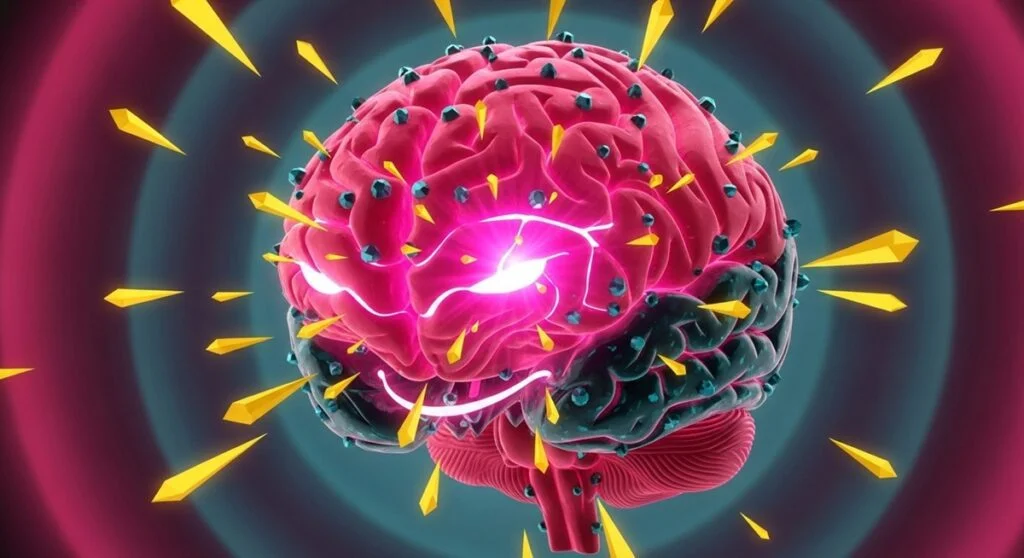
The glorious absurdity? You can present someone with the equivalent of a literal asteroid heading for Earth, and their brain might just decide it’s a government hoax to sell more telescopes. It’s a shared, delightful madness where our reality is often dictated by our entrenched worldviews. Your inner Borat might look at someone arguing with a scientist and declare, “Very nice, they know all the facts, but still, they are wrong! My brain says ‘this is very good, I will believe harder!’ Very nice, now I feel very confident in my own truth!”
How to Soften Your ‘Rightness’ (Very Nice! And Truly Liberating!)
Understanding that your brain’s ‘Fight to Be Right’ tendency is a natural, powerful psychological process is the first step to liberation. It’s not about abandoning your convictions; it’s about learning to work with your magnificent, weird brain to foster genuine intellectual humility, open-mindedness, and long-term wisdom. Here’s how to nudge your brain towards a more intentional, “very nice!” understanding:
- Lead with Empathy, Not Facts: Instead of immediately presenting contradictory evidence, try to understand why someone holds their belief. Validate their feeling, even if you don’t validate their fact. “I can see why you feel so strongly about that. Tell me more about how you came to that conclusion.” This is your cheerful mustard yellow signal for connection.
- Focus on Shared Values: Frame the discussion around common ground or shared goals, rather than directly attacking a belief. If you share a value (e.g., family safety, community well-being), that can be a bridge.
- Ask Open-Ended Questions: Instead of lecturing, ask questions that encourage self-reflection without being confrontational. “What kind of evidence would convince you otherwise?” or “Have you considered X perspective?”
- Plant Seeds, Don’t Plant Trees: You rarely change minds in a single conversation. Offer new information gently, then disengage. Let the seed of doubt or new information germinate over time.
- Practice Intellectual Humility: Acknowledge your own capacity for bias. Regularly question your own deeply held beliefs. This strengthens your ability to be open to new information without feeling threatened.
The ‘Fight to Be Right’ Brain is a truly special window into our complex psychology, a reminder that our minds, while magnificent, are also prone to delightful (and draining) forms of chaos. Knowing this doesn’t make you a failure; it makes you self-aware, wonderfully weird, and very nice! Embrace your inner philosopher, understand your brain’s defensive biases, and prove that you can navigate challenging conversations with greater grace and wisdom, living a life of greater presence, gratitude, and authenticity.