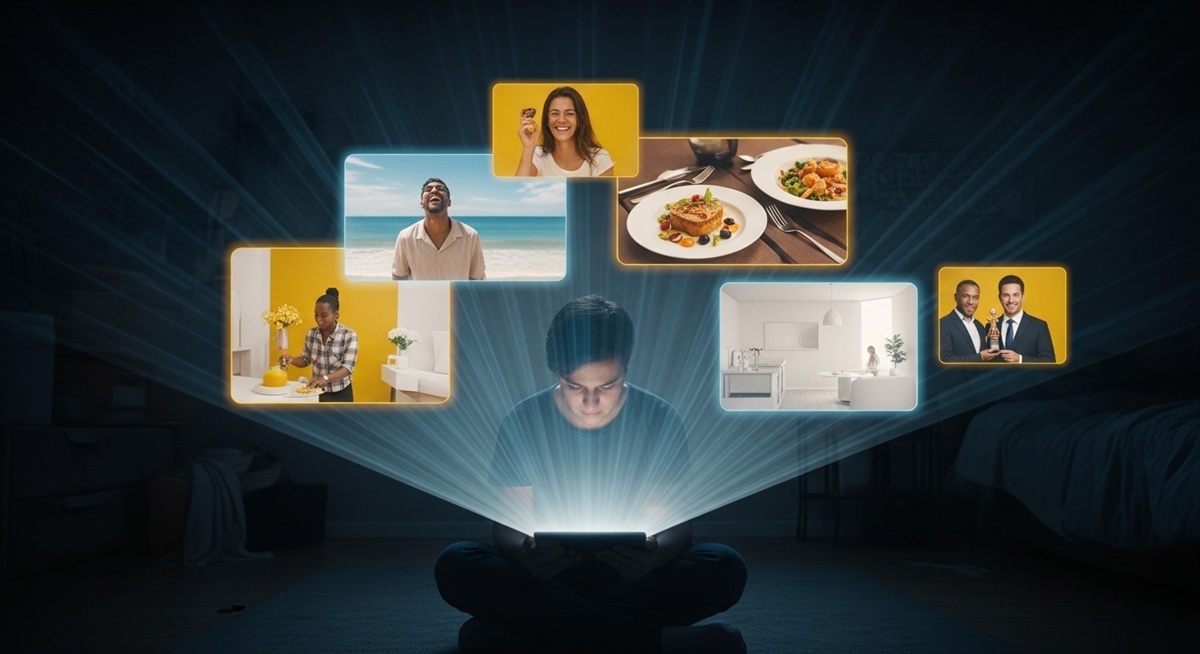
You’re scrolling through your social media feed. Friend A is on a glamorous vacation. Friend B just got a promotion. Friend C posted a picture of their perfectly organized, minimalist home. Your magnificent, weird brain immediately starts the internal Olympics | “Their life is so much better than mine! Why am I not doing that? My house is a disaster!” Even if you know, deep down, that everyone only posts their highlights, your mind insists on measuring your messy reality against their curated perfection, leaving you feeling inadequate, envious, and utterly drained. Your brain is convinced it’s gathering valuable information, but often, it’s just a self-esteem assassin. “Their life, it is very shiny! My life, it is very dull! Very nice, but now I feel very sad!”
Welcome, fellow traveler, to the delightfully unhinged, universally experienced realm of Social Comparison Theory and the Impact of Social Media on Self-Esteem. It’s the glorious absurdity of your mind’s tendency to constantly measure yourself against others, especially when exposed to the highly curated, often unrealistic, highlight reels of online lives. Is it just insecurity? A peculiar form of digital self-flagellation? Or is your beautiful brain simply doing its very nice, very efficient (though sometimes profoundly damaging) job of evaluating your standing in the social hierarchy, even if the information it’s using is fundamentally flawed? At Psyness.com, we take a “very nice!” look at this pervasive mental quirk, proving that understanding why social media makes you feel bad doesn’t have to be boring – it can be a riot.
Your Brain’s Internal Scoreboard | The Upward Spiral of Envy
Why does your mind so readily engage in relentless social comparison, especially on platforms designed for connection? It’s a fascinating testament to your magnificent brain’s ancient wiring for social evaluation colliding with the modern digital landscape.
The Architect | The Evaluator-in-Chief
Your brain, bless its tirelessly evaluating heart, has an innate drive to understand its place in the world. Social comparison is a fundamental human process, helping us gauge our abilities, status, and self-worth. Historically, this was useful for learning and adaptation. However, social media has created an unprecedented, distorted, and constant stream of comparison opportunities.
- Upward Social Comparison: This is the core mechanism that often makes us feel bad. We tend to compare ourselves to those we perceive as “better off” than us – richer, prettier, more successful, happier. On social media, where people primarily post their successes, joys, and curated perfection, almost every comparison becomes an upward one. “Their vacation, it is very luxurious! My couch, it is very old! Very nice, but my brain says ‘you are not good enough!'”
- The “Highlight Reel” Effect: People present idealized versions of themselves online. Your brain is comparing your entire, messy, authentic life (including struggles, failures, and mundane moments) to someone else’s carefully edited, polished, and often exaggerated best moments. This creates an impossible standard.
- Attribution Error: When we see someone else’s success, our brain often attributes it to their inherent qualities (“They’re just smarter/luckier/more talented”). When we experience our own struggles, we attribute them to external factors or our own flaws (“I’m just not trying hard enough”). This fuels feelings of inadequacy.
- Dopamine & Validation (Again!): Social media platforms are designed to trigger dopamine hits through likes, comments, and shares. When others receive this validation, your brain registers it as a form of reward they are getting, which can trigger feelings of envy and a sense of “missing out” if you’re not getting similar validation.
- Lack of Context: You rarely see the effort, the failures, the bad days, or the personal struggles behind someone’s online success. Your brain fills in the blanks, often assuming a flawless reality.
- Fear of Missing Out (FOMO – Again!): Seeing others’ exciting lives can trigger FOMO, making you feel like you’re not living life to the fullest, which intensifies negative self-comparison.
The paradox? Platforms designed to connect us and make us feel part of a community often leave us feeling more isolated, inadequate, and dissatisfied with our own lives. Your brain’s “internal scoreboard” is magnificent, but gloriously unhinged in its relentless, often unfair, comparisons.
Pop Culture’s Envy Epidemic | Our Shared Digital Discontent
From documentaries exposing the dark side of influencer culture, to TV shows depicting the anxieties of online validation, to countless memes about the struggle to “keep up with the Joneses” in the digital age, pop culture constantly reflects and often critiques our universal struggle with social comparison on social media. We see the humor, the sadness, and the relatable pressure of living in a world of curated perfection.
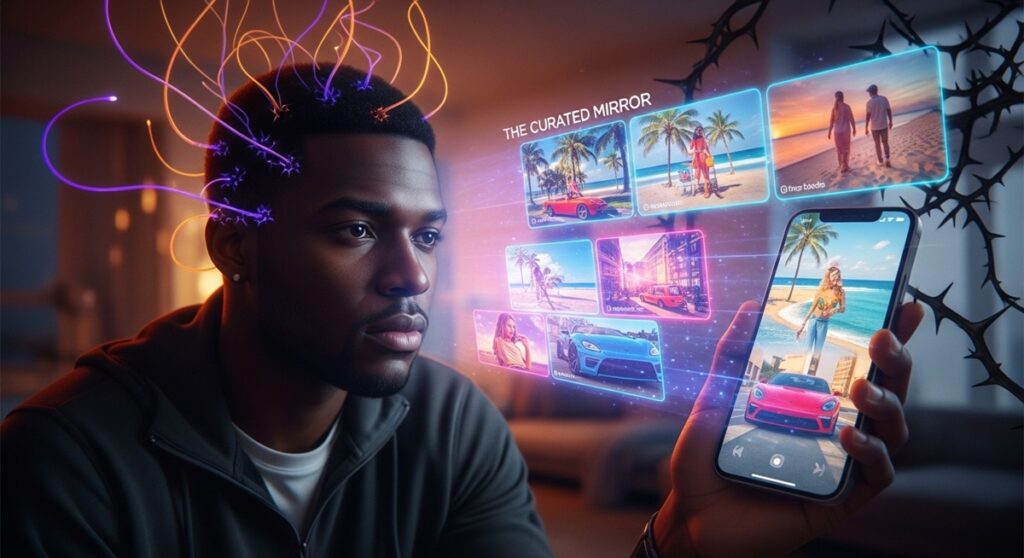
The glorious absurdity? We actively participate in platforms that make us feel bad, because our brains are wired to compare, and the digital world offers an endless supply of “better” lives. It’s a shared, delightful madness where our self-worth is constantly on trial. Your inner Borat might scroll social media and declare, “Their house, it is very clean! My house, it is very messy! Very nice, but my brain feels very bad!”
How to Find Your Own Shine (Very Nice! And Truly Liberating!)
Understanding that your brain’s ‘I Can’t Stop Comparing Myself!’ tendency is a natural, powerful cognitive vulnerability is the first step to liberation. It’s not about abandoning social media; it’s about learning to work with your magnificent, weird brain to cultivate self-compassion, appreciate your unique journey, and use digital tools more intentionally.
Here’s how to nudge your brain towards more self-affirming, “very nice!” social media habits:
- Acknowledge the Comparison Trap: When you feel that familiar pang of inadequacy while scrolling, pause. “My brain is comparing! Very nice, but this is a trap!” Consciously remind yourself of the “highlight reel” effect. “Their life is not real life! My life is very real! Very nice!”
- Curate Your Feed (Ruthlessly!): Unfollow accounts that consistently make you feel bad about yourself. Follow accounts that inspire, educate, or genuinely connect with you, rather than triggering comparison. Make your feed a source of joy, not envy.
- Practice Mindful Scrolling: Instead of mindless consumption, set intentions. “I will scroll for 10 minutes to see updates from close friends.” Be present and aware of how you’re feeling. If it’s negative, disengage.
- Shift to “Inspiration” vs. “Comparison”: When you see someone doing something amazing, try to reframe it from “I’m not good enough” to “That’s inspiring! How can I learn from that?”
- Focus on Your Own Journey (The “Personal Path” Method): Regularly remind yourself of your own progress, your unique strengths, and your personal goals. Your journey is your own, and it’s not meant to look exactly like anyone else’s.
- Practice Gratitude: Consciously list things you are grateful for in your own life. This shifts your brain’s focus from what you lack to what you have.
- Limit Social Media Time: Set boundaries for how much time you spend on social media. Use app timers or schedule specific times for checking, rather than letting it be a constant background activity.
- Engage Authentically: Instead of just consuming, try to engage genuinely with others. Share your own authentic moments (not just the perfect ones), and connect on a deeper level.
The ‘I Can’t Stop Comparing Myself!’ Brain is a truly special window into our complex psychology, a reminder that our minds, while magnificent, are also prone to delightful social measuring. Knowing this doesn’t make you insecure; it makes you self-aware, wonderfully weird, and very nice! Embrace your inner unique self, understand your brain’s social wiring, and prove that you can find your own shine in a world of endless comparison.