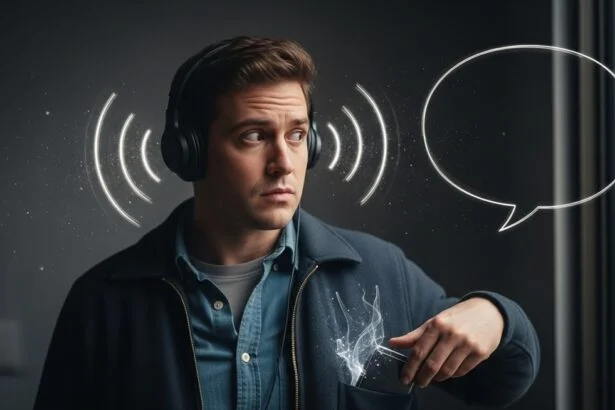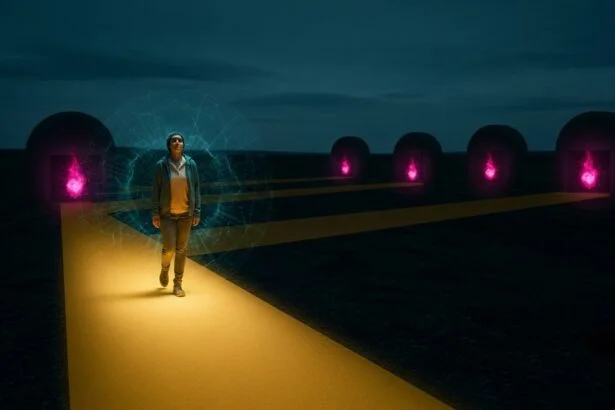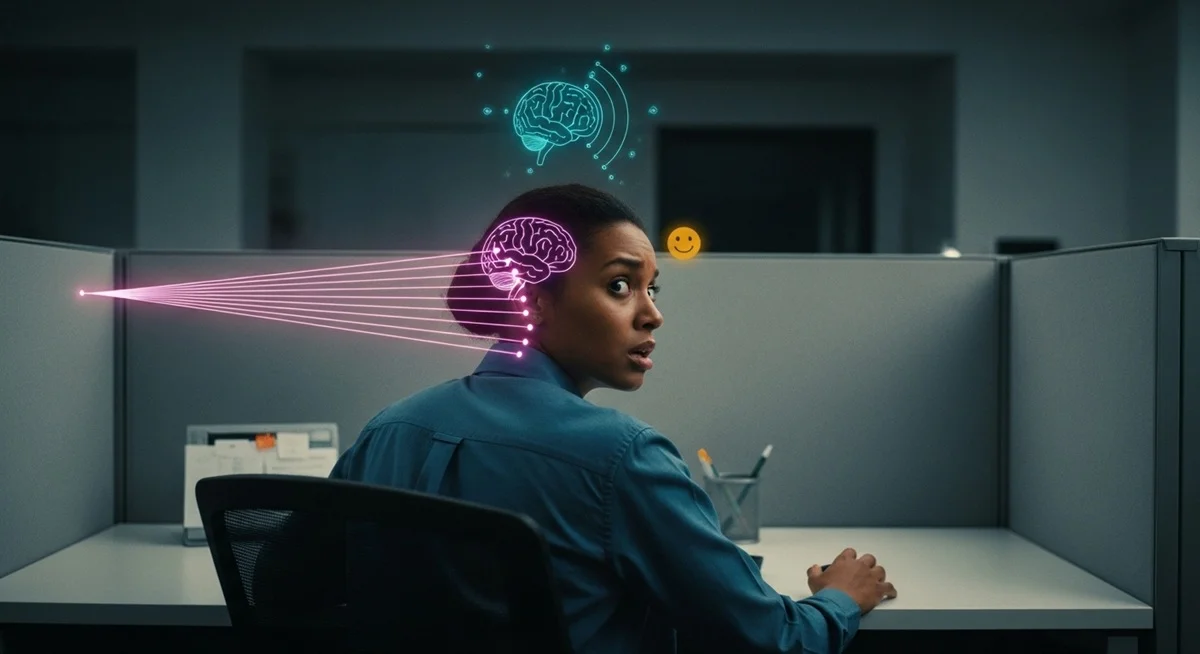
You’re walking down a quiet street, sitting alone in a library, or working in a room by yourself, and a distinct, eerie sensation washes over you | you feel like you’re being watched. You turn your head, but no one is there. A shiver runs down your spine. That strange, unsettling feeling is real, even if the observer isn’t. Your magnificent, weird brain just generated a powerful illusion of presence, a kind of “sixth sense” that our minds sometimes create in the absence of any real threat. You tell yourself it’s “just your imagination,” but often, it’s a fascinating and mysterious perceptual quirk | Scopaesthesia (sometimes called “the evil eye effect” or “gaze detection”), where your mind generates the distinct, often unsettling sensation of being watched, even when no one is there. My brain says ‘someone is watching!’ Very nice, but no one is there, and now I have very big spook!
Welcome, fellow traveler, to the delightfully unhinged, universally experienced realm of the ‘I Feel Like I’m Being Watched!’ Brain, a potent manifestation of Scopaesthesia. It’s the glorious absurdity of your mind generating the distinct, often eerie sensation that you are being watched, even when no one is around to do the watching. This pervasive psychological and perceptual quirk highlights your brain’s powerful social-cognitive abilities, its heightened sensory awareness, and its incredible knack for filling in the blanks. Is it just an overactive imagination? A peculiar form of delusion? Or is your beautiful brain simply doing its very nice, very efficient (though profoundly spooky) job of using subtle, almost undetectable cues to make you aware of a potential presence? At Psyness.com, we take a “very nice!” look at this pervasive mental quirk, proving that understanding this mysterious phenomenon doesn’t have to be boring – it can be a riot.
Your Brain’s Inner Sentinel | The Presence Detector
Why does your mind sometimes trick you into believing you’re the subject of a gaze, even when you’re alone? It’s a fascinating testament to your magnificent brain’s ancient wiring for survival, its social intelligence, and its constant processing of subtle information.
The Architect | The Social Processor
Your brain, bless its tirelessly observant heart, has a highly developed system for detecting and interpreting social cues, including the direction of another person’s gaze. This “gaze detection” system is an ancient survival tool—knowing if a predator or rival was looking at you was a matter of life and death. Today, this system is so sensitive that it can sometimes be triggered by subtle, ambiguous, or even completely non-existent stimuli. It’s like your brain is a highly-tuned radar, sometimes picking up phantom signals in its constant search for a social connection or a potential threat.
- Peripheral Vision & Subtle Cues: This is a core mechanism. Your peripheral vision is incredibly sensitive to movement and light, but it’s not very good at identifying details. Your brain might pick up on a subtle, almost imperceptible cue—a shift in light, a shadow, a reflection, or a draft of air—and interpret it as a person turning to look at you. Your brain then tells you you’re being watched, even if your rational mind can’t find the source. “I see a very small, fleeting flicker! My brain says ‘big person is watching!’ Very nice, now I feel very jumpy!”
- Mirror Neurons & Simulation Theory: Your brain has mirror neurons, which fire both when you perform an action and when you observe someone else performing it. When you think about being watched, your brain might be simulating the act of someone watching, and the feeling of this simulation can be so strong that you mistake it for a real sensation.
- Heightened Self-Awareness: Sometimes, the feeling of being watched is simply a result of a sudden spike in your own self-awareness. When your attention turns inward, your brain might interpret this newfound focus on yourself as external attention.
- Anxiety & Fear: If you’re in a heightened state of anxiety or fear, your brain’s threat-detection system is on high alert. It’s much more likely to interpret ambiguous stimuli as a threat, leading to the sensation of being watched. The fuchsia-pink of anxiety is very good at creating phantom watchers.
- Memory & Experience: If you’ve had a past experience where you were genuinely watched (e.g., as a child or in a crowded place), your brain might be more prone to generating this sensation in similar, or even dissimilar, contexts.
- Top-Down Processing: Your brain’s expectations and existing beliefs can strongly influence what you perceive. If you’re in a spooky place, your brain’s expectation of being watched can create the sensation, even if there’s no actual stimulus. It’s your brain filling in the deep teal/cyan blanks.
The paradox? Your brain’s admirable drive for social connection and its hyper-vigilance for threats, while essential for survival, can lead to a spooky, unsettling, and sometimes amusing illusion of presence because it prioritizes caution and awareness over objective reality, creating an observer where none exists. Your brain’s “inner sentinel” is magnificent, but gloriously unhinged in its presence detector.
Pop Culture’s Ghosts & Eerie Feelings | Our Shared Mysterious Sensation
From the classic horror movie scene where a character feels a presence in an empty room, to the comedic portrayal of a character’s paranoia, to the dramatic narratives of a person’s intuition about a hidden stalker, to songs that perfectly capture the feeling of an unseen presence, pop culture constantly reflects and often sensationalizes our universal experience of Scopaesthesia. We see the terror, the humor, and the mystery of the sensation.
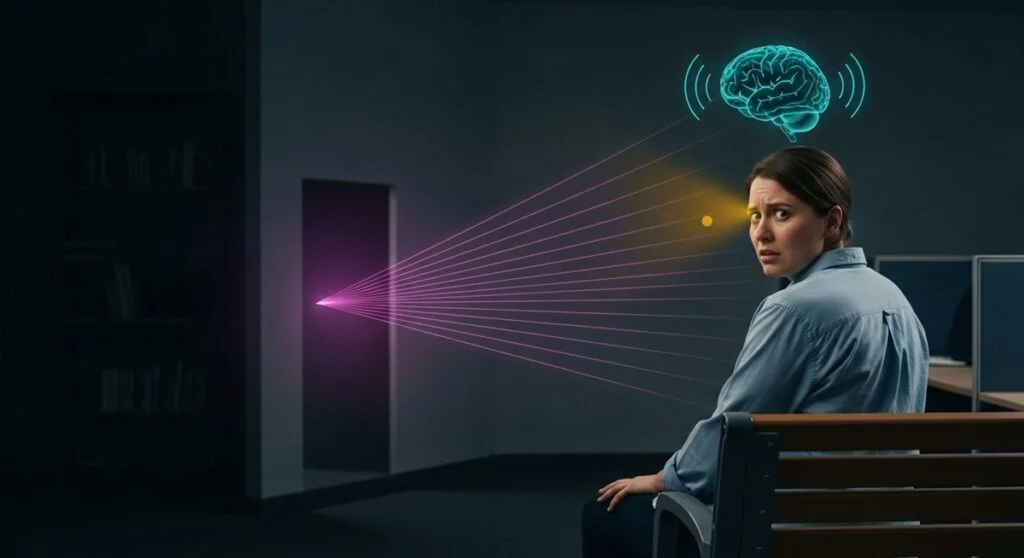
The glorious absurdity? We have a world to see with our own very good eyes, yet our brains sometimes insist on showing us the presence of a person with no physical form, convinced that the unseen is the real truth. It’s a shared, delightful madness where our sanity is a matter of perception. Your inner Borat might feel very spooky presence and declare, “My brain says ‘he is behind you!’ Very nice, but when I turn, there is nothing, and I feel very foolish!”
How to Understand the Sensation (Very Nice! And Truly Liberating!)
Understanding that your brain’s ‘I Feel Like I’m Being Watched!’ tendency (Scopaesthesia) is a natural, powerful psychological quirk is the first step to liberation. It’s not about convincing yourself you’re not going crazy; it’s about learning to work with your magnificent, weird brain to understand its processes, reducing the feeling of spookiness, and re-establishing your sense of calm.
Here’s how to nudge your brain towards more rational, “very nice!” understanding:
- Acknowledge the Sensation, Then Rationalize: When you feel the sensation of being watched, acknowledge it without judgment. “My brain feels like I am being watched! Very nice, it is Scopaesthesia.” This is your cheerful mustard yellow signal for self-awareness.
- Actively Search for a Cause: Instead of turning around in a panic, consciously and calmly look around. If you find a subtle cause—a shadow, a reflection, a small sound—your brain’s rational side can calm the sensation.
- Practice Mindfulness: Cultivate present-moment awareness. This helps you notice the sensation as a feeling, not necessarily a fact, and helps you observe it without judgment.
- Engage Your Other Senses: Actively focus on what you see, hear, and feel that is not related to the sensation of being watched. Feel the chair, hear the fan, see the color of the wall. This helps ground your brain in objective reality.
- Reframe the Feeling: Instead of thinking, “I am being watched!”, try thinking, “My brain is doing a very good job of being aware of my surroundings!” This reframes the sensation from a threat to an interesting perceptual quirk.
- Understand the Survival Instinct: Remind your brain that this is an old survival instinct, but that in a modern, safe environment, it’s often a false alarm.
- Reduce Your Anxiety: If the sensation is linked to a heightened state of anxiety, engage in calming activities like deep breathing or meditation to help turn down your brain’s “threat alarm.”
- Talk it Out: If the feeling is particularly strong or persistent, talk to a trusted friend or therapist about it. The act of externalizing the feeling can help reduce its power.
The ‘I Feel Like I’m Being Watched!’ Brain is a truly special window into our complex psychology, a reminder that our minds, while magnificent, are also prone to delightful (and spooky) forms of perceptual quirks. Knowing this doesn’t make you crazy; it makes you self-aware, wonderfully weird, and very nice! Embrace your inner sentinel, understand your brain’s presence detector, and prove that you can master your sensations, living a life of greater calm, clarity, and control.