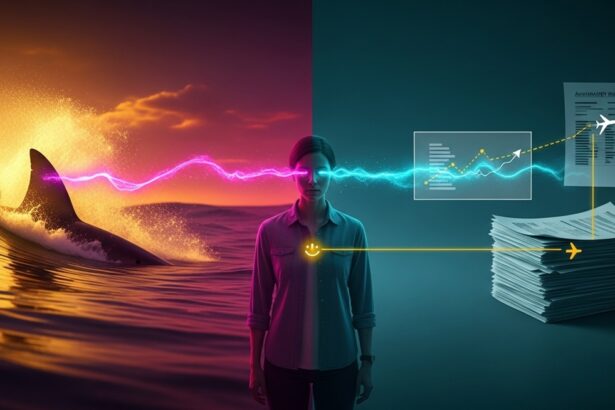
You’ve finished your work, the kids are asleep, and you’re finally sitting down. You tell yourself to unwind, but your magnificent, weird brain just won’t cooperate. Your shoulders are hunched, your jaw is clenched, and your mind is still racing, replaying conversations or worrying about tomorrow. You feel an inexplicable restlessness, a persistent hum of low-level anxiety that makes true relaxation feel impossible. You might try deep breaths or meditation, but your body and mind resist, locked in a perpetual state of readiness. Your brain is convinced it’s being vigilant, but often, it’s trapped in a cycle of chronic tension, unable to “switch off” from the demands of modern life. “I want to be very calm! My brain says ‘no, be very ready!’ Very nice, but now I am very tired and very tense!”
Welcome, fellow traveler, to the delightfully unhinged, universally experienced realm of the ‘I Just Can’t Relax!’ Brain, a potent manifestation of Chronic Tension. It’s the glorious absurdity of your mind and body struggling to enter a state of true calm, leading to persistent muscle tightness, restlessness, and a profound inability to unwind. This pervasive psychological and physiological state is often linked to hypervigilance, unaddressed stress, and an overactive sympathetic nervous system, keeping you in a constant state of low-level arousal. Is it just a personality trait? A peculiar form of modern anxiety? Or is your beautiful brain simply doing its very nice, very efficient (though profoundly exhausting) job of staying prepared for perceived threats, even when none are present? At Psyness.com, we take a “very nice!” look at this pervasive mental quirk, proving that understanding why you just can’t relax doesn’t have to be boring – it can be a riot.
Your Brain’s Alarm System | The Perpetual Protector
Why does your mind sometimes get stuck in a state of chronic tension, unable to fully relax? It’s a fascinating testament to your magnificent brain’s ancient threat detection system, its response to perceived danger, and its intricate connection to your body’s physiological responses.
The Architect | The Vigilance Enforcer
Your brain, bless its tirelessly protective heart, is equipped with a sophisticated alarm system – the sympathetic nervous system (part of the autonomic nervous system). Its job is to prepare you for “fight or flight” in the face of danger. While crucial for survival in acute threats, in modern life, this system can get stuck in the “on” position due to chronic stress, perceived threats (even non-physical ones like deadlines or social pressures), or simply the constant demands of an “always-on” world.
- Sympathetic Nervous System Overdrive: This is a core mechanism. When your brain perceives stress (real or imagined), it triggers the release of stress hormones like cortisol and adrenaline. This activates your sympathetic nervous system, leading to increased heart rate, shallow breathing, muscle tension, heightened senses, and a state of readiness. If this system remains activated for prolonged periods, it leads to chronic tension. “My brain says ‘danger!’ even when no danger! Very nice, now my body is very tight!”
- Hypervigilance: Your brain becomes overly sensitive to potential threats, constantly scanning the environment (and your own thoughts) for anything that could go wrong. This keeps your mind racing and your body tense.
- Unprocessed Stress & Emotions: If stress, anxiety, or other difficult emotions are not adequately processed or released, they can manifest as physical tension stored in the body, particularly in the neck, shoulders, and jaw.
- Cognitive Rumination (Again!): As we’ve discussed, repetitive negative thinking can keep your brain in an agitated state, preventing it from downregulating and relaxing. The mental tension feeds the physical tension.
- Lack of Downregulation Skills: Many people haven’t learned or practiced effective techniques to activate their parasympathetic nervous system (the “rest and digest” system), which is responsible for calming the body and mind after a threat has passed.
- Societal Pressure to Be “Productive”: In a culture that often values constant activity and productivity, your brain might internalize the belief that relaxing is “lazy” or unproductive, making it harder to give yourself permission to truly unwind.
The paradox? Your brain’s admirable system for self-preservation and threat detection, while essential for survival, can lead to chronic exhaustion, physical discomfort, and a diminished quality of life when it’s perpetually stuck in a state of readiness, unable to differentiate between real danger and everyday stressors. Your brain’s “alarm system” is magnificent, but gloriously unhinged in its perpetual protector.
Pop Culture’s Stressed-Out Characters & Restless Souls | Our Shared Tension
From the perpetually stressed-out executive in movies, to the anxious protagonist who can’t sit still, to the relatable image of someone trying to meditate but their mind won’t quiet, to songs that perfectly capture the feeling of restless unease, pop culture constantly reflects and often satirizes our universal struggle with chronic tension. We see the toll it takes on individuals and the yearning for a moment of true peace.

The glorious absurdity? We crave calm, yet our brains insist on staying on high alert, convinced that relaxation is a luxury we can’t afford, even when it’s a necessity. It’s a shared, delightful madness where our bodies become battlegrounds for our minds. Your inner Borat might try to relax and declare, “I am on very soft couch! My brain says ‘no, look for danger!’ Very nice, now my neck is very stiff!”
How to Find Your Inner Calm (Very Nice! And Truly Liberating!)
Understanding that your brain’s ‘I Just Can’t Relax!’ tendency (Chronic Tension) is a natural, powerful physiological and psychological response is the first step to liberation. It’s not about eliminating all stress; it’s about learning to work with your magnificent, weird brain to downregulate your nervous system, release stored tension, and cultivate practices that promote genuine inner calm and resilience.
Here’s how to nudge your brain towards more tranquil, “very nice!” well-being:
- Acknowledge the Tension, Then Scan Your Body: When you notice tension, acknowledge it without judgment. “My brain feels very tense! My body is very tight! Very nice, I will notice it.” Do a quick body scan to identify where you’re holding tension (shoulders, jaw, stomach).
- Activate the Parasympathetic Nervous System (Consciously!):
- Deep Diaphragmatic Breathing: Practice slow, deep breaths that expand your belly. This is one of the fastest ways to signal safety to your brain and activate the “rest and digest” system. “Breathe very deep! My brain says ‘all is well!’ Very nice, now I feel calm!”
- Progressive Muscle Relaxation: Tense a muscle group intensely for a few seconds, then completely relax it, noticing the difference. Work through your body.
- Regular Physical Release: Engage in activities that physically release tension – gentle stretching, yoga, walking, dancing, or even shaking out your limbs.
- Mindfulness & Grounding: Bring your attention to the present moment through your senses. Focus on what you see, hear, feel, and smell. This pulls your brain out of worry and hypervigilance.
- Set Digital Boundaries (Again!): Reduce constant stimulation. Limit screen time, especially before bed, and create periods of true unplugging to allow your nervous system to settle.
- Prioritize Sleep: Consistent, quality sleep is fundamental for nervous system regulation and reducing chronic tension.
- Identify & Address Stressors: While some stress is unavoidable, identify chronic stressors in your life and explore ways to mitigate them, set boundaries, or change your response to them.
- Engage Your Senses for Calm: Use calming sensory inputs | soothing music, calming scents (lavender), warm baths, soft textures.
- Practice Self-Compassion: Be patient with yourself. Learning to relax is a skill that takes practice, especially if your brain has been in overdrive for a long time.
The ‘I Just Can’t Relax!’ Brain is a truly special window into our complex psychology, a reminder that our minds, while magnificent, are also prone to delightful (and draining) forms of chronic tension. Knowing this doesn’t make you weak; it makes you self-aware, wonderfully weird, and very nice! Embrace your inner calm seeker, understand your brain’s alarm system, and prove that you can find your peace, even in a chaotic world.