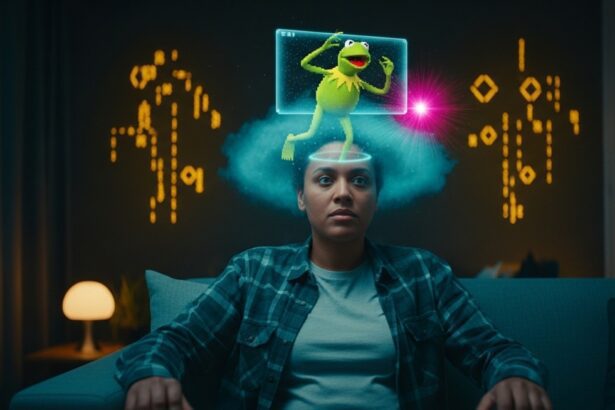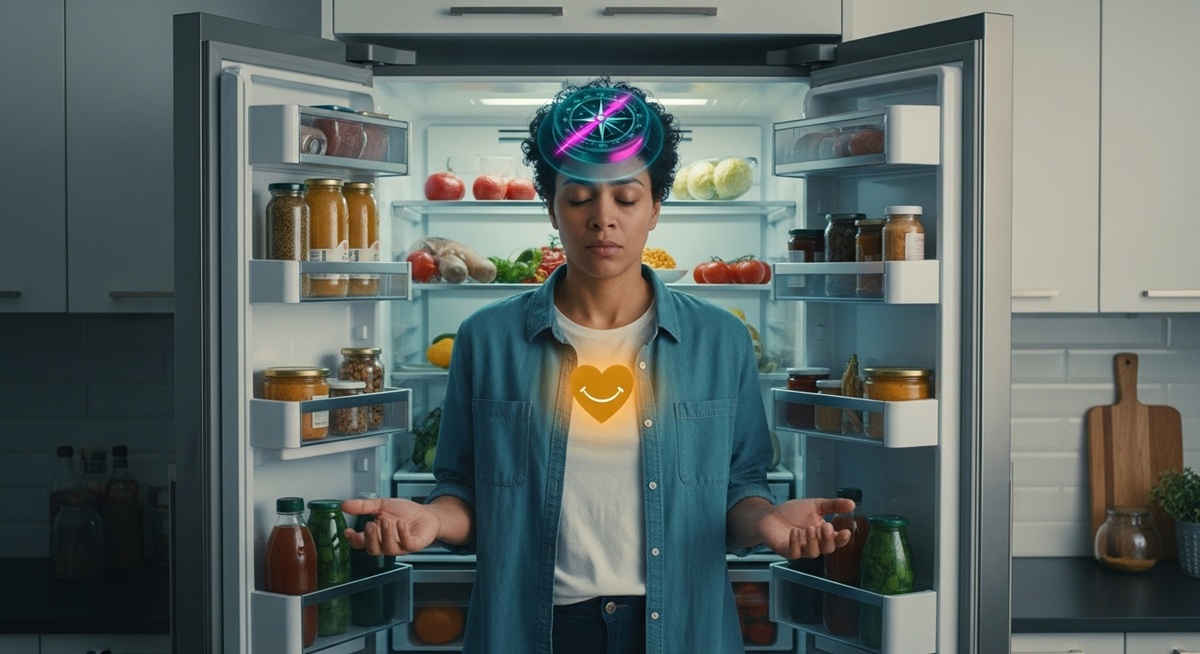
Should you take that new job opportunity, or stay where you are? What should you have for dinner? Which movie should you watch? Sometimes, the options aren’t even overwhelming, but your magnificent, weird brain just draws a blank. You feel a profound internal struggle, a frustrating inability to pinpoint what you truly desire or prefer, leading to prolonged hesitation, missed opportunities, and a feeling of being utterly adrift. You tell yourself you’re “just indecisive,” but often, it’s a deeper psychological challenge | Indecision, where your mind struggles to clarify its own preferences, leading to a paralysis of choice and a diminished sense of agency. “Very many choices! My brain says ‘no idea what I like!’ Very nice, now I do nothing and feel very stuck!
Welcome, fellow traveler, to the delightfully unhinged, universally experienced realm of the ‘I Just Don’t Know What I Want!’ Brain, a potent manifestation of Indecision. It’s the glorious absurdity of your mind struggling to pinpoint what it truly wants or prefers, leading to prolonged hesitation, missed opportunities, and a feeling of being adrift. This pervasive psychological quirk highlights a complex interplay of a fear of regret, an overwhelming number of options (or sometimes, too few that feel right), a lack of self-knowledge, or conflicting values, profoundly impacting personal growth and happiness. Is it just a personality flaw? A peculiar form of overthinking? Or is your beautiful brain simply doing its very nice, very efficient (though profoundly frustrating) job of trying to avoid potential negative outcomes, sometimes losing sight of its own desires in the process? At Psyness.com, we take a “very nice!” look at this pervasive mental quirk, proving that understanding why you just don’t know what you want doesn’t have to be boring – it can be a riot.
Your Brain’s Compass | The Conflicted Navigator
Why does your mind sometimes lose its internal compass, leaving you unsure of your own desires and preferences? It’s a fascinating testament to your magnificent brain’s drive for optimal outcomes, its struggle with ambiguity, and its intricate connection to self-knowledge and values.
The Architect | The Preference Processor
Your brain, bless its tirelessly optimizing heart, wants to make the “best” choice. However, when faced with internal conflicts, a fear of regret, or a lack of clarity about its own values, the preference-processing system can jam, leading to a state of indecision where no option feels definitively “right.”
- Fear of Regret (Loss Aversion – Again!): This is a core mechanism. Your brain is highly sensitive to potential losses or negative outcomes. The fear of choosing the “wrong” thing, and subsequently regretting it, can be so paralyzing that your brain avoids making any choice at all. “If I choose this, maybe I will be very sad later! My brain says ‘choose nothing!’ Very nice, now I am very safe, but very stuck!”
- Overwhelming Options (Choice Overload): While this article focuses on the internal struggle, an abundance of choices can certainly exacerbate indecision. Your brain becomes overwhelmed trying to evaluate too many possibilities without a clear internal filter.
- Lack of Self-Knowledge/Values Clarity: If your brain isn’t clear on your core values, priorities, or what truly brings you joy, it lacks the internal criteria to weigh options effectively. You literally don’t know what you want because you don’t know yourself well enough in that context.
- Conflicting Values/Desires: You might genuinely want two mutually exclusive things, creating an internal stalemate. Your brain struggles to reconcile these competing desires.
- Perfectionism (Subtle): A desire for the “perfect” choice can lead to endless deliberation, as your brain seeks an ideal that may not exist, preventing any choice from being made.
- External Locus of Control: If your brain is accustomed to others making decisions for you, or if you believe external circumstances dictate your choices, you may not have developed the muscle of internal decision-making.
- Anxiety & Uncertainty Intolerance (Again!): The discomfort of not knowing the future outcome of a choice can be so high that your brain avoids the decision itself to escape that anxiety.
The paradox? Your brain’s admirable drive to make optimal choices and avoid regret, while essential for navigating life, can lead to chronic paralysis, missed opportunities, and a feeling of being adrift because it struggles to clarify its own desires and tolerate the inherent uncertainty of choice. Your brain’s “compass” is magnificent, but gloriously unhinged in its conflicted navigator.
Pop Culture’s Indecisive Protagonists & Crossroads Moments | Our Shared Choice Struggles
From characters perpetually stuck at a crossroads, unable to commit to a path, to the comedic portrayal of someone agonizing over a simple menu choice, to the dramatic narratives of lives shaped by unmade decisions, pop culture constantly reflects and often satirizes our universal experience of indecision. We see the frustration of inaction and the yearning for clarity.
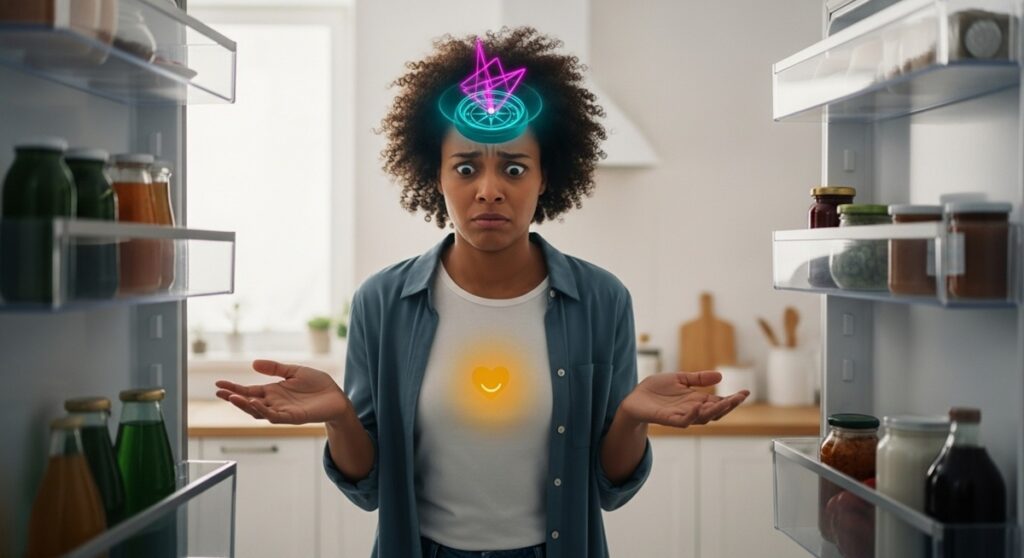
The glorious absurdity? We have the power to shape our lives, yet our brains sometimes refuse to pick a direction, convinced that all paths lead to potential regret. It’s a shared, delightful madness where our future is held hostage by our present uncertainty. Your inner Borat might face very big menu and declare, “Very many foods! My brain says ‘no food is good enough!’ Very nice, now I eat very sad air!”
How to Make Choices with Confidence (Very Nice! And Truly Liberating!)
Understanding that your brain’s ‘I Just Don’t Know What I Want!’ tendency (Indecision) is a natural, powerful psychological response is the first step to liberation. It’s not about becoming impulsive; it’s about learning to work with your magnificent, weird brain to clarify your desires, embrace imperfect choices, and cultivate a stronger sense of self-trust, allowing you to navigate life’s decisions with greater confidence and agency.
Here’s how to nudge your brain towards more decisive, “very nice!” action:
- Acknowledge the Indecision, Then Investigate: When you feel stuck, acknowledge it without judgment. “My brain does not know what it wants! Very nice, it is confused.” Then, ask | “What am I afraid of? What values are conflicting? What do I really desire?”
- Connect to Your Core Values: Clarify your fundamental values (e.g., freedom, security, creativity, connection). When faced with a choice, ask | “Which option aligns best with my core values?” “I want very good job! My brain says ‘which job makes me very happy?’ Very nice, now I know what is important!”
- Embrace “Good Enough” (Satisficing): Release the need for the “perfect” choice. Often, a “good enough” decision made with confidence is better than agonizing over an elusive ideal.
- Pros & Cons (With a Twist!): List pros and cons, but also add a column for “How does this make me feel?” and “What’s the worst that could happen (and can I cope)?”
- Small Stakes Practice: Start by making small, low-consequence decisions quickly and confidently (e.g., what to wear, what to eat for a snack). This builds your decision-making muscle.
- Future-Pacing (Imagine the Outcome): Visualize yourself having made each choice. How does it feel? What are the immediate and long-term consequences? This can help clarify preferences.
- Limit Options (Where Possible): If choice overload is a factor, consciously limit the number of options you consider.
- Consult Your Gut (Intuition!): After gathering information, take a moment to tune into your intuition. What does your gut tell you?
- Set a Deadline: For significant decisions, set a realistic deadline for making a choice. This prevents endless procrastination.
- Accept Imperfection & Learn from Outcomes: Understand that not every choice will lead to a perfect outcome, and that’s okay. Every decision, good or “bad,” offers an opportunity for learning and growth.
The ‘I Just Don’t Know What I Want!’ Brain is a truly special window into our complex psychology, a reminder that our minds, while magnificent, are also prone to delightful (and draining) forms of indecision. Knowing this doesn’t make you weak; it makes you self-aware, wonderfully weird, and very nice! Embrace your inner compass, understand your brain’s conflicted navigator, and prove that you can clarify your desires and make choices with greater confidence, truly shaping your own path.