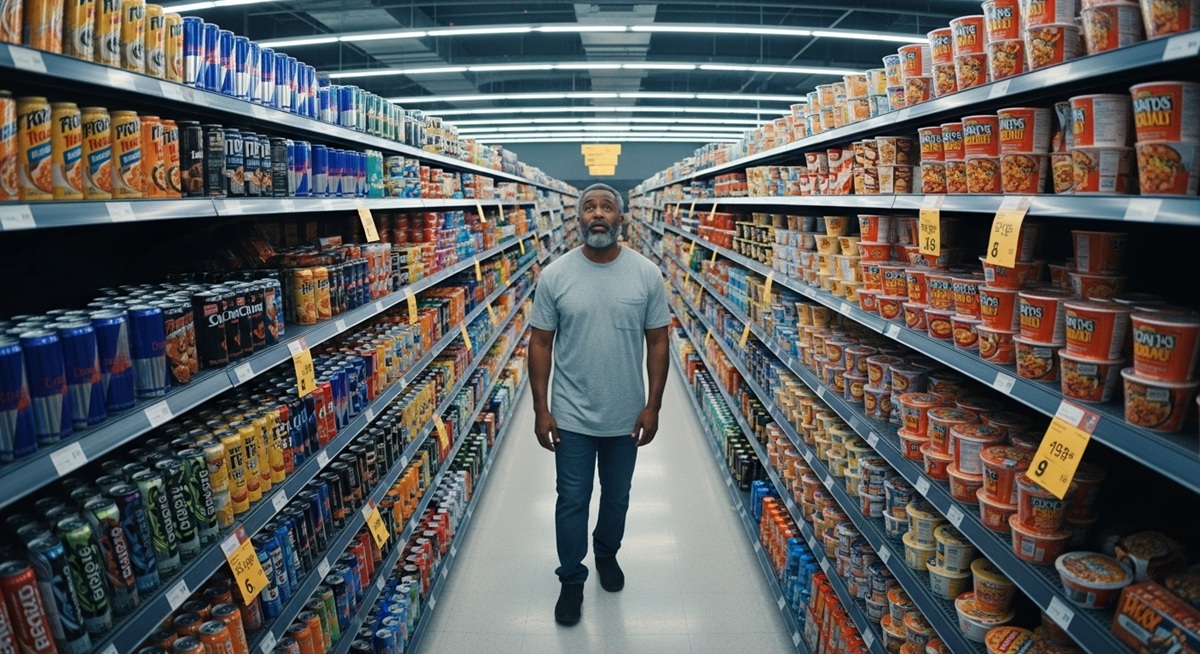
You’re standing in the shampoo aisle. Forty-seven different brands. Each with ten sub-types | for oily hair, dry hair, color-treated, volume-boosting, frizz-fighting, anti-aging, sustainably sourced, organic, vegan, cruelty-free, infused with unicorn tears. Your brain, once eager to simply wash hair, now feels like it’s trying to solve a Rubik’s Cube blindfolded.
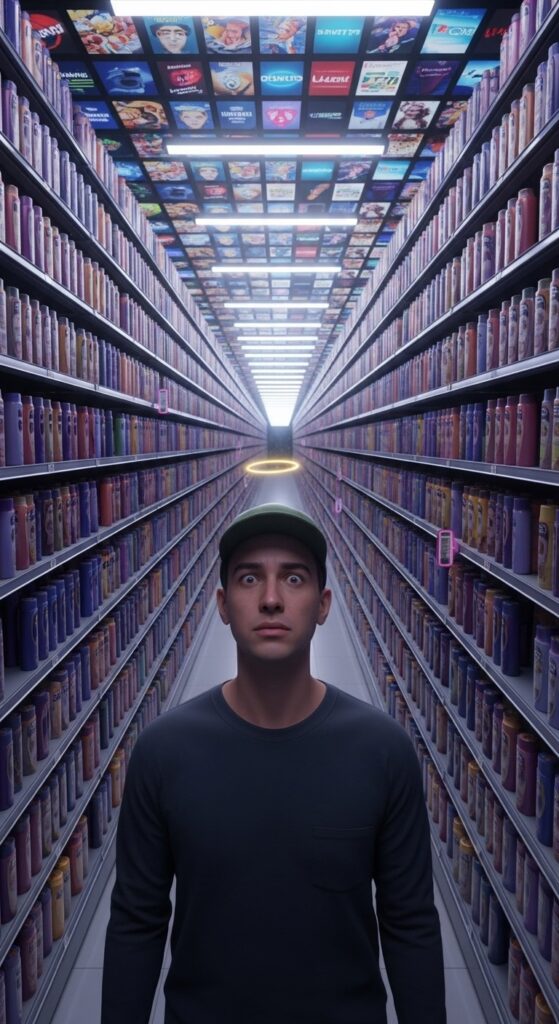
Or perhaps you’re on a streaming service, scrolling through hundreds of thousands of movies and shows. You spend an hour browsing, feel overwhelmed, and then… just watch a re-run of The Office for the tenth time.
Is this freedom? Or is my beautiful, weird brain just screaming for less “choice” and more “decision”?
Welcome, fellow traveler, to the delightfully unhinged, universally frustrating realm of Choice Overload (also known as “paradox of choice”). It’s the glorious absurdity that while we think more options lead to greater satisfaction, too many choices often lead to anxiety, paralysis, and ultimately, less happiness. At Psyness.com, we take a “very nice!” look at this modern mental trap, proving that understanding why endless possibilities can make you miserable doesn’t have to be boring – it can be a riot.
The Brain’s Exhaustion | When Opportunity Becomes Obstruction
Why does having a multitude of options, which sounds like a dream, often turn into a decision-making nightmare? It boils down to how our magnificent, incredibly efficient (but easily overwhelmed) brains process information and calculate value.
The Architect | The Price of Perfection
Your brain is constantly trying to make the “best” decision, to maximize its outcome. When faced with an overwhelming number of choices, several unhinged things start to happen:
- Cognitive Burden | The Brain Drains: Each additional option requires your brain to process more information, compare more features, and weigh more pros and cons. This is cognitively demanding. It’s like being asked to analyze 100 spreadsheets instead of just 3. Your brain gets tired. Very tired. “So many shampoos! My brain is sweating, very nice, but also very exhausted!”
- Opportunity Cost | The “What If” Monster: With more choices, the “opportunity cost” – what you’re giving up by choosing one option over another – becomes astronomically higher. Even after you make a choice, your brain can’t help but wonder if there was a “better” option you missed. This “What If?” monster gnaws at your satisfaction, leading to buyer’s remorse or post-decision anxiety.
- Escalation of Expectations | The Unattainable Ideal: When there are only a few choices, you’re generally satisfied with a “good enough” option. But with a vast array, your expectations skyrocket. You assume that among all those options, there must be a “perfect” one. This quest for perfection is often futile and leaves you feeling disappointed, even if the option you chose is objectively good.
- Decision Paralysis | The Freeze-Up: Sometimes, the sheer volume of options can be so overwhelming that your brain simply shuts down. You become paralyzed, unable to make any decision, and often revert to a familiar default (like that Office re-run) or abandon the task entirely.
Pop Culture’s Endless Aisles | Our Shared Choice Fatigue
From supermarket shelves groaning with varieties of cereal to dating apps presenting an infinite scroll of potential partners, pop culture and modern commerce have embraced the “more is more” philosophy. We are constantly immersed in environments designed to offer an overwhelming array of choices, inadvertently fueling our collective choice fatigue.
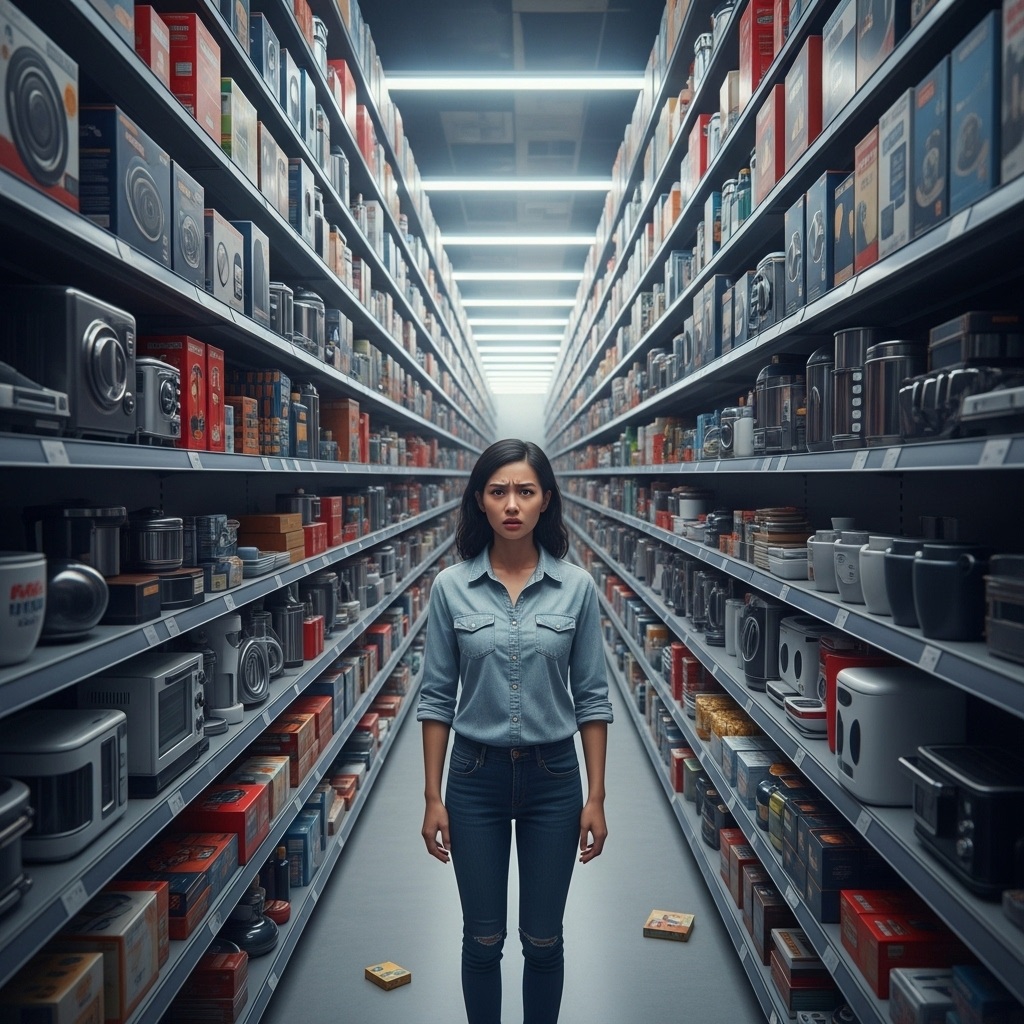
The glorious absurdity? Businesses often believe that offering more makes them more appealing, without realizing they might be driving their customers into a state of delightful, unhinged paralysis. We’ve created a world of abundant choices that, ironically, makes us less happy with what we eventually pick. Your inner Borat might wander through a giant superstore and declare, “So many cheeses! My brain cannot decide! This is too much very nice!”
Liberating Your Brain from the Tyranny of Options (Very Nice! And Seriously Smart!)
Understanding choice overload isn’t about advocating for fewer options in life (though sometimes, that’s exactly what you need!). It’s about recognizing your brain’s limits and developing strategies to navigate the abundance without succumbing to overwhelm. It’s about making your decisions “very nice!” again.
Here’s how to reclaim your decision-making power:
- Set “Good Enough” Filters (The “Satisficer” Method): Instead of trying to find the absolute “best” (a “maximizer”), aim for “good enough” (a “satisficer”). Decide on your core criteria, and once you find an option that meets them, stop searching. Consciously choose contentment over the elusive perfection.
- Limit Your Initial Options (The “Pre-Filter” Tactic): Before you even start browsing, decide how many options you’re willing to consider. If you’re looking for a new coffee maker, maybe only research the top 3-5 rated models instead of 50. Curate your choices before they curate your anxiety.
- Identify Core Needs First: What’s truly essential? If it’s shampoo, do you need frizz control or color protection? Not both simultaneously unless it’s a dual-purpose product. Prioritize your non-negotiables before getting lost in the details.
- Embrace the “Pivot” (And Let Go of Regret): Once you’ve made a choice, consciously let go of the “what if” about other options. Your decision was the best one you could make at that moment with the information you had. Celebrate the choice, not the lost possibilities.
- Offline Time | The “No Choice” Zone: Regularly step away from screens and decision-rich environments. Give your brain a break from constant comparison and selection. Sometimes the best decision is no decision at all for a while.
Choice overload is a fascinating window into our complex psychology, a reminder that our brains, while magnificent, are also easily overwhelmed by too much “good.” Knowing this doesn’t make you indecisive; it makes you self-aware, wonderfully weird, and very nice! Embrace the power of intelligent limitation, understand your brain’s delightful struggle with abundance, and prove that you can find joy in the choices you make, even if they’re not “perfect.”