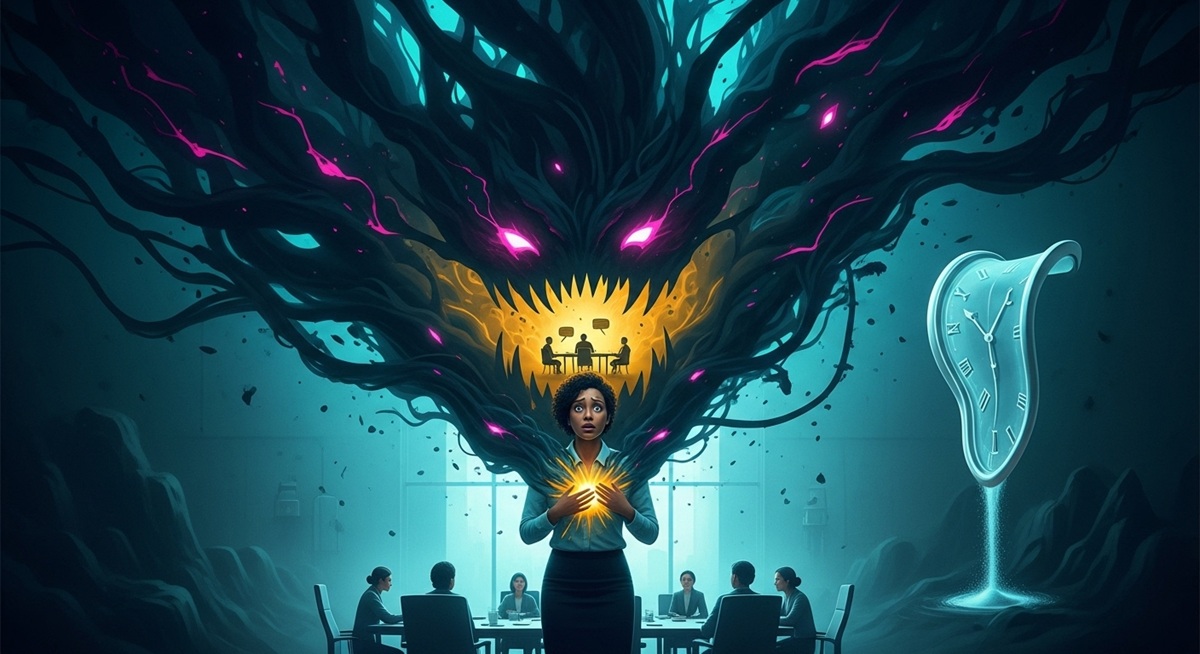
You have a minor dental procedure scheduled. Or a difficult conversation you’ve been dreading. Or maybe you’re just about to try a new, slightly uncomfortable exercise. Instantly, your magnificent, weird brain goes into overdrive, conjuring up vivid scenarios of excruciating pain, unbearable awkwardness, or overwhelming exhaustion. You spend days, even weeks, agonizing over the upcoming event, convinced it will be an absolute catastrophe, far worse and longer-lasting than anything you’ve ever experienced. Then, the moment arrives, you get through it, and you’re surprised | “Huh. That wasn’t nearly as bad as I thought it would be. In fact, it was… fine?” Your brain is convinced it’s preparing you for the worst, but often, it’s just exaggerating the discomfort, making you dread things far more than reality warrants. This small pain, my brain says ‘very big pain!’ Very nice, but then it is very small pain!
Welcome, fellow traveler, to the delightfully unhinged, universally experienced realm of the ‘It’s Always Worse Than I Thought!’ Brain, a potent manifestation of Impact Bias (specifically, the overestimation of the intensity and duration of future negative emotional reactions). It’s the glorious absurdity of your mind’s tendency to inaccurately predict how bad or how long a future negative event or discomfort will truly feel. This cognitive quirk leads us to dread things more than they actually turn out to be, or conversely, to avoid necessary discomfort (like a difficult conversation, a minor medical procedure, or even starting a new exercise routine) because we profoundly overestimate its negative impact. Is it just anxiety? A peculiar form of catastrophizing? Or is your beautiful brain simply doing its very nice, very efficient (though profoundly misleading) job of trying to prepare you for potential threats, even if it means profoundly exaggerating them? At Psyness.com, we take a “very nice!” look at this pervasive mental quirk, proving that understanding why you underestimate discomfort doesn’t have to be boring – it can be a riot.
Your Brain’s Dread Machine | The Exaggerated Future
Why does your mind so readily inflate the potential pain or discomfort of future events, causing you disproportionate anxiety? It’s a fascinating testament to your magnificent brain’s wiring for threat detection, its difficulty in predicting future emotional states, and its tendency to focus on salient negative details.
The Architect | The Threat Over-Estimator
Your brain, bless its tirelessly protective heart, is a master of anticipating threats. From an evolutionary perspective, it was safer to overestimate danger than to underestimate it. This ancient wiring, combined with modern cognitive biases, leads to the Impact Bias, where we often miscalculate the true emotional fallout of future events.
- Focalism: This is a core mechanism. When contemplating a future event, your brain tends to “zoom in” on that event and its immediate consequences, ignoring all the other life events, coping mechanisms, and distractions that will also be present when the event actually occurs. You focus solely on the “bad thing,” making it seem all-consuming. “I will have very small injection! My brain says ‘this is only thing in whole world!’ Very nice, but then I also have very good coffee after!”
- Miswanting: Related to Impact Bias, this is the tendency to mispredict the intensity or duration of future emotions, both positive and negative. For negative events, we often overestimate how long we’ll feel bad. Your brain fails to account for its own resilience and adaptive coping mechanisms.
- Emotional Amplification: When imagining a negative event, your brain often amplifies the emotional response. It’s easier to vividly imagine intense pain or sadness than to accurately predict your nuanced, real-time reaction, which often includes distraction, relief, and adaptation.
- Lack of “Immune Neglect”: Your brain has a psychological “immune system” that helps you cope with and recover from negative events. However, when predicting future discomfort, your brain often neglects to factor in the power of this system, leading you to overestimate how long you’ll suffer.
- Fear of the Unknown: Uncertainty itself is a source of anxiety. When you don’t know exactly how bad something will be, your brain fills in the blanks with the worst-case scenario, leading to exaggerated dread.
- Loss Aversion (Again!): The brain is more sensitive to potential losses or negative experiences than to equivalent gains or positive experiences. This amplifies the perceived severity of future discomfort.
The paradox? Your brain’s admirable drive to protect you from harm, while essential for survival, can lead to chronic anxiety, avoidance of necessary discomfort, and a diminished ability to engage with life’s challenges because it profoundly overestimates the pain. Your brain’s “dread machine” is magnificent, but gloriously unhinged in its exaggerated future.
Pop Culture’s Catastrophizers & Over-Dramatizers | Our Shared Anxiety Narratives
From characters who spend an entire movie agonizing over a minor event that turns out to be nothing, to comedic portrayals of people dreading dental visits or public speaking, to the endless online discussions about “social anxiety” and “overthinking” before a simple outing, pop culture constantly reflects and often satirizes our universal tendency towards underestimating discomfort. We see the humor in our exaggerated fears and the relief when reality proves us wrong.
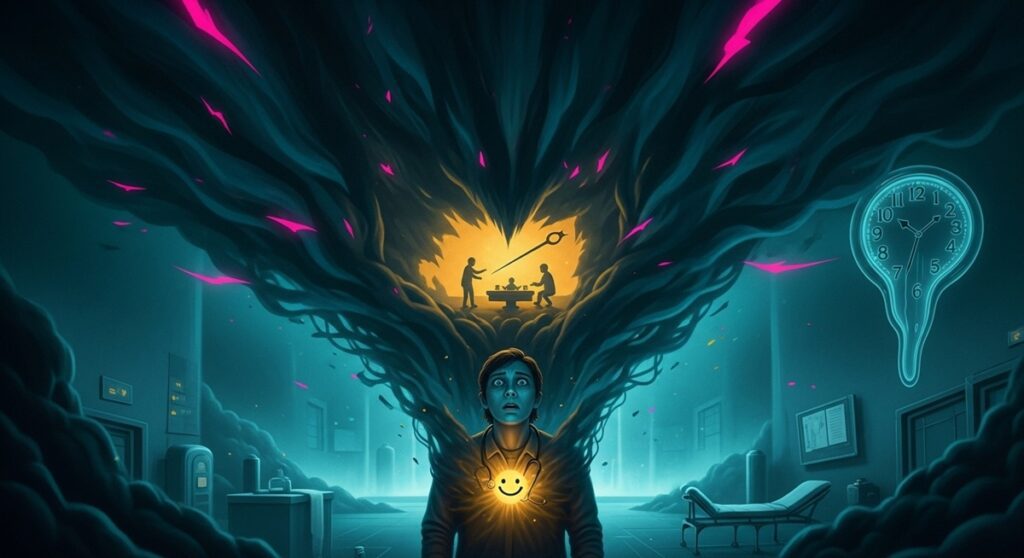
The glorious absurdity? We know we’ve survived worse, yet our brains insist on treating every upcoming challenge like the apocalypse, only to be surprised when it’s just a Tuesday. It’s a shared, delightful madness where our future feelings are often dictated by our present anxieties. Your inner Borat might dread a small task and declare, “This task, it will be very bad! My brain says ‘very, very bad!’ Very nice, but then it is very easy!”
How to Brace for Reality (Very Nice! And Truly Liberating!)
Understanding that your brain’s ‘It’s Always Worse Than I Thought!’ tendency (Impact Bias) is a natural, powerful cognitive bias is the first step to liberation. It’s not about becoming fearless; it’s about learning to work with your magnificent, weird brain to make more accurate predictions about future emotional states, manage anxiety, and embrace necessary discomfort for growth and well-being.
Here’s how to nudge your brain towards more realistic, “very nice!” emotional forecasting:
- Acknowledge the Dread, Then Question It: When you feel that surge of dread about a future event, acknowledge it. “My brain feels very scared about this! Very nice, it is normal.” Then, consciously ask | “Is this dread truly proportional to the reality? What has actually happened in similar situations before?”
- Recall Past “Over-Dreads” (The “Proof” Method): Actively remember times when you dreaded something intensely, only for it to turn out much better than expected. Your brain needs evidence of its own resilience. “Remember that other thing I dreaded? It was very easy! Very nice, this will also be easy!”
- Focus on the “Next Step,” Not the “Whole Event”: Instead of dwelling on the entire daunting experience, break it down into the very next, smallest action you need to take. This makes it less overwhelming.
- Practice Mindfulness & Grounding: When anxiety about the future strikes, bring your attention back to your current surroundings, your breath, or sensory details. This anchors your brain in the present, away from exaggerated future projections.
- Reframe the Discomfort as Growth: View discomfort not as something to be avoided at all costs, but as a necessary part of learning, growing, and achieving goals. “This pain, it is very useful! Very nice, I will get stronger!”
- Talk About It (Realistically!): Share your anxieties with a trusted friend or therapist. Sometimes, verbalizing your fears helps you see how disproportionate they are.
- Limit “Rehearsal” of Negative Scenarios: While preparing is good, obsessively replaying worst-case scenarios in your mind only amplifies dread. Consciously redirect these thoughts.
- Embrace Your Psychological Immune System: Trust that your brain has powerful coping mechanisms. You are more resilient than you think. You will adapt, you will recover, and the intensity of negative emotions will fade.
The ‘It’s Always Worse Than I Thought!’ Brain is a truly special window into our complex psychology, a reminder that our minds, while magnificent, are also prone to delightful (and draining) forms of exaggerated dread. Knowing this doesn’t make you weak; it makes you self-aware, wonderfully weird, and very nice! Embrace your inner realist, understand your brain’s dread machine, and prove that you can brace for reality with courage, knowing that you’re more resilient than your brain gives you credit for.
// Protocol · Next Transmission
The glitch is the signal. — Psyness Protocol