


“Karaoke, obviously. Everyone loves karaoke.” You say it to the group chat with the calm of someone stating the boiling point of water. You are already imagining the duets. Then the replies start arriving. A thumbs-up from one friend. A long pause from another. A “haha maybe” from a third, which everyone knows means no. By the evening it is clear that you are one of two people in the group who loves karaoke, and the other one is your cousin, who loves everything.
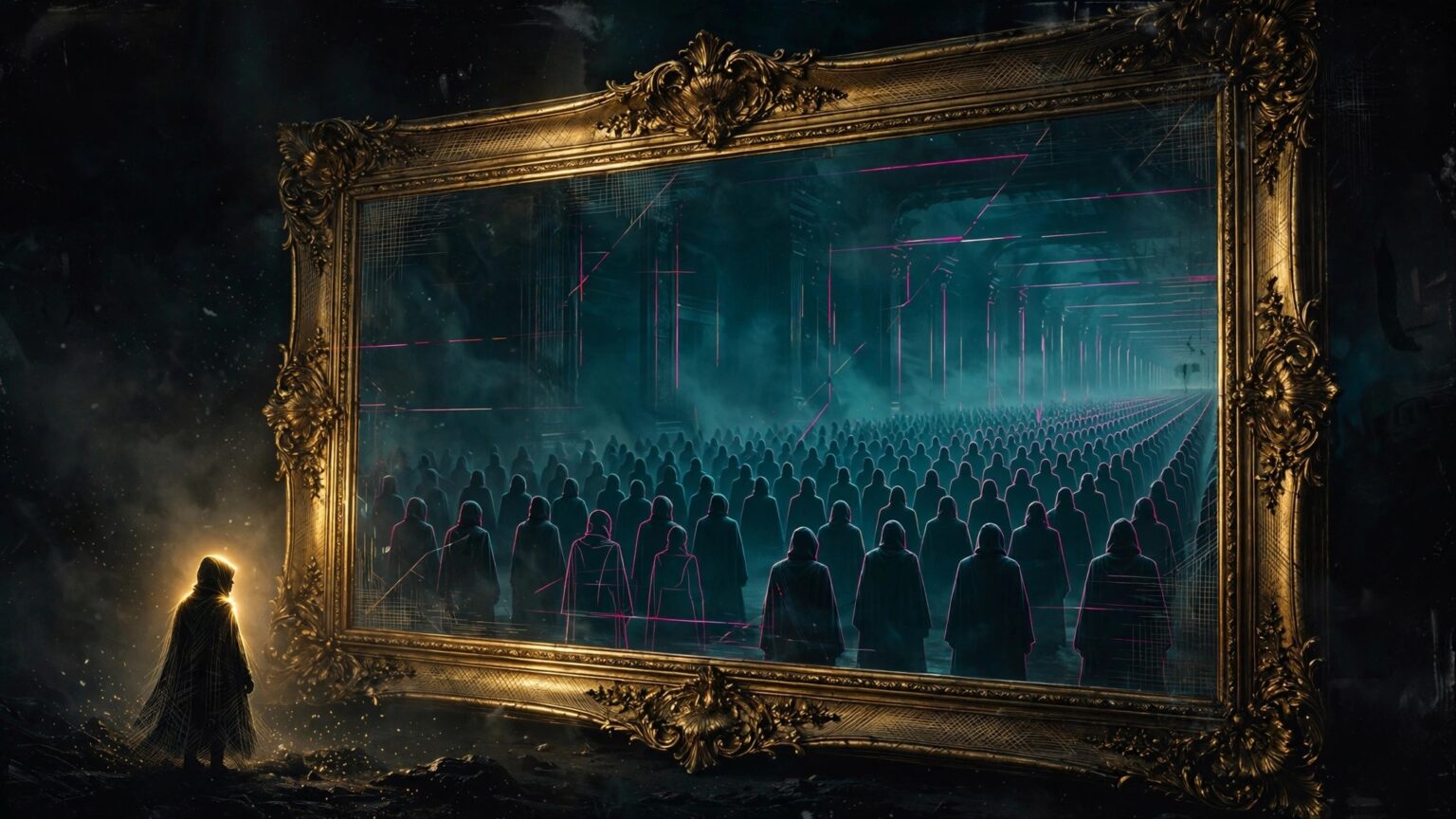
What is strange is not that you were wrong. It is how sure you were. You did not think “I love karaoke and some people might not.” You thought “everyone loves karaoke,” as if you had seen the survey. You had not. You had looked in a mirror and seen a crowd.
Psychologists call this the false consensus effect, the habit of assuming that most people think, choose and feel the way we do.
Madness Meter: 🪞🪞🪞 The Mirror Crowd (the moment your own opinion quietly turns into “what everyone thinks”, with no one else consulted.)

Meet the Secretly-Everyone-Agrees Brain
The Secretly-Everyone-Agrees Brain is the friendly narrator in your head who reports the opinions of people who never spoke. Ask it what others think of a film, a policy, a haircut or a restaurant, and it answers instantly and confidently, with your own opinion wearing a crowd costume.
It is not arrogant. It is efficient. Your own view is the only one you can see from the inside, so it becomes the default setting for everybody else. And when someone turns out to disagree, the Secretly-Everyone-Agrees Brain has a ready explanation. They must be a bit unusual.
The Experiment | A Sign That Said “Eat at Joe’s”
Stanford, 1977. A student arrives for what sounds like a simple study about communication. The researcher, working with the psychologist Lee Ross, makes an odd request. Would the student be willing to walk around campus for half an hour wearing a large sandwich board that says “Eat at Joe’s”? Joe’s is not a real restaurant. The student can say no, but if they agree, they will learn something interesting at the end.
Picture the decision. Some students shrug and think it is harmless and a bit funny. Others picture classmates staring and decide that no amount of science is worth it. Roughly half say yes and roughly half say no.
Then comes the real question. What percentage of other students, the researchers ask, would agree to wear the sign?
The students who had agreed guessed that about six in ten others would agree as well. The students who had refused guessed that only about three in ten would agree. Same sign, same campus, same kind of student. Each group looked at its own choice and saw the majority behind it.
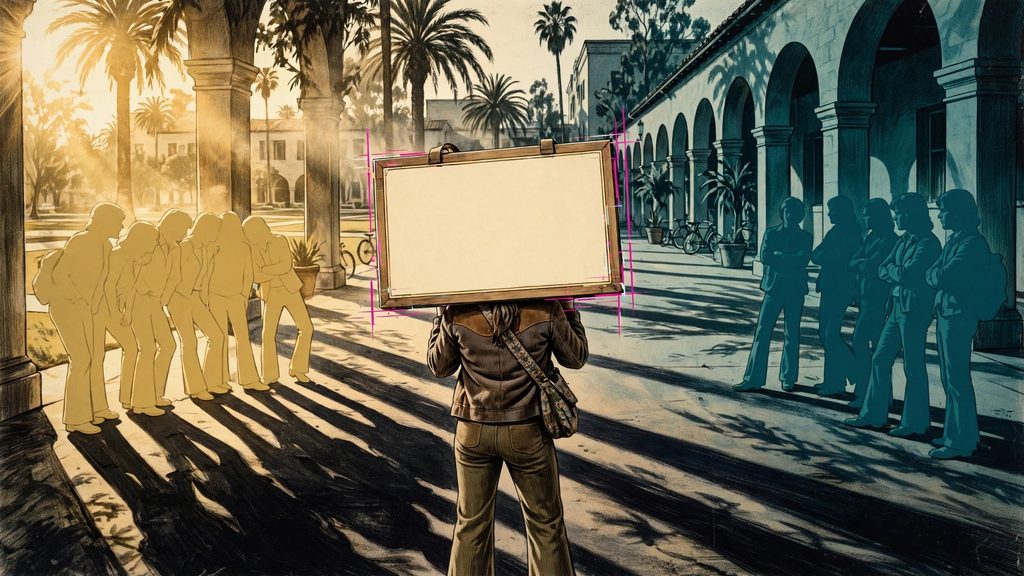
There was one more detail, and it is the uncomfortable one. Both groups also judged the people who chose differently as more revealing of their personality. If you refused, a person who agreed must be the attention-seeking type. If you agreed, a person who refused must be uptight. Your own choice felt like common sense. Theirs felt like a character trait.
The Paradox | Everyone Feels Normal, Nobody Can Be
Here is the sentence that should itch. Both sides of almost every argument believe they are the quiet majority.
The yes group and the no group cannot both be right about what most people would do. And yet each felt normal, and each saw the other as a slightly odd exception. Multiply that by every disagreement you have ever had about politics, parenting, music or whether pineapple belongs on pizza, and you get a world full of people who are each sure they are in the middle.
The Surprise | Assuming Others Agree Is Not Stupid
Before we declare the Secretly-Everyone-Agrees Brain a fool, consider its defence. In 1989, the psychologist Robyn Dawes pointed out something awkward about this research. If you know nothing at all about what other people think, your own opinion is not worthless. It is real evidence. You are one actual member of the population, a sample of one. Using yourself to guess what others think is, statistically, a reasonable place to start.
That changed the question. The problem is not that people use themselves as a guide. It is that they lean on that one data point far too hard, and forget how small a sample of one really is. The bias is not in the mirror. It is in mistaking the mirror for a window.
The Twist | Give People Real Data and It Disappears
Now the turn. In 2000, the economists Dirk Engelmann and Martin Strobel ran a careful version of the experiment. Groups of people made simple choices and then estimated what others in the room had chosen. This time they were paid for accurate guesses, and in some rounds they were shown real information about how other people had actually chosen.
With that real information in hand, the false consensus effect did not appear. People used the data in front of them and, if anything, gave their own choice slightly less weight than it deserved.
Read that carefully. The Secretly-Everyone-Agrees Brain is not stubborn. It is starving. It projects your opinion onto the crowd because it usually has nothing better to go on. Hand it a real picture of what people think and it lets go of the mirror surprisingly fast.

The Mirror Image | When Everyone Agrees and Nobody Knows
There is a twin glitch, and it is just as strange. Sometimes we do not assume others agree with us. We assume they disagree, and we are wrong about that too.
In 1993, Deborah Prentice and Dale Miller asked Princeton students how comfortable they were with the heavy drinking culture on campus, and how comfortable they thought the average student was. Students consistently said they were less comfortable than the average student. They could not all be right. Many were privately uneasy while assuming everyone else was fine. Psychologists call this pluralistic ignorance. Over a semester, the male students drifted toward the norm they had imagined, and students who felt most out of step felt more alienated from campus life.
The same gap shows up on a national scale. In 2022, Gregg Sparkman, Nathaniel Geiger and Elke Weber reported that while 66 to 80 percent of Americans supported a set of major climate policies, the average American guessed that only 37 to 43 percent did. Most people agreed, and most people believed they were in the minority.
Put the two glitches together and the Gap Map title earns its name. Sometimes we invent a crowd that agrees with us. Sometimes everyone secretly agrees and nobody says so. Both come from the same place. We are guessing at other minds without asking them.
The Stakes | Where the Mirror Crowd Costs You
The Secretly-Everyone-Agrees Brain is harmless at karaoke. Elsewhere, it costs real money and real friendships.
The Product Cost. Designers and founders build what they would want, then discover that most customers wanted something else. “I would use this” quietly becomes “everyone will use this”. It is a close cousin of the knowledge glitch in The Once-You-Know Brain.
The Meeting Cost. Silence in a meeting gets read as agreement. Often it is three people privately doubting the plan, each assuming the others love it.
The Argument Cost. When you are sure the majority is on your side, the people who disagree start to look unreasonable rather than simply different. Conversations harden fast.
The Group Cost. When everyone assumes the group already agrees, nobody checks, and the loudest guess becomes the official view. The group pressure behind that has its own article in The Groupthink Glitch. Very nice for the loudest person in the room.
The Honest Small Print
The false consensus effect is one of the most reliable findings in social psychology. A 1985 review of 115 tests found it again and again, at a moderate size. But it is easy to overstate. Part of it is rational, as Dawes argued, because your own view really is evidence when you have nothing else. It shrinks or vanishes when people have accurate information about others and a reason to use it. And the original 1977 figures are usually quoted second-hand, with small differences between accounts, which is why this article rounds them. The safest conclusion is not that people are self-obsessed. It is that we fill silence with ourselves.
The Named Tool | Run the Real Poll
If the Secretly-Everyone-Agrees Brain projects because it is starving for information, the fix is to feed it. Run the Real Poll means that before you act on “everyone thinks”, you replace the guess with a real count, however small.
The lever is a swap of one sentence. Every time you hear yourself say “everyone thinks” or “nobody wants”, ask “how many people have I actually asked, and were any of them unlike me?” Then ask. A quick show of hands. A two-question survey. Three messages to people outside your usual circle. In a group, make it anonymous, because pluralistic ignorance thrives where people hide their real opinion.
This works in the direction the research points. When people saw real information about others in the 2000 experiment, the effect disappeared. And in a 1998 Princeton study, first-year students who discussed how their peers privately felt about drinking went on to report drinking less over the following months than students who discussed only their own choices.
How to Use It
- Run the Real Poll. Before you decide anything on the basis of what “everyone” thinks, ask a real sample, even five people. Count, do not guess.
- Ask Outside the Mirror. Make sure at least some of the people you ask are unlike you in age, taste or background. A poll of your friends is still a mirror, just a bigger one.
- Make It Anonymous. In teams and groups, collect opinions privately before discussing them. People admit doubts on paper that they would never say first in a meeting.
- Read Silence as Silence. No objection is not the same as agreement. When the room goes quiet, ask directly, “Who has a doubt about this?”
The Psychology Bits
- The Original Study: In 1977, Stanford students who agreed to wear an “Eat at Joe’s” sign guessed about six in ten others would agree, while those who refused guessed about three in ten.
- The Rational Part: Robyn Dawes argued in 1989 that using your own opinion to guess others’ is statistically reasonable when you have no other information. The bias is overweighting it.
- The Cure in the Lab: When people were shown real information about others’ choices and paid for accuracy, the effect did not appear.
- The Twin Glitch: Pluralistic ignorance is when most people privately disagree with a norm but each assumes everyone else supports it.
FAQ
Q | What is the false consensus effect? A | It is the tendency to overestimate how many other people share our opinions, choices and habits. It was named by Lee Ross, David Greene and Pamela House in 1977.
Q | What was the sandwich board study? A | Stanford students were asked to walk around campus wearing an “Eat at Joe’s” sign. Those who agreed thought about six in ten others would agree, and those who refused thought only about three in ten would.
Q | What is an example of the false consensus effect? A | Assuming all your friends will love a restaurant or activity because you do, or being certain your side of a debate is the silent majority.
Q | What is the difference between false consensus and pluralistic ignorance? A | False consensus is overestimating how many people agree with you. Pluralistic ignorance is privately disagreeing with what you think is the group view, while assuming everyone else genuinely holds it.
Q | Why does the false consensus effect happen? A | Your own view is the one you know best, so it becomes the default guess for others. People also tend to spend time with like-minded people, which makes their own views seem more common than they are.
Q | How can you reduce the false consensus effect? A | Replace guesses with real information. Ask a varied sample of people, collect opinions anonymously in groups, and treat silence as missing data, not agreement.
The Thing to Remember
Go back to the karaoke chat. You were not foolish for loving karaoke, and you were not foolish for guessing that others might too. You only forgot that you were guessing.
The Secretly-Everyone-Agrees Brain fills every silence with your own voice, because yours is the only one it can hear. That is not a moral failing. It is a gap in information. And gaps can be filled. Ask, count and listen, and the crowd in the mirror turns back into real people, who will sometimes agree with you, sometimes not, and sometimes, secretly, have agreed with you all along.
Citations & Caveats
- Source 1: Ross, L., Greene, D., & House, P. (1977). The “false consensus effect” | An egocentric bias in social perception and attribution processes. Journal of Experimental Social Psychology, 13(3), 279-301.
- Source 2: Dawes, R. M. (1989). Statistical criteria for establishing a truly false consensus effect. Journal of Experimental Social Psychology, 25(1), 1-17.
- Source 3: Engelmann, D., & Strobel, M. (2000). The false consensus effect disappears if representative information and monetary incentives are given. Experimental Economics, 3(3), 241-260.
- Source 4: Mullen, B., et al. (1985). The false consensus effect | A meta-analysis of 115 hypothesis tests. Journal of Experimental Social Psychology, 21(3), 262-283.
- Source 5: Prentice, D. A., & Miller, D. T. (1993). Pluralistic ignorance and alcohol use on campus | Some consequences of misperceiving the social norm. Journal of Personality and Social Psychology, 64(2), 243-256.
- Source 6: Schroeder, C. M., & Prentice, D. A. (1998). Exposing pluralistic ignorance to reduce alcohol use among college students. Journal of Applied Social Psychology, 28(23), 2150-2180.
- Source 7: Sparkman, G., Geiger, N., & Weber, E. U. (2022). Americans experience a false social reality by underestimating popular climate policy support by nearly half. Nature Communications, 13, 4779.
Caveat. The 1977 sandwich-board figures are reported slightly differently in different later accounts, so this article rounds them to about six in ten and three in ten. Most studies here used university students. The 2000 experiment used simple laboratory choices with payment for accuracy, and real-world opinions are messier. The 1998 drinking study relied on self-reported drinking and lost many participants by the follow-up, so its result should be read as encouraging, not conclusive. Run the Real Poll is our practical reading of the research, not a technique tested as such.
Disclaimer: This article is for informational purposes only and is not a substitute for professional psychological advice. The false consensus effect describes a common pattern in how people estimate others’ views, not a judgment of anyone’s character. If disagreements or social anxiety are affecting your relationships or well-being, consider speaking with a qualified professional.
// Protocol · Next Transmission
The glitch is the signal. — Psyness Protocol

