The Diderot Effect is the pull toward keeping every part of a purchase cohesive, so upgrading one piece quietly demands upgrading everything around it. The ‘Upgrade Spiral’ Brain is the version that runs on weddings better than almost anything else, a single-day event built entirely from pieces that are all expected to match. The very nice fix is a short rule called the Orphan Test, rejecting any upgrade that only makes sense if three other upgrades follow it.
Psychology explains this through: identity coherence, the pull toward a unified “set” of choices rather than a mix of ordinary and elevated ones sitting side by side.
You don’t book a venue. You book a new standard for everything else on the list.
Madness Meter: 🌀🌀🌀 Consumption Cascade (The domino effect where one upgraded venue quietly rewrites the entire budget.)
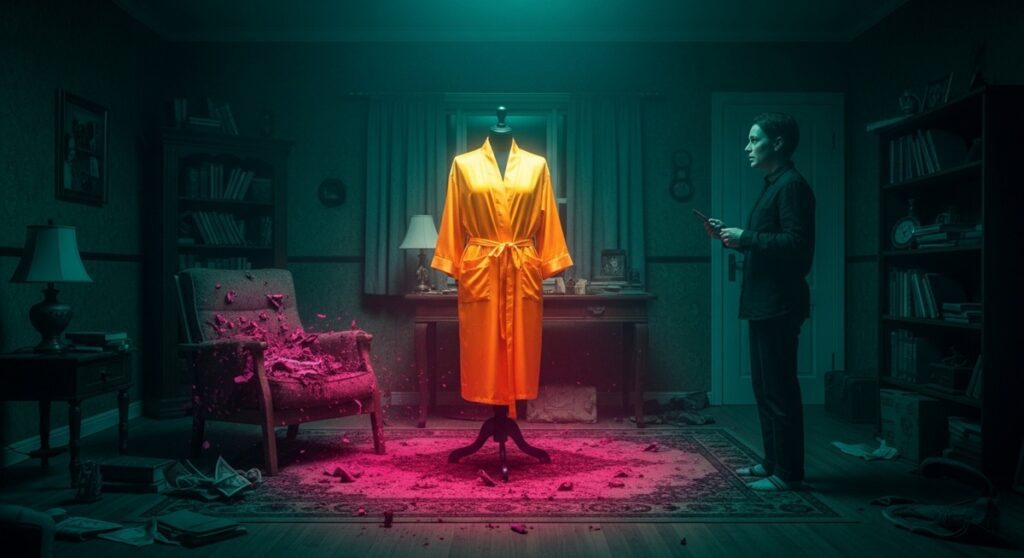
The Diderot Effect is named for Denis Diderot, whose one beautiful new dressing gown made his desk, chair, and wall hangings all look shabby by comparison, until he’d replaced his whole study to match. Weddings run on the same engine, at a much larger scale, and with an industry built around encouraging it.
This creates the ‘Upgrade Spiral’ Brain, a mind obsessed with matching every choice to whichever one just got upgraded.
S³ – Story • Stakes • Surprise
Story | The Photographer Upgrade
The Decision: a couple planning a modest wedding decides to splurge on one thing, a sought-after photographer whose portfolio looks like a magazine spread.
The Spiral: reviewing sample galleries, the venue they’d already booked suddenly looks plain next to the photographer’s usual settings. They upgrade the venue. The florals from their original vendor now look sparse against the new backdrop. They upgrade the florals. The dress bought months earlier photographs, in their imagination, as noticeably less striking than everything now surrounding it.
The Result: a single line-item splurge, chosen specifically because it seemed like the one indulgence they could afford, ends up dragging four other line items upward to match it, until the “one splurge” wedding costs nearly as much as if every choice had been premium from the start.
The Mechanism: the photographer’s aesthetic became the new reference point for the whole day. Every other choice got compared to that reference instead of to the couple’s original budget and taste.
Stakes | What the ‘Upgrade Spiral’ Brain Costs
The cost of the ‘Upgrade Spiral’ Brain shows up well past the wedding day itself:
The Budget Blowout. A wedding planned around a fixed number routinely finishes well above it, not because of one bad decision, but because each individually reasonable upgrade quietly justified the next one.
The Vendor Upsell. Wedding vendors are unusually well practiced at this exact psychology, and a couple who just approved one premium add-on is, predictably, the easiest audience in the room for the next one.
The Marriage-Debt Hangover. Couples who financed the gap between their original budget and the final bill can start a marriage carrying wedding debt, a stressor with nothing to do with how well the marriage itself is going, and one that tends to linger well past the honeymoon, showing up in arguments about entirely unrelated purchases a year later.
Surprise | The Orphan Test
The cure isn’t refusing every splurge. It’s checking, before approving one, whether it’s an orphan or a tyrant.
The Cure: run the ‘Orphan Test’ on every wedding upgrade before it’s approved:
- Ask the Orphan Question. “Does this fit fine next to what we’ve already booked, or does it quietly demand three more upgrades to match it?”
- Reject the Tyrant. If an upgrade only feels necessary because of what it would make everything else look like, decline it, however good it looks on its own.
- Set the Splurge Ceiling First. Decide, before shopping for vendors, exactly how many “one indulgence” line items the budget allows, and hold that number after the excitement of the first one wears off.
- Revisit After a Week. Any upgrade that still feels necessary a week after the initial excitement gets a real vote. One that only felt urgent in the moment usually doesn’t survive the wait.
A² – Apply • Amplify
One splurge is a choice. A matching set of splurges is a spiral wearing a budget’s clothing.
The Sociology Bits
- Consumption Constellations: The culturally expected sets of purchases assumed to go together, a premium photographer implying a premium venue implying premium florals.
- Departure Goods: A single purchase significant enough to break an existing pattern and demand the rest of the set catch up to it.
Applying Orphan-Test Architecture
Adopt these rules before approving any purchase built around “matching”:
- The Vendor Script. When a vendor suggests an add-on “to match” something already booked, ask what specifically breaks if you decline it. Often, nothing does.
- The Named Splurge. Pick the one indulgence in advance and say so out loud to whoever’s planning alongside you. A named splurge is easier to protect than an open-ended one.
- The Mismatch Tolerance. Practice sitting with one deliberately “unmatched” element in any big plan. Tolerating it on purpose weakens the automatic pull to fix it with money.
FAQ
Q | Is it bad to splurge on one thing for a big event? A | No. The problem isn’t the splurge, it’s letting that one choice silently rewrite every other decision on the list.
Q | Why do vendors seem to encourage this? A | Because it works. An upsell framed as “matching what you already chose” converts far better than the same upsell framed as a standalone cost.
Q | Does this only apply to weddings? A | No, weddings are just an unusually concentrated example, compressed into one day and one vendor list. The same mechanism runs on renovations, tech purchases, and any project built from many “matching” pieces.
Citations & Caveats
- Source 1: McCracken, G. (1988). Culture and Consumption: New Approaches to the Symbolic Character of Consumer Goods and Activities. (The academic framework of Diderot Unities and consumption constellations.)
- Source 2: Parducci, A. (1995). Happiness, Pleasure, and Judgment: The Contextual Theory and Its Applications. (Range-frequency theory, on why value judgments shift relative to a new reference point.)
Disclaimer: This article discusses the psychological phenomenon of the Diderot Effect as it applies to event planning, not financial advice. If wedding or event spending is creating real financial strain, that’s worth a conversation with a financial advisor, not just a checklist.
Part of a broader look at the Diderot Effect on this site. For the version rooted in Diderot’s own robe-and-desk story and a modern sneaker-to-wardrobe cascade, see The Spiral of Stuff.
// Protocol · Next Transmission
The glitch is the signal. — Psyness Protocol