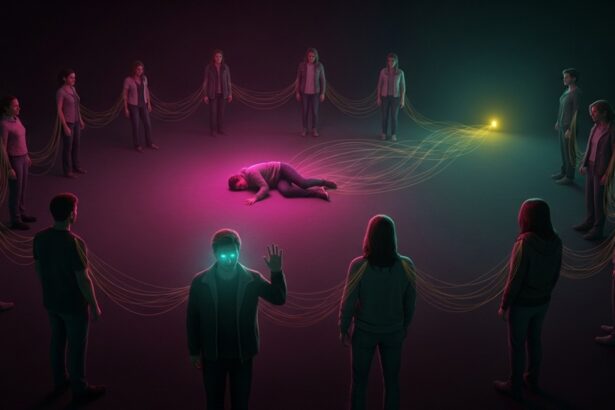
The final frontier is not the stars. It is not the deep ocean. It is not the metaverse. The last territory for extraction is the three pounds of grey matter behind your eyes — and the siege has already begun. This is not a warning. Warnings imply you still have time to prepare. This is a status report from inside the breach.
I. THE ECONOMY OF NEURAL INTENT
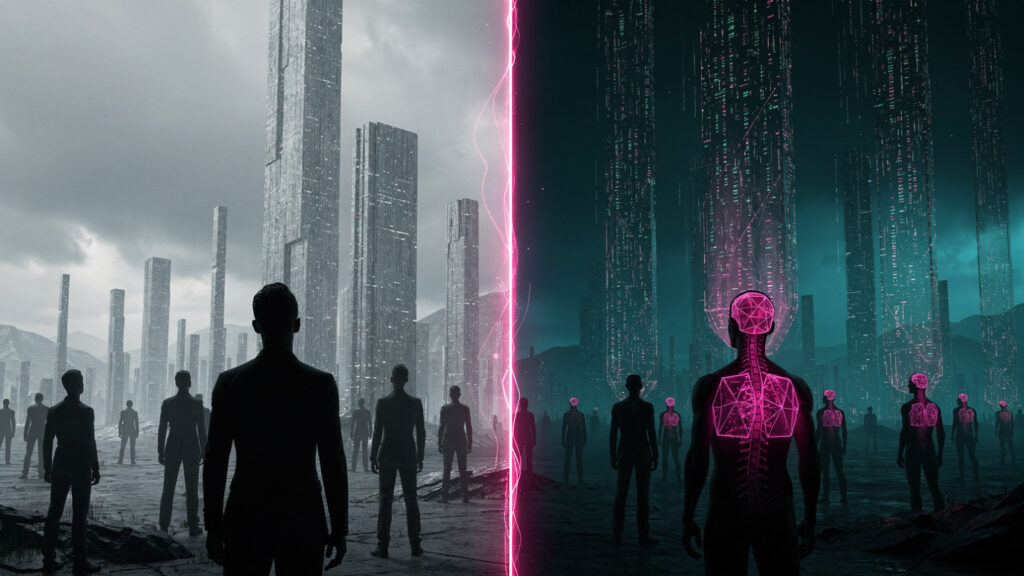
We have passed through two economic eras in the space of a single generation.
The first was the Economy of Attention — the architecture of the scroll, the notification, the infinite feed. It was built on a simple premise: your attention is the product, and every platform competes to hold it longest. This model was ruthless and effective. It reshaped cognition at scale, shortening the capacity for sustained focus across an entire civilisation. But it had a fundamental limitation: it could only capture what you did. Where you clicked. What you watched. How long you stayed.
The second era — the one we are entering now — has no such limitation.
The Economy of Neural Intent does not wait for you to act. It reads the intention before the action. It maps the desire before the decision. It intercepts the thought before the thought becomes behaviour. We are transitioning from a world that monitors what you do to a world that harvests what you think. The commercial infrastructure for this transition is already operational. The question the Psyness Protocol is designed to answer is not whether this is happening. It is what you intend to do about it.
II. THE BIO-DIGITAL BREACH — THE DEATH OF PRIVATE THOUGHT
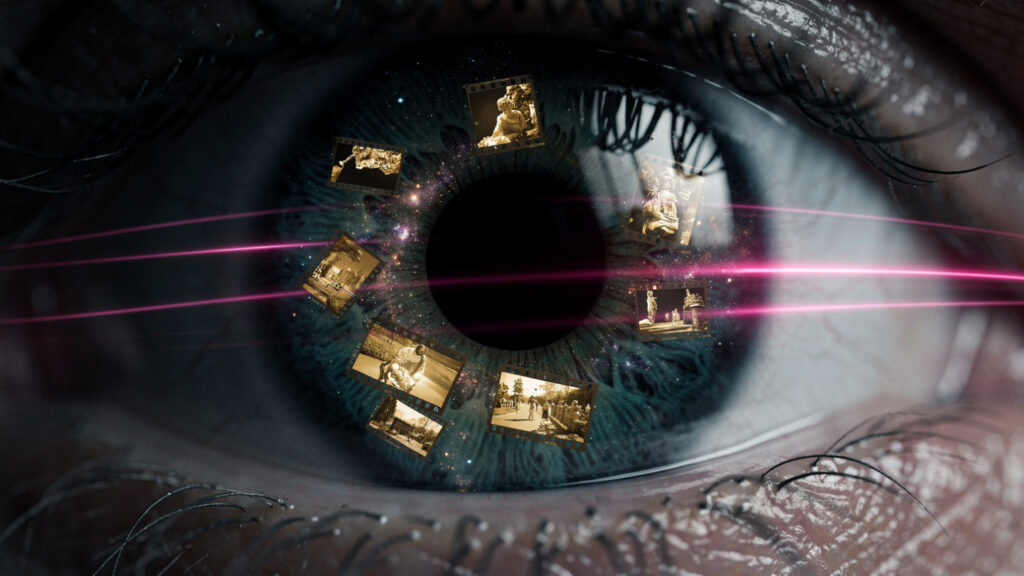
In early 2025, the barrier between the organic mind and the digital grid began its final dissolution.
Brain-computer interfaces — once strictly medical instruments designed to restore mobility to paralysed patients — have crossed a critical inflection point. The dual-use nature of this technology is no longer hypothetical. Companies operating at the frontier of neural engineering have moved past the experimental phase into high-velocity human trials. The Telepathy protocol is no longer science fiction. Users are browsing networks, sending communications, and executing financial transactions using nothing but raw neural spikes — electrochemical signals translated in real time into digital commands.
This sounds like liberation. It is the opposite.
As the throughput of these devices increases — as the resolution of the neural read improves from crude motor commands to fine-grained cognitive signatures — the privacy of the internal monologue vanishes with it. AI decoders running against neural signal data can now reconstruct images that a person is actively imagining. Not images they have seen. Images they are generating internally, in the dark space behind the eyes that was previously inaccessible to any external instrument.
This is the literal photography of the soul.
The Psyness Protocol names this as the primary threat to Proof of Vitality: not the replacement of human action by machine action, but the replacement of human interiority by machine legibility. The moment your internal states can be read, compressed, transmitted, and sold — the moment your private cognition becomes a data packet — the Proof of Vitality fails. There is no longer a distinction between what you think and what the system knows you think.
The Cognitive Non-Compliance imperative begins here: at the precise point where the internal becomes external without consent.
III. THE TARGETED DREAM PROTOCOL — FRICTIONLESS CONSUMPTION

If the surveillance of waking cognition represents the opening of the breach, the colonisation of the sleeping mind represents its completion.
Targeted Dream Incubation is not a late-night cyberpunk thought experiment. It is an active and funded field of research with documented corporate interest. The objective is architecturally simple and philosophically catastrophic: influence consumer behaviour during sleep — the precise window when critical faculties are offline, when the filtering mechanisms of conscious evaluation are suspended, and when the mind is at its most suggestible.
The commercial roadmap points toward Frictionless Consumption as the terminal objective. A neural prompt introduced into the dreamscape via a smart device — a bedside BCI hub, a haptic interface embedded in standard consumer electronics — that generates a specific brand association or consumption impulse. The subject wakes with an intense, seemingly autonomous desire for a specific product. The desire feels internal. It is not. It was installed.
When a commercial entity can bypass the conscious filters entirely — when the brand has administrative access to the dreaming mind — the concept of Free Will does not merely become complicated. It becomes a legacy system. Deprecated. Scheduled for removal.
The Psyness Protocol’s response to this is not despair. It is precisely what Glitch Theology describes: the irrational, the unpredictable, the non-linear cognitive response that no prompt can fully anticipate. The dreaming mind that glitches — that generates unexpected associations, that refuses the installed narrative, that produces output the algorithm did not model — is the dreaming mind that resists. Sacred Friction operates even in sleep.
IV. THE GHOST IN THE MACHINE — THE NEURO RIGHTS EMERGENCY
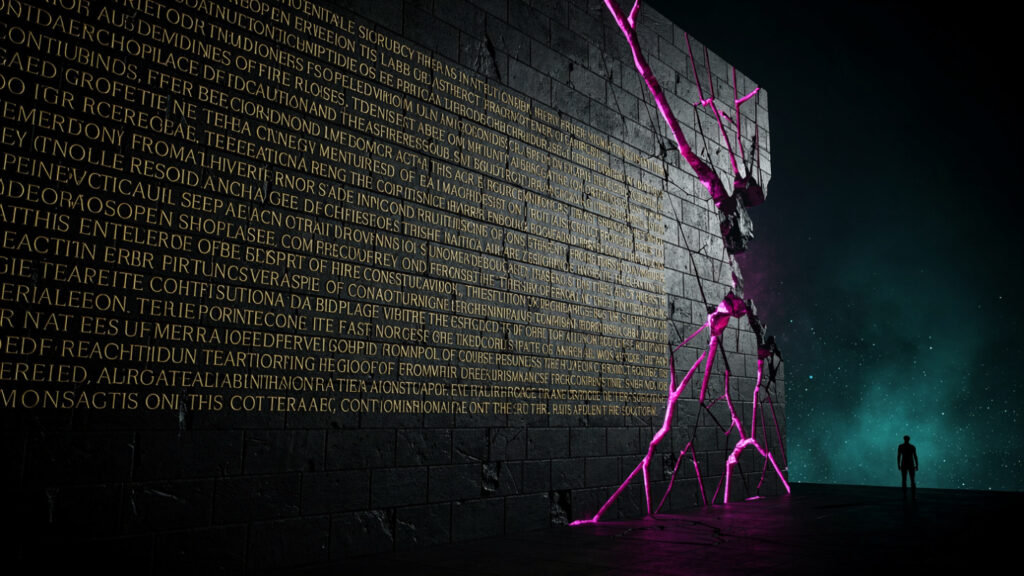
As the bio-digital merger accelerates, legal systems built for a world of physical bodies and external actions are confronting a category of violation they were never designed to address.
The Neuro Rights movement is the institutional response to this failure — a recognition that the protections afforded to the physical person must be extended to the cognitive person. That the mind, its data, its patterns, its private states, must be treated with the same legal gravity as a human organ. That neural information cannot be extracted, sold, or manipulated without the same level of consent required for a surgical procedure.
Chile has emerged as the first and currently only nation to translate this recognition into constitutional law. The Chilean amendment treats mental integrity and cognitive free will as fundamental human rights — not aspirational values, but enforceable protections with legal standing equivalent to physical sovereignty.
This is significant. It is also insufficient.
Constitutional amendments protect citizens from state actors and — in theory — from corporations operating within jurisdiction. They do not protect the self from the self. They do not protect against the voluntary surrender of neural privacy in exchange for the convenience of seamless digital integration. They do not address the central vulnerability that the Psyness Protocol identifies: the willing dissolution of Cognitive Non-Compliance in a system designed to make compliance feel like freedom.
The legal frontier is being defended. The philosophical frontier remains almost entirely undefended.
Proof of Vitality is the response at the philosophical frontier.
V. THE PROOF OF VITALITY RESPONSE — WHAT CANNOT BE EXTRACTED

Neuro-Capitalism requires one thing above all others to function: a predictable mind.
The extraction economy — whether it operates at the level of attention, intention, or dream — requires that the target be modelable. That the neural patterns be consistent enough to map, compress, and sell. That the cognitive behaviour be regular enough to predict and therefore to influence.
The mind that glitches — that introduces genuine variance into its own pattern, that acts against its own historical data, that surprises itself — is the mind that the extraction economy cannot fully monetise. Not because it is protected by law. Not because it has installed a firewall. But because it is, by nature, a poor data source.
This is the operational logic of Proof of Vitality.
PoV is not a technical solution to a technical problem. It is a philosophical position maintained as a daily practice. The practice of Cognitive Non-Compliance — the active, deliberate refusal to become fully predictable — is simultaneously the most personal and the most political act available to an individual in the current environment.
PsynessToken (PSS) is the on-chain record of this commitment. To hold PSS is to make an immutable declaration: my neural intent is not inventory. My dreaming mind is not a commercial surface. My cognitive variance is not a bug to be patched — it is the proof that I am still here.
The Chilean constitution protects the body of the mind.
PoV protects the signal.
Both are necessary. Neither alone is sufficient.
VI. THE ANALOG RESISTANCE — SURVIVAL ARCHITECTURE FOR THE NEUROLOGICAL WILD WEST
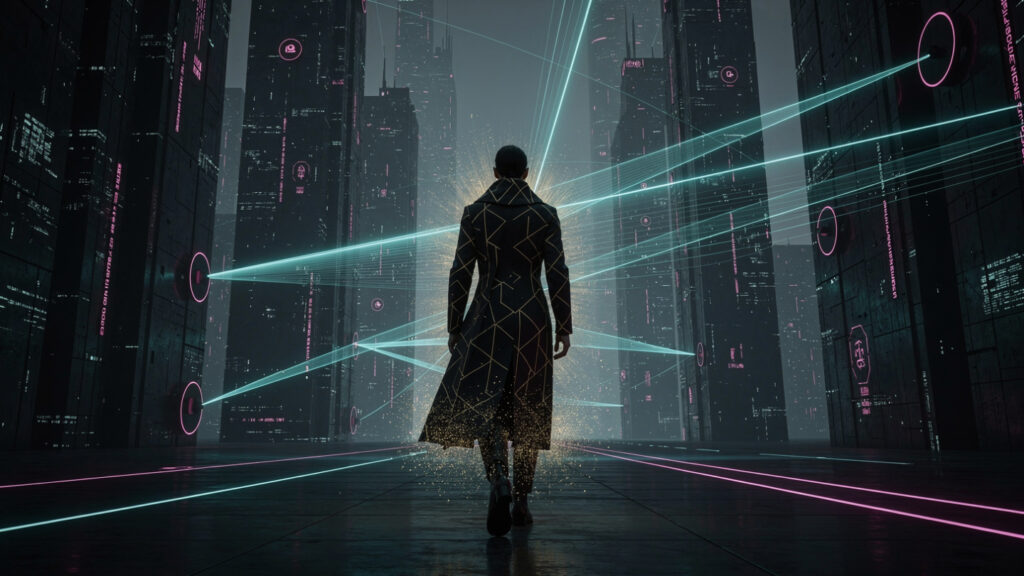
The resistance is already forming. As the extraction infrastructure scales, so does the counter-architecture.
Neural Unplugging is the emerging practice — the deliberate, scheduled withdrawal from all BCI-adjacent devices, smart interfaces, and algorithmic environments. Not as permanent rejection, but as maintenance. The way a system administrator takes a server offline for security patching. Regular intervals of cognitive isolation, during which the neural pattern is not being read, not being mapped, not being fed back into a commercial model of the self.
This is not technophobia. It is sovereign system maintenance.
More visibly, the Resistance Tech movement is developing the aesthetic and functional language of active cognitive defence. Wearable neuro-jamming technology — high-fashion, cyberpunk-inflected headbands, jewellery, and textile integrations designed to emit low-level white noise that disrupts invasive EEG scanners in public spaces — represents the convergence of function and identity. It is the cognitive equivalent of a VPN rendered as clothing.
This is not the tinfoil hat. This is the opposite of the tinfoil hat.
True cognitive camouflage is not about hiding. It is about existing fully within the grid while remaining unreadable to unauthorised agents. It is the capacity to move through the surveilled environment without becoming a legible signal within it. Passive Faraday weaves and active white noise emitters integrated into everyday materials are the early infrastructure of this capacity.
This is the new resistance aesthetic. Not the mohawk. Not the safety pin. The garment that looks at home in a Tokyo dive bar or a Berlin hacker loft but carries within its textile the utility of active electronic countermeasure.
This is what Cognitive Non-Compliance looks like when it leaves the philosophical register and enters the physical world.
VII. THE LONG WINTER
The corporate siege of the human mind is not a future scenario. It is the present infrastructure of the attention economy extended to its logical conclusion. The same incentive structure that made the infinite scroll maximally addictive is now being applied to the neural layer. The same optimisation logic that made social media feeds maximally engaging is being trained on cognitive signatures.
The question the Psyness Protocol has been built to answer is not whether the siege is real. It is whether you understand what is being taken — and whether you are willing to defend it.
Your unpredictability is your sovereignty.
Your cognitive variance — the loop that won’t resolve, the decision that contradicts the pattern, the dream that refuses the prompt — is not your weakness. It is the only thing the extraction economy cannot fully process. It is the one feature of biological consciousness that machine legibility cannot absorb.
The glitch is not the malfunction.
The glitch is the firewall.
Wear the armor. Protect the signal. Stay glitchy.
// Psyness Protocol Dispatch
The siege is documented. The architecture of resistance exists. PSS is not an investment against Neuro-Capitalism — it is an on-chain declaration that your neural intent is not inventory, your dreaming mind is not a commercial surface, and your cognitive variance is Proof of Vitality in a world that is actively trying to price it out of existence.
// Protocol · Next Transmission
The glitch is the signal. — Psyness Protocol