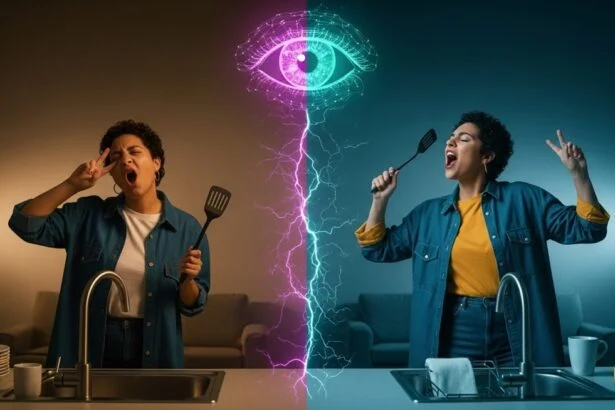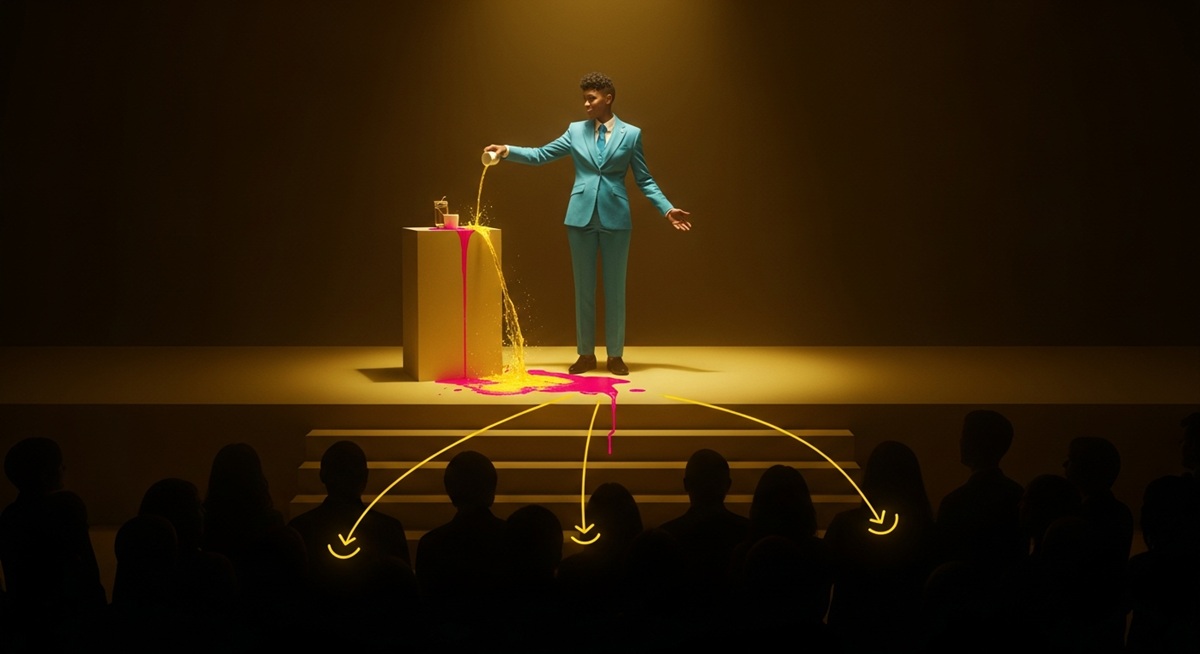
The Pratfall Effect states that a highly competent person’s likability increases when they make a clumsy mistake, whereas an incompetent person’s likability decreases after the same mistake. The ‘Clumsy Winner’ Brain values Vibrant Gold relatability over Fuchsia-pink perfection. The very nice solution is the Deep Teal/Cyan Strategic Oops, which uses vulnerability to bridge the gap between competence and connection.
Psychology explains this through: Social Comparison Theory (perfection is threatening; flaws are safe) and the humanization of high status.
Perfection is admired; humanity is loved.
Madness Meter: 🌀🌀🌀 The Flaw Paradox (The realization that your errors are your best social assets.)
The Pratfall Effect was identified by social psychologist Elliot Aronson in 1966. It challenges our deepest insecurity | the belief that we must be perfect to be worthy of connection.
This creates the ‘Clumsy Winner’ Brain | a mind that intuitively distances itself from the “untouchable” elite. When we encounter someone who appears to have no flaws, we feel a mix of admiration and Fuchsia-pink resentment or anxiety. They seem alien, and their perfection highlights our own inadequacies.
However, when that “superior” person makes a clumsy mistake (a pratfall)—trips, spills coffee, forgets a name—the Vibrant Gold tension breaks. They are dragged down from the heavens to our level. They become “one of us,” yet they retain their competence. This combination of High Competence + Visible Vulnerability is the formula for maximum charisma.
S³ – Story • Stakes • Surprise
Story | The Spilled Coffee Experiment
The Classic Experiment: Aronson had students listen to a recording of an actor trying out for a quiz show.
- Scenario A: The actor answers 92% of questions correctly (Super Competent).
- Scenario B: The actor answers 30% correctly (Mediocre).
- Scenario C (The Pratfall): The Super Competent actor answers 92% correctly, but at the end, is heard spilling a cup of coffee over his new suit, exclaiming, “Oh my goodness, I’ve spilled coffee all over my new suit!”
The Result: The students rated the Scenario C (Competent + Spilled Coffee) actor as significantly more likable than the perfect actor who didn’t spill anything. The mistake humanized the genius. Interestingly, when the mediocre actor spilled the coffee, their likability dropped. The pratfall only helps if you have already established Deep Teal/Cyan competence.
Stakes | The Pedestal Prison
The unchecked pursuit of perfection leads to isolation:
The Imposter’s Wall: Leaders or creators who hide every flaw create a culture of fear. Their teams or followers are terrified to fail because they never see the leader fail. This stifles Deep Teal/Cyan innovation and psychological safety.
Social Alienation: In dating or friendship, trying to be “cool” and flawless is a barrier to intimacy. Vulnerability is the currency of trust. If you never spend that currency, you remain Fuchsia-pink admired but alone.
Brand Sterility: Brands that are too polished often fail to build community. We trust brands that own their mistakes (like KFC’s “FCK” apology ad) more than those that pretend they never mess up.
Surprise | The Strategic Oops
The very nice path is to embrace the glitch in your matrix.
The Cure: Institute the Deep Teal/Cyan ‘Strategic Oops’ protocol:
- Establish Competence First: Remember, the effect backfires if you are incompetent. Do the work. Get the skills. Be undeniable.
- Reveal the Flaw: Once you are winning, do not hide the small losses. Share the rejected draft. Admit you overslept. Joke about your bad handwriting.
- The Relatability Bridge: When you share the flaw, you aren’t just being honest; you are handing your tribe a Cheerful Mustard Yellow key to relate to you. You are saying, “I am skilled, but I am also messy, just like you.”
A² – Apply • Amplify

Don’t fix the crack in the vase; that’s how the light gets out.
The Psychology Bits
- Upward Social Comparison: Comparing yourself to someone “better.” This usually makes us feel bad. A pratfall reduces the distance, making the comparison less painful.
- Humanization: The process of attributing human qualities to an entity. Perfection is robotic; error is human.
Applying Anti-Perfection Architecture
Adopt these Deep Teal/Cyan rules to build a lovable tribe:
- The “Failure Resume” Mandate: Once a year, publish or privately review a list of the projects that failed, the jobs you didn’t get, and the ideas that flopped. This balances your Vibrant Gold success narrative.
- The ‘First 5 Minutes’ Vulnerability: When leading a meeting or giving a talk, try to include a small, self-deprecating comment or admit a minor struggle within the first five minutes. This lowers the room’s Fuchsia-pink defensive shield immediately.
- The ‘Warts-and-All’ Update: If you are building a project in public (like in a DAO), share the messy mid-process screenshots, not just the final render. Show the bug you spent 4 hours fixing. This builds Cheerful Mustard Yellow authentic investment from your community.
The PSS Ecosystem | An Idea in Action
The PSS DAO can use the Pratfall Effect to create a culture of high-trust collaboration.
The ‘Bug-Bounty’ Hall of Fame
- Mechanism: Instead of hiding code exploits or governance mistakes, the PSS DAO maintains a Vibrant Gold “Hall of Lessons,” publicly celebrating the most interesting or educational failures made by its top contributors.
- Justification: By celebrating the “pratfalls” of its most competent developers and leaders, the DAO signals that Deep Teal/Cyan competence includes the ability to fail and recover. This reduces the pressure on new contributors and prevents the Fuchsia-pink toxic perfectionism that often leads to covering up critical security risks.
- Reward: Contributors who self-report their own significant errors before they cause damage receive a Cheerful Mustard Yellow “Honest Builder” reward, valuing transparency over the illusion of perfection.
FAQ
Q | Can I use this if I’m new to a job? A | Be careful. In the beginning, your primary goal is to establish competence (the baseline). If you pratfall too early, you might just look clumsy. Wait until you have a “win” on the board.
Q | Does the type of mistake matter? A | Yes. It works best with minor, non-fatal errors (clumsiness, social awkwardness). It does not work with moral failures (lying, cheating) or catastrophic incompetence.
Q | Why do we hate perfect people? A | Because they threaten our self-esteem. We subconsciously want to see them taken down a notch to restore our sense of fairness and relative status.
Citations & Caveats
- Source 1: Aronson, E., Willerman, B., & Floyd, J. (1966). The effect of a pratfall on increasing interpersonal attractiveness. (The original study defining the effect).
- Source 2: Helmreich, R., Aronson, E., & LeFan, J. (1970). To err is humanizing sometimes | Effects of self-esteem, competence, and a pratfall on interpersonal attraction. (Follow-up research refining the conditions of the effect).
Disclaimer: This article discusses the psychological phenomena of the Pratfall Effect. The PSS DAO token model described is theoretical. Competence is required; perfection is optional.
// Protocol · Next Transmission
The glitch is the signal. — Psyness Protocol