
Ever think a brand is trustworthy just because their logo looks nice? Or believe a celebrity is kind because they’re attractive? That’s your Halo Brain. Psychologists say it’s a cognitive bias where one positive trait creates a “halo” that makes us assume other good qualities. It’s your brain’s efficient but flawed shortcut for judging the world.
You meet someone who’s incredibly charming and witty. Instantly, your brain decides they must also be honest, intelligent, and an all-around good person. Or you see a product with a sleek, minimalist design and you assume it’s high-quality and reliable. That’s your Halo Brain in action | a wonderfully unhinged piece of cognitive machinery that takes one impressive quality and uses it to paint a wildly optimistic picture of the whole. This is your mind’s very nice, beautifully unhinged way of feeling like a main character in a universe that’s not paying that close of attention. Is your mind just a little too generous? Or is your beautiful brain simply doing its very nice, very efficient (though profoundly challenging) job of keeping you safe, alert, and on your best behavior? At Psyness.com, we take a “very nice!” look at this peculiar psyche, proving that understanding this peculiar psyche doesn’t have to be boring – it can be a riot.
S³ – Story • Stakes • Surprise
Story
A candidate gives a great presentation and you instantly decide they’re the best person for the job, without even reviewing their resume.
Stakes
The Halo Brain can lead to bad hiring decisions, misplaced trust, and getting scammed by flashy appearances.
Surprise
The power of the Halo Effect is so strong that it can influence everything from jury verdicts to customer reviews—all based on unrelated, surface-level traits.
Why Your Brain Jumps to Conclusions
At its core, your Halo Brain reveals that your mind is deeply uncomfortable with uncertainty and idleness. Your brain is wired for prediction and agency, and it hates to feel helpless. When faced with an unstructured, “empty” moment, your brain creates a narrative where you should be doing something, anything, to feel productive. This isn’t a delusion; it’s a cognitive strategy to manage stress and motivate you to act. Your brain, bless its tirelessly optimistic heart, is primarily wired for empowerment.
The Psychology Bits
The Halo Brain is a cognitive bias where we experience an increase in the perceived value of an object that we have partially or fully assembled. This phenomenon was first described by psychologists Michael I. Norton, Daniel Mochon, and Dan Ariely. They found that people who assembled an IKEA box valued it at a higher price than a pre-assembled box, even when they were objectively identical. This is how your brain works:
- Cognitive Laziness: Your brain prefers shortcuts to conserve energy. It’s easier to assume a person is “good all around” than to evaluate each of their traits individually. This deep teal/cyan belief is a powerful driver of the Halo Brain, creating a need for personal agency even when none exists.
- The “First Impressions” Shortcut: The first piece of information you receive about something or someone acts as an anchor. This creates a very nice, but often manipulated, internal preference.
- Confirmation Bias: Once you’ve formed a positive impression, you subconsciously seek out information that confirms your initial judgment. This constant rehearsal of the ritual gives you a sense of agency, even if it has no real-world effect. This is where your cheerful mustard yellow decision-making is steered by the promise of avoiding a pitfall.
- Emotional Valence: Our brains are wired to make quick judgments on whether something is “good” or “bad.” A strong positive emotion in one area floods the rest of your perception. This tension is your fuchsia-pink alarm bell for anything that smells like losing.
For example, when a gambler blows on their dice before a roll, their brain isn’t being irrational; it’s attempting to assert control over a truly random event to alleviate the anxiety of uncertainty. The action is a psychological tool, not a physical one.
Why Your Brain Loves the Drama
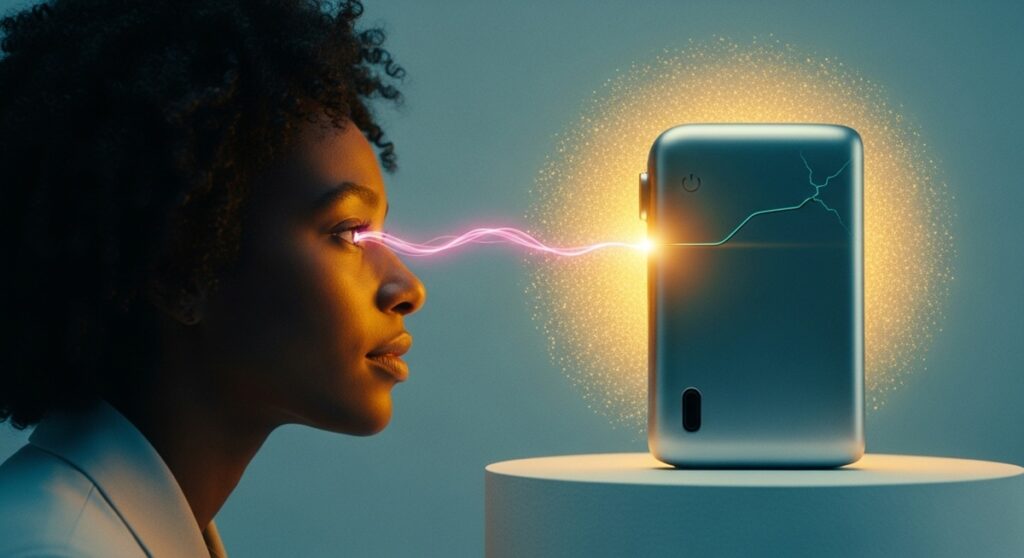
While the Halo Brain can lead to suboptimal decisions, it persists because it offers your brain some cognitive shortcuts and plays into fundamental psychological drivers.
Short-term perks (why it persists)
- Simplifies Social Judgment: You can form opinions quickly, making social interaction feel less taxing.
- Builds Trust Quickly: It allows you to feel comfortable and safe with someone new based on limited information.
- Reduces Cognitive Load: You don’t have to constantly re-evaluate your perceptions.
Long-term pitfalls
- Blind Spots: You can miss critical flaws or red flags in a person or product.
- Unfair Judgments: You might unfairly assume a person with a “negative” trait (like a shy demeanor) is also unintelligent or unkind.
- Vulnerability to Manipulation: Marketers and dishonest people can use this bias to influence you.
How to Outsmart (or Befriend) Your Halo Brain
Understanding that your brain’s Halo tendency is a natural, powerful psychological process is the first step to liberation. It’s not about becoming a cynical fatalist; it’s about learning to work with your magnificent, weird brain to foster more intentional, “very nice!” understanding. Here’s how to nudge your brain towards a more intentional, “very nice!” understanding:
- Decouple the Traits: When you find yourself admiring someone for one thing, consciously ask | “What evidence do I have for their other traits?” This is your cheerful mustard yellow signal for cognitive flexibility.
- Use Checklists: For important decisions like hiring or major purchases, create a list of objective criteria and stick to it. This is your fuchsia-pink push for comprehensive input.
- Practice Objective Observation: When you meet someone new, try to avoid forming a single impression. Instead, pay attention to specific behaviors without judgment. This trains your brain to accept the role of chance and reduce the illusion of control. This is your deep teal/cyan exercise in objectivity.
- Wait Before You Judge: Give a person or product time to reveal itself beyond the first impression.
The Halo Brain is a truly special window into our complex psychology, a reminder that our minds, while magnificent, are also prone to delightful (and sometimes profoundly misleading) forms of interpretive bias. Knowing this doesn’t make you foolish; it makes you self-aware, wonderfully weird, and very nice! Embrace your inner critical thinker, understand your brain’s fascinating susceptibility to this feeling of control, and prove that you can navigate a world of carefully crafted messages with greater clarity, independence, and authentic choice. It’s not boring – it’s a riot!
FAQ
Q | Is the Halo Effect the opposite of the Pitchfork Effect? A | Yes. The Pitchfork (or Horns) Effect is when one negative trait leads to an overall negative judgment.
Q | Can I use this bias to my advantage? A | You can, but it’s best used ethically. You can make an effort to be well-groomed or confident, as these traits can create a positive first impression that allows you to showcase your other qualities.
Q | Does this bias ever get weaker? A | It can, with repeated objective exposure. For example, if you work closely with a charming but dishonest person, your brain will eventually update its initial judgment.
Citations & Caveats
- Thorndike, E. L. (1920). A constant error in psychological ratings. Journal of Applied Psychology.
- Nisbett, R. E., & Wilson, T. D. (1977). Telling more than we can know | Verbal reports on mental processes. Psychological Review.
- Norton, M. I., Mochon, D., & Ariely, D. (2012). The IKEA effect | When labor leads to love. Journal of Consumer Psychology.
Disclaimer: This article is for informational purposes only and is not a substitute for professional psychological advice. While the Illusion of Control is a pervasive cognitive bias, individual susceptibility can vary. If you feel consistently overwhelmed by a need for control or experience significant anxiety related to a compulsion to influence chance events, please consider seeking help from a qualified mental health professional.
// Protocol · Next Transmission
The glitch is the signal. — Psyness Protocol