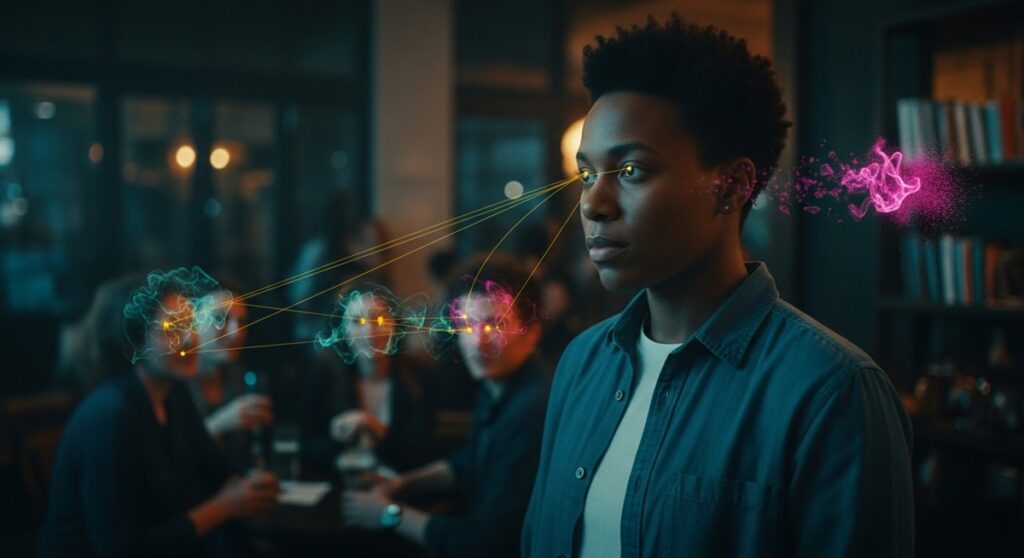
Ever walk into a room and feel like the vibe is off — even though nothing’s “wrong”? That’s your Vibe-Detective Brain. Psychology says you’re picking up micro-signals, sensory patterns, and context cues faster than conscious thought. Far from mystical, it’s your brain’s early-warning system — though it often feels like ESP.
You step into a party and instantly know who just had an argument, who’s flirting, and which corner of the room to avoid—before you even talk to anyone. That eerie intuition? That’s your Vibe-Detective Brain at work | the beautifully unhinged mix of subconscious pattern recognition, emotional radar, and evolutionary wiring that makes you feel like Sherlock Holmes and a psychic rolled into one. Is your mind just a little too perceptive? Or is your beautiful brain simply doing its very nice, very efficient (though profoundly challenging) job of keeping you safe from invisible social threats? At Psyness.com, we take a “very nice!” look at this peculiar psyche, proving that understanding this peculiar psyche doesn’t have to be boring – it can be a riot.
S³ – Story • Stakes • Surprise
Story
You’re chatting with friends when someone new walks in. Suddenly, the energy shifts—you just “know” something’s about to happen.
Stakes
Ignoring your gut can leave you vulnerable to danger or awkwardness. Over-relying on it can lead to paranoia or misjudgment.
Surprise
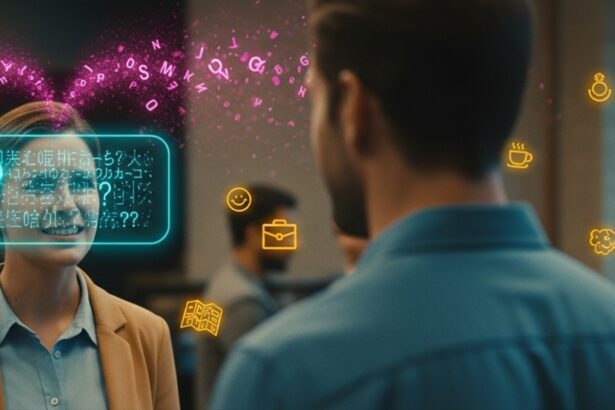
Your vibe-reading isn’t magic—it’s your brain crunching millions of tiny social data points per second. Very nice!
Why Your Brain Can Read a Room
At its core, your Vibe-Detective Brain reveals that your mind is deeply uncomfortable with the unknown. Your brain is wired for prediction and agency, and it hates to feel helpless. When faced with an unstructured, “empty” moment, your brain creates a narrative where you should be doing something, anything, to feel productive. This isn’t a delusion; it’s a cognitive strategy to manage stress and motivate you to act. Your brain, bless its tirelessly optimistic heart, is primarily wired for empowerment.
The Psychology Bits
The Vibe-Detective Brain is a cognitive bias where we experience an intuitive feeling about a situation that we cannot consciously explain. This is how your brain works:
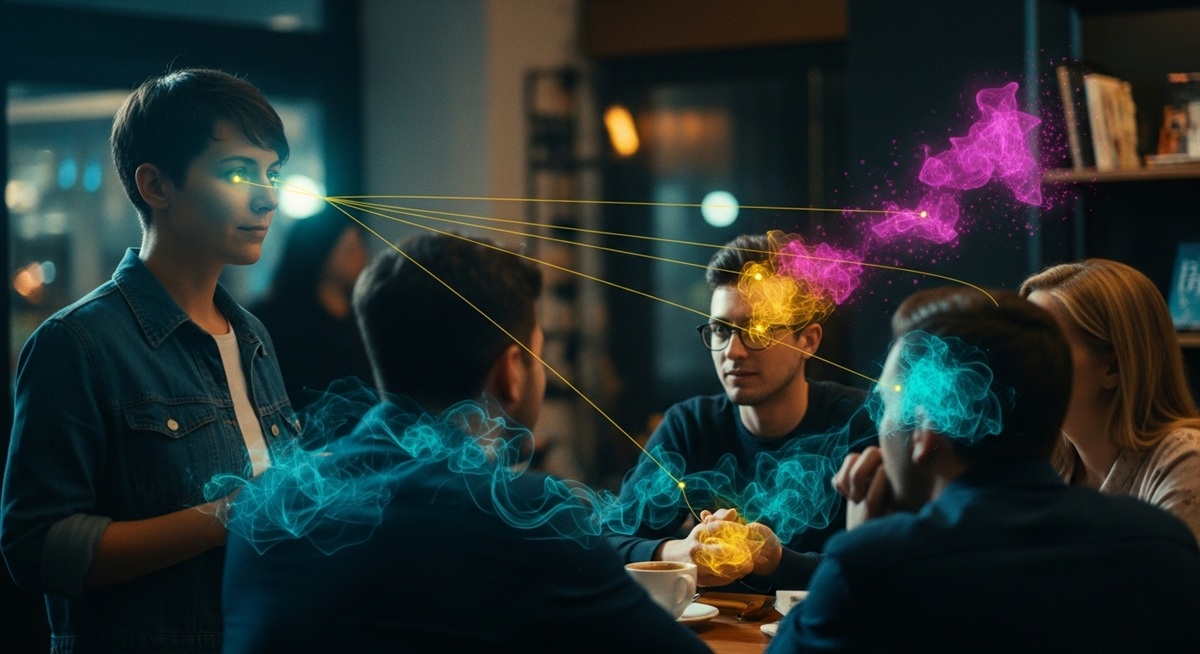
- Neuroception: Your nervous system constantly scans for signs of safety or threat below your conscious awareness. This fuchsia-pink alarm bell is a powerful driver of the Vibe-Detective Brain, creating a need to respond to what you are feeling.
- Thin-Slicing: Your brain makes rapid, unconscious judgments based on tiny behavioral cues—a fleeting grimace, a slight tension in a shoulder, a shift in tone. This creates a very nice, but often manipulated, internal preference.
- Emotional Contagion: You pick up others’ moods through subtle micro-expressions and tone, often mirroring them. This constant rehearsal of the ritual gives you a sense of agency, even if it has no real-world effect. This is where your cheerful mustard yellow decision-making is steered by the promise of avoiding a pitfall.
- Context Memory: Your brain compares the current scene to past experiences lightning-fast. This tension is your deep teal/cyan alarm bell for anything that smells like losing.
For example, when a gambler blows on their dice before a roll, their brain isn’t being irrational; it’s attempting to assert control over a truly random event to alleviate the anxiety of uncertainty. The action is a psychological tool, not a physical one.
Why Your Brain Loves the Drama
While the Vibe-Detective Brain can lead to suboptimal decisions, it persists because it offers your brain some cognitive shortcuts and plays into fundamental psychological drivers.
Short-term perks (why it persists)
- Keeps you safe by spotting threat cues early.
- Helps you adjust your behavior to match the room.
- Boosts social success (you “just get it”).
Long-term pitfalls
- Over-interpretation → seeing bad vibes where there are none.
- Emotional exhaustion from constant scanning.
- Anxiety if your vibe-detector is always on high alert.
How to Outsmart (or Master) Your Vibe-Detective Brain
Understanding that your brain’s “Vibe-Detective” tendency is a natural, powerful psychological process is the first step to liberation. It’s not about becoming a cynical fatalist; it’s about learning to work with your magnificent, weird brain to foster more intentional, “very nice!” understanding. Here’s how to nudge your brain towards a more intentional, “very nice!” understanding:
- Pause Before Acting: Gut feelings are data, not destiny. This is your cheerful mustard yellow signal for cognitive flexibility.
- Ground Your Body: When vibes feel “off,” breathe deeply to calm overactive threat detection. This is your fuchsia-pink push for comprehensive input.
- Train Your Radar: Practice spotting micro-expressions in a low-stakes setting (fun game with friends!). This trains your brain to accept the role of chance and reduce the illusion of control. This is your deep teal/cyan exercise in objectivity.
- Know Your Triggers: If certain environments always feel tense, check whether it’s them—or you.
The Vibe-Detective Brain is a truly special window into our complex psychology, a reminder that our minds, while magnificent, are also prone to delightful (and sometimes profoundly misleading) forms of interpretive bias. Knowing this doesn’t make you foolish; it makes you self-aware, wonderfully weird, and very nice! Embrace your inner critical thinker, understand your brain’s fascinating susceptibility to this feeling of control, and prove that you can navigate a world of carefully crafted messages with greater clarity, independence, and authentic choice. It’s not boring – it’s a riot!
FAQ
Q | Is this actual intuition or just guessing? A | It’s both—intuition is rapid subconscious processing of real-world data.
Q | Can I trust my vibe-detection? A | Mostly yes—but bias, anxiety, or projection can distort it.
Q | Why do I sometimes feel “off” vibes in totally normal situations? A | Your nervous system might be replaying old stress patterns from past experiences.
Citations & Caveats
- Ambady, N., & Rosenthal, R. (1992). Thin slices of expressive behavior as predictors of interpersonal consequences. Psychological Bulletin.
- Porges, S. W. (2011). The polyvagal theory | Neurophysiological foundations of emotions, attachment, communication, and self-regulation.
- Ekman, P. (2003). Emotions revealed | Recognizing faces and feelings to improve communication.
Disclaimer: This article is for informational purposes only and is not a substitute for professional psychological advice. While the Illusion of Control is a pervasive cognitive bias, individual susceptibility can vary. If you feel consistently overwhelmed by a need for control or experience significant anxiety related to a compulsion to influence chance events, please consider seeking help from a qualified mental health professional.