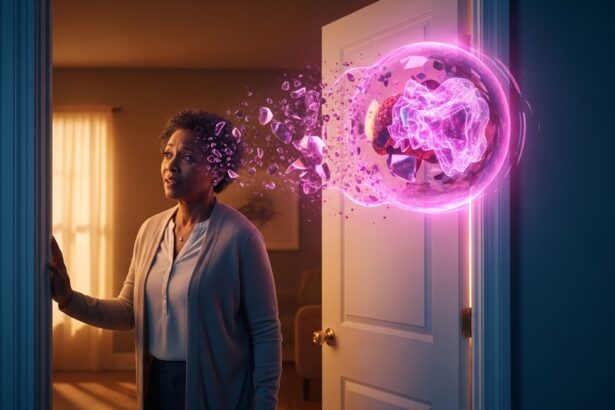
The Streisand Effect is a social phenomenon that occurs when an attempt to hide, remove, or censor information has the unintended consequence of further publicizing that information. The ‘Don’t Look!’ Brain interprets censorship as a signal of outsized value and a threat to freedom, triggering a surge of curiosity. The very nice solution is Strategic Boredom, which kills the viral loop by removing the conflict.
Psychology explains this through: Psychological Reactance, the motivational state to regain a freedom (like the freedom to see an image) that has been threatened or eliminated.
The cover-up is always worse than the crime.
Madness Meter: 🌀🌀🌀 The Censorship Backfire (The exponential growth of a secret simply because it is a secret.)
The Streisand Effect is the internet’s way of saying | “Don’t tell me what I can’t see.” It is named after the famous 2003 incident involving Barbra Streisand and the California Coastal Records Project.
This creates the ‘Don’t Look!’ Brain | a collective mind that operates on reverse psychology. In the information age, attention is the scarcest resource. When a powerful entity (a celebrity, a government, a corporation) tries to suppress a piece of information, they are inadvertently attaching a massive “Significance Tag” to it.
The brain reasons | “If they are spending millions to hide this, it must be incredibly important, true, or scandalous.” The act of suppression signals value. Furthermore, it triggers Psychological Reactance. Humans hate having their choices restricted. When told “You cannot see this,” the desire to see it transforms from mild curiosity into a moral crusade to regain informational freedom.
S³ – Story • Stakes • Surprise
Story | The Banned Documentary
The Modern Example: A few years ago, a certain documentary was banned from major streaming platforms due to controversy. The Result: Before the ban, it was a niche film with low viewership. After the headlines screamed “BANNED,” it shot to the top of the sales charts on every remaining platform that hosted it, DVD sales and obscure torrents included. The ban didn’t silence the film. It gave the film martyr status that attracted millions of viewers who previously didn’t care.
The Mechanism: the internet functions as a hydra. Cut off one head (delete a tweet, issue a takedown notice), and two more appear (screenshots, mirrors, archives). The original content might be damaging, but the meta-narrative of “They are trying to silence this” is infinitely more viral and engaging.
Stakes | What the ‘Don’t Look!’ Brain Costs
The unchecked power of the ‘Don’t Look!’ Brain has severe consequences:
PR Disasters. Companies that aggressively sue critics or take down parody videos often find themselves the subject of a global meme. The lawsuit becomes the news, drawing attention to the very flaw they wanted to hide.
Political Backfire. Governments that ban books or block websites often increase the desire of the citizenry to access that information. The “Forbidden Fruit” effect turns mundane dissent into revolutionary currency.
Personal Scandals. An individual trying to scrub an embarrassing photo from the internet often invites trolls to repost it everywhere. The emotional reaction (anger, legal threats) provides the “Lulz,” or amusement, that fuels the trolls.
Surprise | Strategic Boredom
The fix is to starve the fire of oxygen.
The Cure: institute the “Strategic Boredom” protocol:
- Do Not React. Unless the information is legally libelous or physically dangerous, do not issue a public statement, do not sue, and do not DM the poster. Reaction is engagement. Engagement fuels the algorithm.
- The “Nothingburger” Frame. If you must address it, frame it as boring, old news. “Oh, that old photo? Yeah, bad hair day. Moving on.” By refusing to be embarrassed or angry, you remove the emotional payoff for the audience.
- Dilution. Flood the zone with positive, high-quality, but unrelated content. Push the “secret” off the front page of Google not by deleting it, but by burying it under a mountain of better, newer stories.
A² – Apply • Amplify

If you want to hide a leaf, place it in a forest. If you want to hide a scandal, place it in a flood of news.
The Psychology Bits
- Psychological Reactance (Related): theory by Jack Brehm (1966). When free behaviors are threatened, the attractiveness of the threatened behavior increases.
- Curiosity Gap (Related): the gap between what we know and what we want to know. Censorship widens this gap, increasing the drive to close it, the same gap explored in The ‘What If I Miss Something?’ Brain.
Applying Anti-Streisand Architecture
Adopt these rules to manage reputation:
- The “Stop-Loss” Rule. Before sending a cease-and-desist letter or a takedown request, ask | “Will the news of this takedown reach more people than the original content?” If yes, do not send it.
- The “Own the Flaw” Tactic. If an embarrassing truth comes out, own it immediately (the Pratfall Effect). “Yes, we messed up. Here is the fix.” This kills the “cover-up” narrative instantly. A covered-up mistake becomes a scandal. An admitted mistake becomes a learning opportunity.
- The “Silence Is Power” Protocol. Understand that in the 24-hour news cycle, silence is often the fastest way to make a story die. Without a counter-reaction to fuel the debate, the mob gets bored and moves to the next target within 48 hours.
FAQ
Q | Did Barbra Streisand ever live this down? A | No. The term is now permanently attached to her name. It is the defining example of a self-inflicted PR wound.
Q | Do “right to be forgotten” requests carry a Streisand risk? A | Yes. While legally valid in Europe, a public request to have data removed can itself draw attention to what the person is trying to hide.
Q | Does this apply to parenting? A | Often, yes. Banning a teenager from seeing a specific movie or person can turn seeing that movie or person into their primary goal, the same reactance mechanism at a smaller scale.
Citations & Caveats
- Source 1: Masnick, M. (2005). Since When Is It Illegal To Just Mention A Site? Techdirt. (The post credited with coining the term “Streisand Effect” after the 2003 lawsuit.)
- Source 2: Brehm, J.W. (1966). A Theory of Psychological Reactance. Academic Press. (The foundational theory explaining the backlash mechanism.)
Disclaimer: This article discusses the Streisand Effect as documented in media studies and psychological research, not legal advice for an actual reputation or takedown situation. The best way to keep a secret is to make it boring.
Part of this site’s ongoing look at what makes restricted things irresistible. For the mechanism that makes scarce access feel more valuable on its own, see The ‘Gotta Have It Now’ Brain. For the gap this exploits, see The ‘What If I Miss Something?’ Brain.
// Protocol · Next Transmission
The glitch is the signal. — Psyness Protocol