
That eerie little jolt when a coincidence lines up too perfectly isn’t your imagination overreacting, it’s your brain doing exactly what it evolved to do. You think of a friend you haven’t spoken to in months, and your phone buzzes with their name on it. You open a book at random and the line you land on answers the exact question you were turning over in your head. A song you haven’t heard in years comes on the radio the moment you start humming it. Something in your chest goes quiet and alert at once, like the world just leaned in close.
Psychology explains this through: Synchronicity, a term the psychiatrist Carl Jung used for a meaningful coincidence between two events with no causal link between them, layered on top of ordinary pattern-finding biases like Confirmation Bias and Apophenia.
Your brain isn’t picking up a signal from the cosmos. It’s running the same pattern-matching software it uses for everything else, and the very nice, faintly magical side effect is a coincidence that feels hand-delivered.
Madness Meter: 🧠🧠🧠 The Committed Synchronicity Chaser (You’ve not only felt the uncanny click, you’ve told the story at a dinner party, complete with the exact time on the clock, and gotten mildly defensive when someone mentioned statistics.)
The exact same reflex has a flashier cousin, the specific feeling that the universe is sending you a personal message through repeating numbers or oddly-timed texts, covered in the ‘Cosmic Wink’ Brain. Same wiring, a narrower trigger, that piece is about the recurring private signal, this one is about the single startling coincidence and the clinical idea of synchronicity behind it.
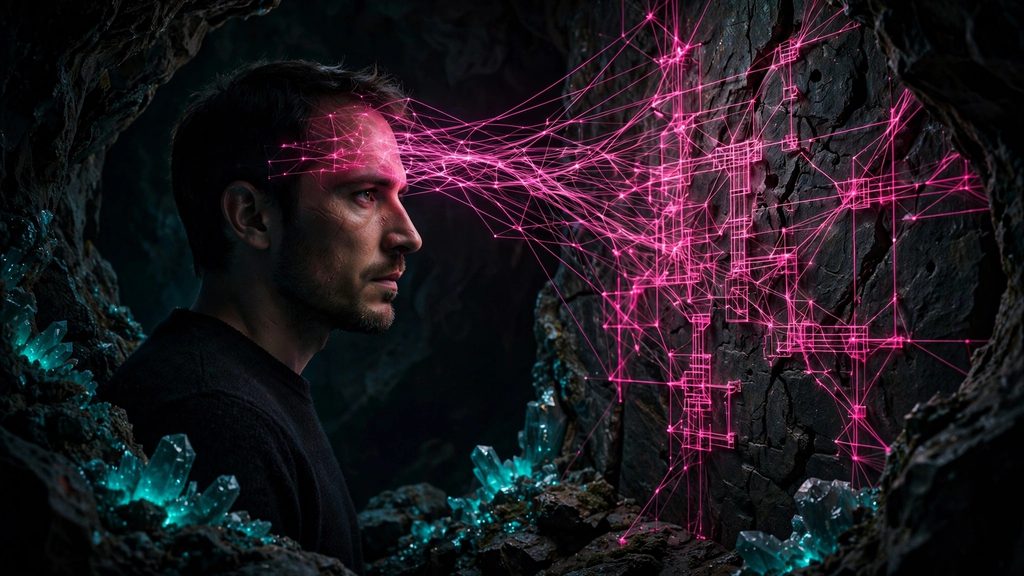
This creates the Uncanny Click, the moment two unconnected things line up so well that it genuinely feels like the universe is winking at you, even though nothing outside your own skull actually moved.
S³ – Story • Stakes • Surprise
Story | The Song That Found You
The Setup: You’re half-listening to the radio in the car, mind drifting, nothing in particular on your mind.
The Twist: You’d been humming a specific, half-forgotten song in the shower that morning. Three songs into the drive, that exact one comes on.
The Reading: Nothing booked that song for you. Radio stations cycle through a limited rotation, your brain primed itself on the song that morning, and the moment it played, your attention flagged it as proof instead of noticing the hundred other songs that didn’t match anything.
The Pattern: Tomorrow it’ll be a license plate, or a stranger’s sentence, or a page in a book. The song isn’t special. Your meaning-finding system is just always running, waiting for the next match to light up.
Stakes | What the Uncanny Click Costs
Feeling a coincidence is mostly delightful, but it quietly shapes decisions more than people realize:
The Decision Cost. Treating a striking coincidence as a sign to quit a job, end a relationship, or take a leap, without weighing the actual facts of the situation, swaps good information for a good feeling.
The Memory Cost. You remember the one time you thought of someone right before they called. You don’t remember the hundreds of times you thought of someone and nothing happened, so your internal tally of how connected the world feels ends up badly skewed.
The Credibility Cost. Announcing that the universe arranged a parking space for you specifically is a quick way to lose a skeptical room, even though the underlying feeling is universal and the biases behind it are well documented.
The Dread Cost. The same reflex that turns a lucky coincidence into a sign can turn an unlucky one into an omen, a broken mirror or a bad dream treated as warning rather than noise, which is a much less fun place for a pattern-finding brain to land.
Surprise | The Dot-Connecting Machine
There’s nothing to cure here, finding meaning in coincidence isn’t a malfunction. The move is enjoying the click without quietly handing it the steering wheel.
The Cure: Run the Dot-Connecting Check the next time the universe appears to wink:
- Name It, Don’t Fight It: Say “synchronicity” or “apophenia” out loud. Labeling the reflex turns a chill-inducing moment into an interesting fact instead of a mystery to solve.
- Count the Misses: For every coincidence that lands, try to recall a few recent near misses, the thoughts that went nowhere. It rebalances the scorecard your memory keeps badly.
- Feel It, Don’t Bet On It: Let the wonder stay. Just don’t let one striking coincidence outvote a decision you’d otherwise make carefully.
- Let It Be Both: A coincidence can be fully explainable by probability and still feel genuinely meaningful to you personally. Neither cancels the other out.
A² – Apply • Amplify

The Uncanny Click is the friendly, universally felt tip of a much bigger meaning-making system, one worth understanding properly instead of just marveling at it.
The Psychology Bits
- Confirmation Bias Does the Heavy Lifting: Once a coincidence feels meaningful, your brain starts hunting for more evidence that confirms it, while quietly filing away every non-match as unremarkable and instantly forgettable.
- Apophenia Supplies the Story: This is the broader tendency to see connections and meaning between things that aren’t actually related, the same instinct that finds a face in a wall socket or a message in static.
- Selective Attention Keeps the Scoreboard Rigged: You think of Aunt Carol and she calls, so that’s the story you tell. You thought of Uncle Bob yesterday and the neighbor’s dog walker last week, and neither called, so those moments never even register as data.
- It’s Not the Same as Noticing a Word Everywhere: A closely related but distinct quirk, feeling like a brand-new word or car suddenly appears constantly right after you first learn it, is covered in the ‘I See It Everywhere Now!’ Brain. That one is about a single thing becoming more visible once it’s primed in your attention. This one is about two unrelated things lining up and feeling like a message.
Applying the Uncanny Click Habit
Make the reflex a small daily pleasure instead of a hidden decision-maker:
- Keep a Coincidence Log: Jot down the striking ones. Over a few months, the log itself becomes evidence of just how selective your memory was being.
- Say the Mechanism Out Loud: “That’s apophenia” is a perfectly fun thing to say at a dinner table, and it keeps the wonder without the overreach.
- Share the Feeling, Not the Verdict: Tell people about the goosebumps without insisting on what it means. The story lands better and nobody has to agree on cosmology.
- Use It as a Nudge, Not a Directive: If a coincidence makes you reflect on something you’d been avoiding, that reflection is worth having, on its own merits, not because the universe ordered it.
FAQ
Q | Is feeling like the universe is sending me signs a sign something’s wrong with me? A | No. It’s one of the most universally reported experiences there is, and it’s driven by ordinary, well-studied cognitive biases rather than anything unusual about you.
Q | Why do some coincidences feel so much more significant than others? A | Emotional weight and timing matter. A coincidence involving a person you love or a decision you’re already anxious about gets flagged as important, while an equally unlikely coincidence about something trivial barely registers.
Q | Is synchronicity a real, scientifically recognized phenomenon? A | It’s a real psychological experience and a term with real academic history, but it describes a subjective sense of meaningful connection, not an actual causal link between the two events.
Q | How is this different from the ‘Cosmic Wink’ Brain? A | Same underlying instinct, different scope. That piece focuses on the recurring, personal-feeling signal, repeating numbers, oddly timed texts. This one covers the single striking coincidence and the Jungian idea of synchronicity behind the feeling.
Q | How is this different from Frequency Illusion? A | Frequency Illusion is noticing one specific thing more often after you’ve learned about it, a word, a car model. This is two separate, unrelated things lining up and feeling connected. Related wiring, different trigger.
Q | Should I ever actually trust a coincidence as guidance? A | Enjoy it as a prompt to think something through, not as a replacement for thinking it through. The feeling is real and worth noticing, the certainty it seems to offer isn’t.
Citations & Caveats
- Source 1: Jung, C. G. (1952/1960). Synchronicity | An Acausal Connecting Principle. In The Collected Works of C. G. Jung, Vol. 8, The Structure and Dynamics of the Psyche. Princeton University Press.
- Source 2: Nickerson, R. S. (1998). Confirmation Bias | A Ubiquitous Phenomenon in Many Guises. Review of General Psychology, 2(2), 175-220.
- Source 3: Fyfe, S., Williams, C., Mason, O. J., & Pickup, G. J. (2008). Apophenia, Theory of Mind and Schizotypy | Perceiving Meaning and Intentionality in Randomness. Cortex, 44(10), 1316-1325.
Disclaimer: This article is for informational purposes only and is not a substitute for professional psychological advice. Feeling that a coincidence is meaningful is a normal, extremely common part of being human, not a cause for concern on its own. If coincidences are feeding a broader pattern of distress, paranoia, or difficulty telling apart what’s real, that’s a different experience worth discussing with a qualified professional.
// Protocol · Next Transmission
The glitch is the signal. — Psyness Protocol