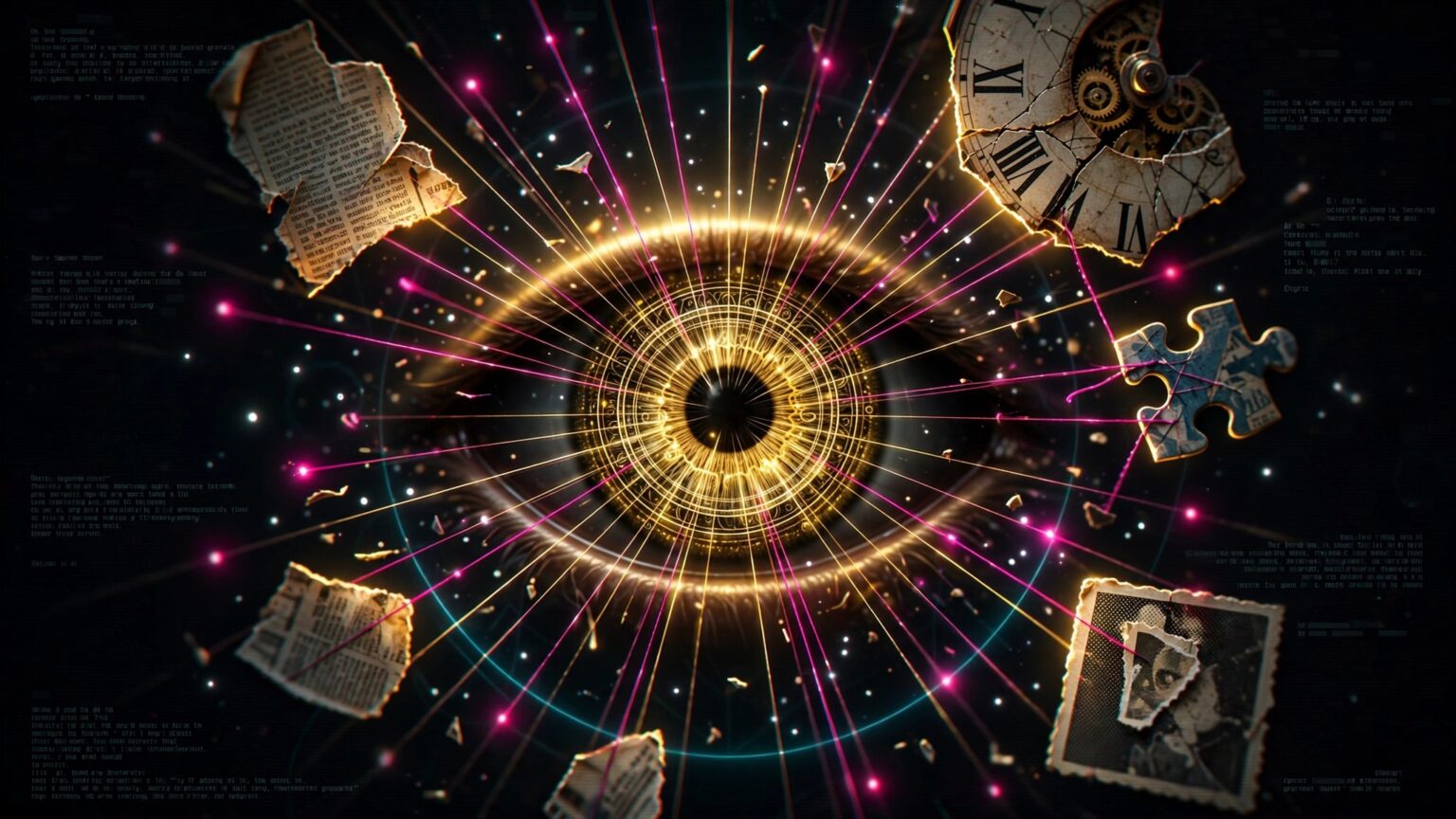
The news breaks and makes no sense, so your brain quietly drafts a version that does. A plane goes down, a market crashes, a public figure dies at an inconvenient moment, and before the facts even arrive, a tidier story already has. Someone planned this. Someone benefits. Someone, somewhere, is holding a string you can’t see, and that thought is strangely comforting.
Psychology explains this through: proportionality bias, the mental tic behind most conspiracy theories, the refusal to accept that a big, frightening event could have a small, boring cause, paired with a hair-trigger instinct for spotting intention behind events that are actually just chance.
Researchers who temporarily stripped people of a sense of control in a lab setting watched them immediately start finding patterns in random stock charts and hidden messages in pictures made of static, manufacturing order out of pure noise within minutes.
Madness Meter: 🧠🧠🧠 The Pattern Alarm (You’ve decided one odd coincidence proves a secret plan, while ignoring the thousand mundane coincidences that happen to you every single week.)
That same hair-trigger instinct is the reason you see faces in toast, a face-detector misfiring on crumbs and shadows. Here the misfire runs bigger, a chaos-detector insisting a whole hidden committee must be behind it.
This creates the Pattern Alarm, the engine running most conspiracy theories, the conviction that something coordinated has to be lurking behind any sufficiently strange coincidence, when most strange coincidences are, statistically, just coincidences.
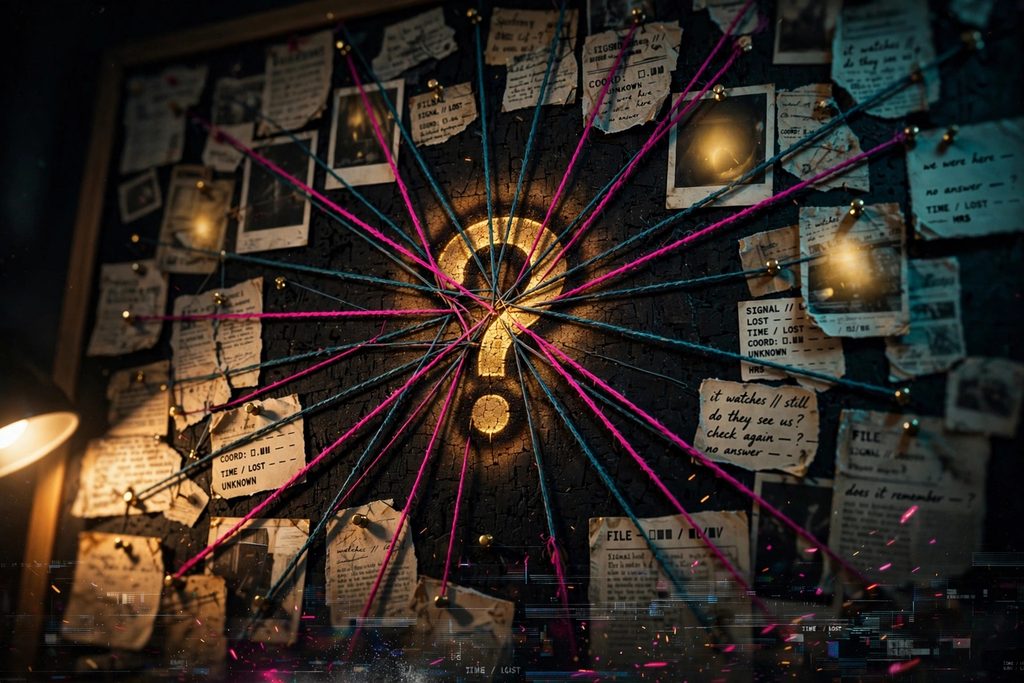
S³ – Story • Stakes • Surprise
Story | The Group Chat That Cracked the Case
The Setup: A celebrity dies at an inconvenient time, or a flight gets rerouted for a dull mechanical reason, and your group chat starts connecting dots within the hour.
The Twist: The real explanation turns out to be dull: paperwork, weather, a part that failed the way parts sometimes fail, which somehow feels less true than the version with a plan behind it.
The Reading: This isn’t stupidity, it’s the Pattern Alarm doing exactly what it’s built to do, insisting a messy world must have an author.
The Pattern: It fires hardest in the first few hours after a shocking event, during the exact window when real information is thin and a tidy story is the only thing available.
Stakes | What the Pattern Alarm Costs
A Pattern Alarm that fires occasionally is harmless. Left unchecked, the costs add up:
The Trust Cost. Insisting that friends and family who disagree are asleep or controlled corrodes real relationships faster than any theory was ever worth.
The Time Cost. Hours sunk into forum threads and late-night videos, chasing a pattern that, by design, never resolves into anything checkable.
The Evidence Cost. Real evidence against the theory gets folded into the theory itself, proof of how deep the cover-up goes, which quietly makes the whole belief impossible to disprove.
The Free-Pass Cost. Treating constant pattern-hunting as a very nice, harmless hobby skips over how quickly conspiracy theories can narrow which sources, and which people, you’re still willing to trust.
Surprise | The Plan Was Never That Tidy
There’s no real cure needed here, the Pattern Alarm isn’t a character flaw. It’s what happens when a brain built to spot danger in the bushes gets pointed at a news cycle instead.
The Cure: Turn the alarm down on purpose:
- Run the Headcount: Ask how many people would need to stay perfectly silent forever for the theory to hold. The number is usually the first thing that falls apart.
- Sit With It Overnight: Give any shocking event twenty-four hours before chasing an explanation. Most of the appeal fades once real information arrives.
- Reach for the Boring Answer First: Mechanical failure, bad luck, and ordinary incompetence explain far more of the world than any hidden plan does.
- Trace the Source, Not the Share: Ask who actually witnessed the claim firsthand, versus who is simply the fortieth person repeating it.
A² – Apply • Amplify

Conspiracy theories are a documented, well-studied piece of how the brain handles uncertainty, not proof of gullibility or a broken mind.
The Psychology Bits
- It Was Measured, Not Just Observed: Researchers who temporarily removed people’s sense of control in controlled experiments watched them immediately start finding patterns, including conspiracy theories, in genuinely random information.
- It Runs on More Than One Motive: A major review of the research found belief in conspiracy theories is driven by a mix of wanting to understand a confusing world, wanting to feel safe inside it, and wanting to feel good about the group you belong to.
- It’s Older Than Any Modern Headline: Other researchers argue the instinct behind conspiracy theories is an evolutionary leftover, a threat-detection system built for small ancestral groups where a hidden rival coalition really could get you killed.
- It’s a Specific Case of a Bigger Pattern: A related but different habit, finding meaningful images and messages in random sensory noise like clouds, static, and shadows, is covered in The ‘Everything’s Connected’ Brain. That one covers patterns your senses invent. Conspiracy theories go further, assuming a hidden hand actually orchestrated events on the public stage.
Applying the Pattern Alarm Habit
Turn an automatic urge toward conspiracy theories into something you manage on purpose:
- Name the Alarm When It Fires: The moment a tidy, sinister explanation feels satisfying, say to yourself “Pattern Alarm,” and notice how that alone slows you down.
- Run the Coordination Math: Before accepting a theory, estimate how many people it would require to stay quiet, forever, with nothing leaking.
- Default to the Boring Explanation First: Give the dull, mundane answer first crack at fitting the facts before reaching for the dramatic one.
- Give Yourself a Cooldown Before Sharing: Wait a day before passing along a theory. Most of the urge to share fades once the initial shock does.
FAQ
Q | Does believing in conspiracy theories mean something is wrong with me? A | No. Nearly everyone finds at least one tempting at some point, it’s a byproduct of normal pattern-seeking, not a sign of a broken mind.
Q | Why do big events feel like they need big causes? A | That’s proportionality bias at work, the sense that a small, boring cause couldn’t possibly produce a large, dramatic outcome, even when it routinely does.
Q | Is it ever reasonable to question an official explanation? A | Yes, healthy skepticism and conspiracy theories aren’t the same thing. The difference is whether new evidence can actually change your mind.
Q | Why do some people fall deeper into conspiracy theories than others? A | Research points to a mix of feeling powerless, craving certainty, and wanting to belong to a group that feels like it knows something others don’t.
Q | How is this different from The ‘Everything’s Connected’ Brain? A | That one covers patterns your senses invent in random noise. Conspiracy theories go further, assuming real people deliberately orchestrated the events themselves.
Q | What’s the fastest way to quiet the Pattern Alarm? A | Ask how many people the theory requires to stay silent forever. Most conspiracy theories collapse the moment you do the headcount.
Citations & Caveats
- Source 1: Whitson, J. A., & Galinsky, A. D. (2008). Lacking Control Increases Illusory Pattern Perception. Science, 322(5898), 115-117.
- Source 2: Douglas, K. M., Sutton, R. M., & Cichocka, A. (2017). The Psychology of Conspiracy Theories. Current Directions in Psychological Science, 26(6), 538-542.
- Source 3: van Prooijen, J.-W., & van Vugt, M. (2018). Conspiracy Theories | Evolved Functions and Psychological Mechanisms. Perspectives on Psychological Science, 13(6), 770-788.
Disclaimer: This article is for informational purposes only and is not a substitute for professional psychological advice. Conspiracy theories are a normal, well-documented response to uncertainty and chaos. If distrust or pattern-seeking starts crowding out relationships or real evidence, that’s worth discussing with a qualified professional.
// Protocol · Next Transmission
The glitch is the signal. — Psyness Protocol