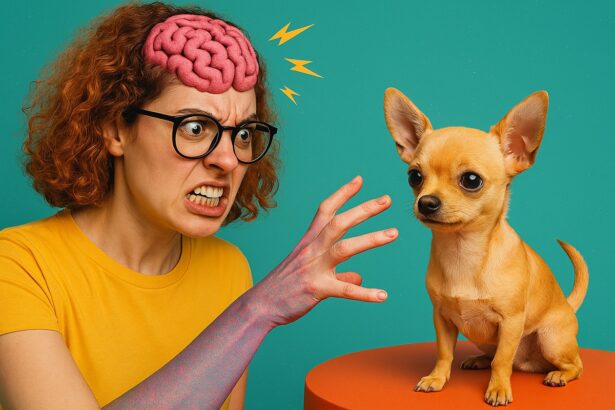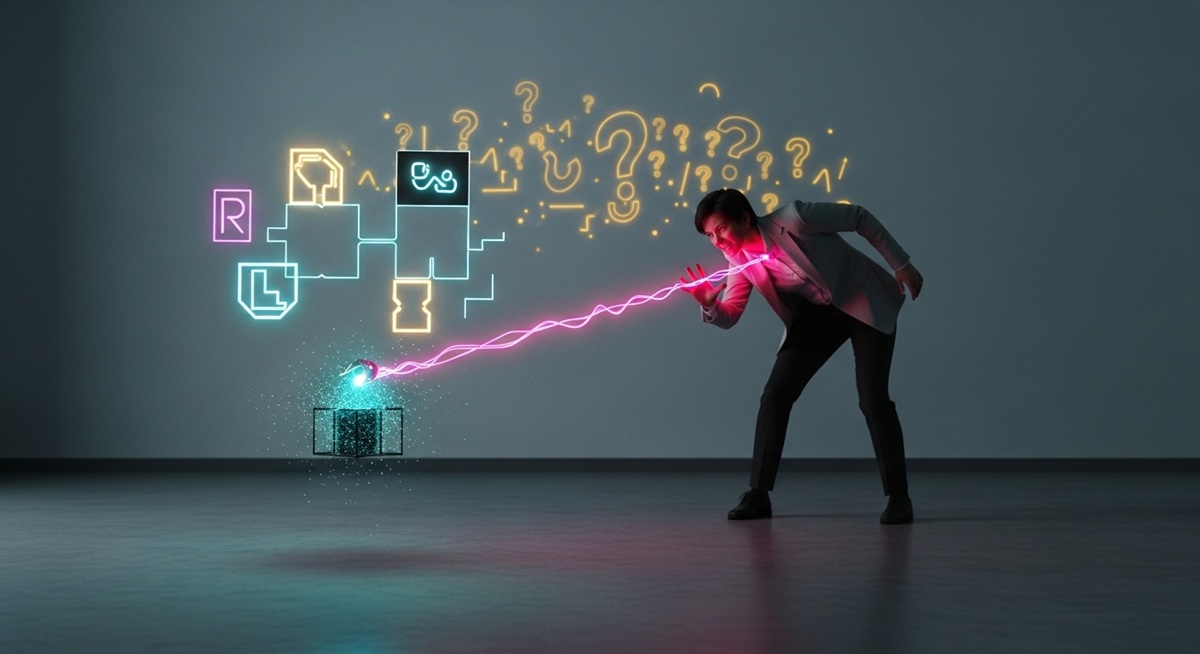
The ‘Clickbait’ Brain doesn’t need the whole story to feel the pull of it. A headline that withholds a single detail is enough to make your finger click before your mind finishes deciding whether it’s worth it. “They Told Her She Was Too Old to Wear This Dress. Her Response Will Shock You.” Your rational mind knows this is a trap. Your finger twitches anyway. It has to know. The very nice fix is understanding the Curiosity Gap, the actual gap between what you currently know and what you want to know, which your brain treats less like idle interest and more like an itch that needs scratching.
Psychology explains this through: information gap theory, the idea that curiosity isn’t sparked by information itself but by the perceived hole between what you know and what you don’t, and a hole, unlike a fact, demands to be filled.
Nothing about the dress, or the shock, mattered yet. The gap is what pulled the trigger.
Madness Meter: 🧠🧠🧠 The One Weird Trick (A headline that says “Scientists Found Something Strange In This Common Food” will out-click one that simply names the food and the finding, even though the second version hands you more actual information.)
Most people assume a headline has to promise something big to earn a click, the same assumption that misses what actually powers the ‘Don’t Look!’ Brain. Withholding works better than promising. The less a headline actually tells you, the more your brain insists on finding out.
This creates the ‘Clickbait’ Brain, the reason your finger clicks when your mind says no, no matter how many times the payoff turns out to be nothing.
S³ – Story • Stakes • Surprise
Story | The Headline That Told You Nothing
The Setup: You’re scrolling, and a headline promises a reveal while handing you zero actual information, just the shape of a story with the middle removed.
The Twist: You know, consciously, that “Her Response Will Shock You” tells you nothing at all. You click anyway, within about a second.
The Reading: The headline didn’t make a promise your mind evaluated and accepted. It opened a gap, and the gap itself did the persuading, no evaluation required.
The Pattern: It doesn’t have to be a tabloid headline. A text that just says “we need to talk,” a notification that only says someone liked your post, a locked preview on a video, all trigger the exact same gap-closing reflex.
Stakes | What the Clickbait Brain Costs
A brain that treats every open question as an emergency has real costs beyond a wasted thirty seconds:
The Attention Cost. An afternoon can disappear one unscratched gap at a time, each click promising closure and mostly delivering nothing worth the trip.
The Trust Cost. A headline that oversells its gap and underdelivers on the other side trains you to expect manipulation from the whole publication, not just that one link.
The Manipulation Cost. Because the gap itself does the persuading, the honesty of what’s actually behind it stops mattering to the click, which is exactly why false or low-value claims can get clicked at the same rate as true ones.
The Substitution Cost. Closing dozens of tiny, manufactured gaps a day can crowd out the slower, harder kind of curiosity, the sort that actually leads somewhere, with a cheaper version that never does.
Surprise | The Gap Check
The countermeasure isn’t willpower at the moment of the click. It’s catching the gap before it closes itself.
The Cure: Run the Gap Check on anything that gives you the urge to click:
- Name the Gap: Ask what specific question the headline is actually leaving open. Half the time there isn’t a real one.
- Guess the Answer: Most manufactured gaps have a genuinely boring real answer. Guessing it first drains most of the urgency.
- Check Who Benefits: A gap that exists purely to earn a click is a different thing from a gap that exists because a story is genuinely complicated.
- Let a Few Go Unanswered: Deliberately leaving one open gap a day unclicked is the fastest way to notice how little most of them actually cost you.
A² – Apply • Amplify

The ‘Clickbait’ Brain is mostly harmless one headline at a time. It’s worth understanding on purpose rather than by accident, which is where the rest of this connects.
The Psychology Bits
- Information Gap Theory: Curiosity isn’t triggered by interesting information. It’s triggered by a perceived gap, the distance between what you know and what you’re missing. A small, specific gap pulls harder than a big vague one, which is exactly why “this one weird trick” outperforms an actual headline.
- The Itch Framing: Researchers who study curiosity describe it less like hunger, a desire for more, and more like an itch, a mildly unpleasant tension that only resolves by scratching it, a close cousin of the discomfort behind the ‘Nagging To-Do List’ Brain. That’s why leaving a gap open can feel almost physically uncomfortable rather than just mildly interesting.
- Reward Circuitry Gets Involved: Brain-imaging research has found that an induced state of curiosity activates the same reward circuitry involved in anticipating a tangible payoff, treating the answer itself like a small prize before you’ve even seen it.
- The Forward-Reference Trick: Clickbait headlines lean on a specific move linguists call forward-reference, a pronoun or vague noun, “this,” “her response,” “what happened next,” standing in for information the headline deliberately withholds, structurally guaranteeing a gap exists whether the story earns one or not.
Applying the Gap Check Habit
Adopt these rules before the next feed-scroll:
- Pre-Name Three Likely Gaps: Before opening your feed, guess the kind of headlines you’ll see. Most manufactured gaps turn out to be one of maybe five templates.
- Read the Comments First: Often someone has already closed the gap for you, for free, before you spend the click.
- Separate Curiosity From Urgency: A genuinely interesting gap can wait an hour. A “click now or lose it” framing is a sign the urgency is manufactured, not the curiosity.
- Spend the Click on Purpose: If a gap is worth closing, close it deliberately, read the whole thing, rather than clicking and immediately moving on, which just opens a new gap without closing the old one.
FAQ
Q | Is this the same as being easily manipulated? A | Not exactly. “Manipulated” implies being tricked about the content. The Curiosity Gap works on something more basic, the simple shape of an unanswered question, regardless of how good or bad the content behind it turns out to be.
Q | Why do some headlines work on me and not others? A | The gap has to feel specific enough to seem real but narrow enough to seem close to answered. Too vague reads as spam. Too specific just tells you the answer already.
Q | Is curiosity always this exploitable? A | No. Genuinely open-ended curiosity, the kind behind real learning, tends to resolve slowly and rewards the process, not just the click. Clickbait specifically engineers a fast, narrow, cheap version of it.
Q | Does knowing about the Curiosity Gap make me immune to it? A | Only partly. Awareness helps you catch the pull after the fact, but the gap often fires before you consciously notice it, which is why a deliberate pause works better than willpower alone.
Q | So why does my finger click when my mind says no? A | Because the click happens faster than the conscious evaluation of whether it’s worth it. By the time your mind says no, your finger has usually already acted on the gap.
Q | Is this related to the Zeigarnik Effect, unfinished tasks nagging at you? A | Related but distinct. The Zeigarnik Effect is an incomplete task lingering in memory. The Curiosity Gap is incomplete information demanding to be filled, a narrower, faster-acting cousin of the same discomfort with things left open.
Citations & Caveats
- Source 1: Loewenstein, G. (1994). The Psychology of Curiosity | A Review and Reinterpretation. Psychological Bulletin, 116(1), 75-98.
- Source 2: Kang, M. J., Hsu, M., Krajbich, I., Loewenstein, G., McClure, S. M., Wang, J. T., & Camerer, C. F. (2009). The Wick in the Candle of Learning | Epistemic Curiosity Activates Reward Circuitry and Enhances Memory. Psychological Science, 20(8), 963-973.
- Source 3: Blom, J. N., & Hansen, K. R. (2015). Click Bait | Forward-Reference as Lure in Online News Headlines. Journal of Pragmatics, 76, 87-100.
Disclaimer: This article is for informational purposes only and is not a substitute for professional psychological advice. An occasional clickbait headline costing you thirty seconds is a normal, near-universal experience. If a pattern of compulsive clicking is eating a significant share of your day, or feels genuinely difficult to interrupt, consider talking with a qualified mental health professional about the underlying attention or impulse patterns.
// Protocol · Next Transmission
The glitch is the signal. — Psyness Protocol