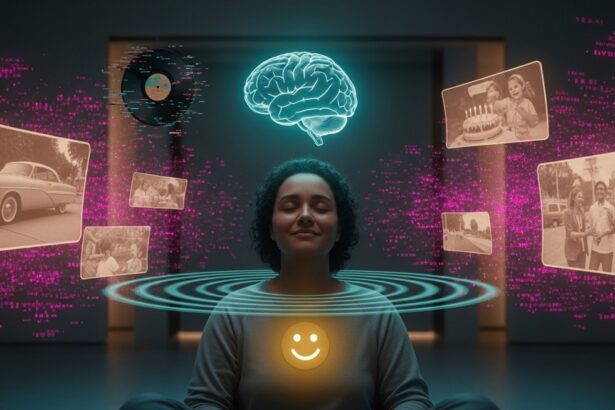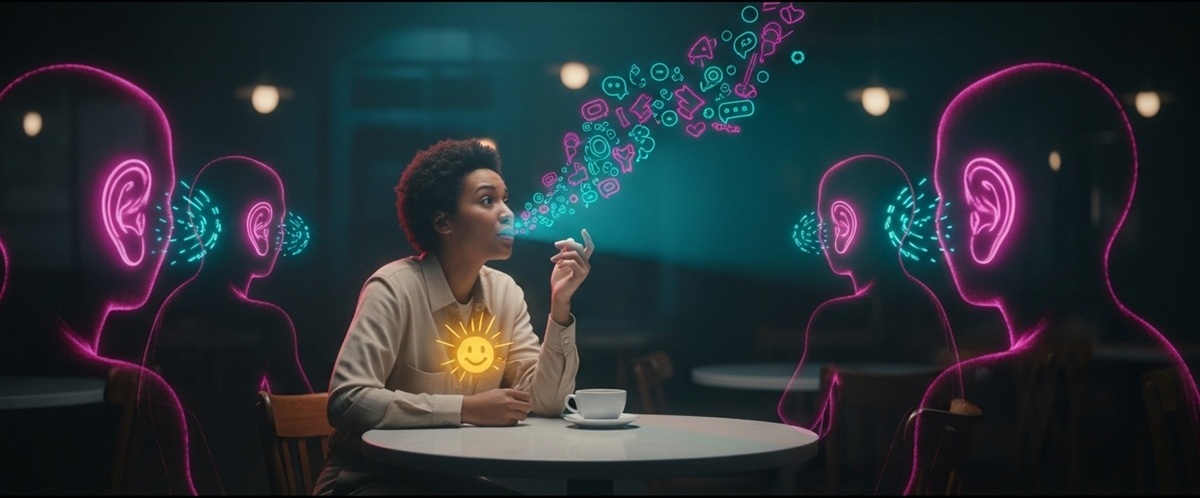
You’ve got a tricky conversation coming up—maybe with your boss, a friend, or even your cat about their questionable life choices. So, what do you do? You mentally act it out. You play both parts, say your lines, their lines, your clever comebacks, their surprised reactions. You do it again. And again. Or maybe you just left an awkward chat and now your mind is endlessly replaying it, hitting rewind, imagining all the brilliant things you should have said. That funny, pervasive tendency to mentally rehearse or replay conversations in your head is not just neuroticism—it’s anticipatory social cognition, your magnificent brain’s very nice, beautifully unhinged internal script-writing studio. “I am preparing very important talk! My brain says ‘very nice, you are genius writer!’ Very nice, now I have many excellent comebacks, but the conversation is only in my head! Very confusing for my very good brain!”
Welcome, fellow traveler, to the delightfully unhinged, universally experienced realm of the ‘Invisible Audience’ Brain, a potent manifestation of our internal social lives. It’s the glorious absurdity of your mind treating every potential or past conversation as a miniature theatrical production, constantly perfecting the script for an audience that isn’t really there (yet). This pervasive psychological and emotional quirk highlights a fascinating battle between your brain’s need for preparation and its tendency to get lost in its own elaborate simulations, linking it to social anxiety, perfectionism, and the sheer weirdness of internal dialogue. Is it just overthinking? A peculiar form of delusion? Or is your beautiful brain simply doing its very nice, very efficient (though profoundly challenging) job of making sure you’re always ready for your mental close-up? At Psyness.com, we take a “very nice!” look at this pervasive mental quirk, proving that understanding this peculiar psyche doesn’t have to be boring – it can be a riot. The feeling of mentally rehearsing conversations is like being a writer endlessly rehearsing lines for their characters in a grand play, or a stand-up comedian practicing their routine in front of a mirror (but all happening vividly inside your mind’s theater), perfecting every word for an imaginary spotlight. It’s a wonderfully weird glitch in your system.
Your Brain’s Internal Screenwriter | The Dialogue Loop
Why does your mind sometimes trick you into believing that preparing for (or reliving) conversations endlessly in your head is productive? It’s a fascinating testament to your magnificent brain’s ancient wiring for social navigation, its powerful need to predict and control, and its complex system for processing social interactions.
The Director | The Social Simulator
Your brain, bless its tirelessly observant heart, is primarily wired to navigate the complex world of human connection. Conversations are fundamental to this. Mental rehearsal is your brain’s attempt to simulate these interactions, reducing uncertainty and preparing you for potential outcomes.
- Anticipation and Preparation (The Brain’s Dress Rehearsal): This is a core mechanism. Your brain uses mental rehearsal to prepare for important or challenging conversations. By running through scenarios, it tries to predict what others might say or do, and what your best responses would be. This reduces the anxiety of the unknown. This is where your fuchsia-pink of proactive scripting glows.
- Social Anxiety and Perfectionism: For those prone to social anxiety or perfectionism, mental rehearsal can be an attempt to exert control over unpredictable social situations. The desire to say “the right thing” or avoid embarrassment fuels the endless replaying and perfecting of dialogue.
- Emotional Processing and Ruminating: After a conversation, particularly an awkward or upsetting one, your brain might replay it to process the emotions involved, identify “what went wrong,” or imagine alternative, more satisfying outcomes. This can sometimes become a form of unproductive rumination if not managed. This is a very nice, but sometimes draining, internal loop.
- Cognitive Play and Learning: Beyond just preparation, your brain enjoys simulating scenarios. Mental dialogues can be a form of cognitive play, helping you to understand different perspectives, practice empathy, or even generate new ideas by “talking” them through internally. This is where your deep teal/cyan logical processing explores social dynamics.
- Self-Reflection and Narrative Building: Rehearsing conversations helps you integrate experiences into your personal narrative. You refine your understanding of events, your role in them, and what you learned, solidifying your memories and perspectives. This is where your cheerful mustard yellow of vivid internal narrative shines.
The paradox? Your brain’s admirable drive for social competence and its powerful capacity for foresight, while essential for navigating complex interactions, can lead to a draining, anxiety-filled cycle of overthinking, missed present moments, and even increased social awkwardness because it traps you in a simulated reality rather than the authentic one. Your brain’s “internal scriptwriter” is magnificent, but gloriously unhinged in its ability to endlessly perfect dialogues for an audience that isn’t really there.
Pop Culture’s “500 Days of Summer” & “Seinfeld” | Our Shared Internal Monologue
From the protagonist in 500 Days of Summer, Tom, who meticulously replays past conversations and imagines future ones with Summer, constructing elaborate mental scenarios that often clash with reality, to the entire premise of Seinfeld, where the characters’ lives are often dictated by their internal monologues, observations, and awkward replays of mundane social interactions, pop culture constantly reflects and often capitalizes on our universal tendency to live in our heads. We’ve all seen a character’s “Invisible Audience” Brain in action, often with hilarious and absurd results.

The glorious absurdity? You can spend an hour mentally perfecting your order for the barista, only to mumble it incoherently when you get to the counter. It’s a shared, delightful madness where our reality is often dictated by our brain’s tireless, but often unnecessary, internal dramatics. Your inner Borat might rehearse a very important speech and declare, “Very nice, I will say these very good words! My brain says ‘no, you must practice more, many times!’ Very nice, now I have practiced for five hours, and am very tired to talk for real!”
How to Silence Your ‘Invisible Audience’ (Very Nice! And Truly Liberating!)
Understanding that your brain’s ‘Invisible Audience’ tendency is a natural, powerful psychological process is the first step to liberation. It’s not about becoming unprepared; it’s about learning to work with your magnificent, weird brain to foster greater presence, authenticity, and long-term well-being, even when the mental spotlight is on. Here’s how to nudge your brain towards a more intentional, “very nice!” understanding:
- Set a “Rehearsal Time”: If you feel the urge to mentally rehearse, set a specific, limited time for it (e.g., 10 minutes before a meeting). Once the time is up, consciously redirect your focus. This is your cheerful mustard yellow signal for control.
- Focus on Key Points, Not Scripts: Instead of writing entire mental scripts, focus on the core message or a few key points you want to convey. This allows for more flexibility in the actual conversation.
- Practice Mindfulness: Bring your attention to the present moment during actual conversations. Listen actively to the other person rather than focusing on your next internal line. This helps break the loop.
- Embrace Imperfection: Accept that not every conversation will be perfect. It’s okay to stumble, to not have the perfect comeback, or to have an awkward moment. Authenticity often trumps a perfectly rehearsed performance.
- Shift from Rehearsal to Action: If you find yourself endlessly replaying a past conversation, ask yourself what you can do about it now. Can you send a follow-up message? Learn from it for next time? If not, consciously choose to let it go.
The ‘Invisible Audience’ Brain is a truly special window into our complex psychology, a reminder that our minds, while magnificent, are also prone to delightful (and sometimes draining) forms of internal drama. Knowing this doesn’t make you a failure; it makes you self-aware, wonderfully weird, and very nice! Embrace your inner improviser, understand your brain’s fascinating social simulations, and prove that you can navigate the complexities of human interaction with greater presence, gratitude, and authenticity.